









Bengaluru / Vasanth Nagar
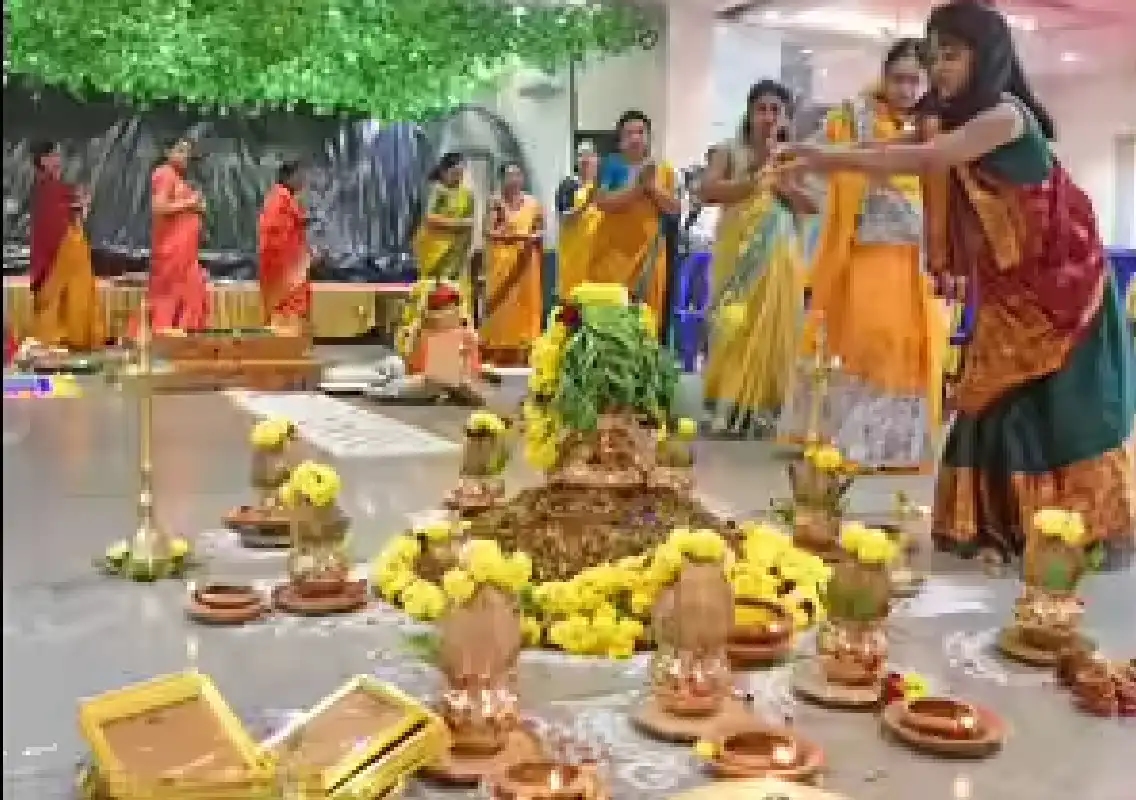
In Bengaluru’s Vasanth Nagar, the Rajput Sabha is busy preparing for Dasara celebrations. The community’s women are spearheading every aspect of the festival’s planning and execution.
Women’s role & responsibilities
For over 36 years, the women’s wing has taken charge of many small but crucial tasks — from designing rangolis to handling finances, arranging supplies, and coordinating logistics.
Retired professor Asha Chavan described how Rajput women are always active in festival work: “Be it shopping for sarees for Kumkumarchana, handling finances, or procuring herbs for homa, we are constantly planning and executing things.”
Rituals & traditions upheld
On September 29, the Kumkumarchana ritual will be performed, where about 400 married women (sumangalis) will be offered saris and a feast.
On the day of Ashtami, a chandi homa is performed (inserting specific herbs) to calm the goddess’s fiery aspect. Also, kanya puja and suhasini puja are conducted as part of community tradition.
Community pride & identity
The Rajputs in Bengaluru are originally Hindi-speaking migrants, but over generations they have embraced many Kannada cultural elements. Despite this assimilation, they continue to preserve their traditional Rajput identity, and festival observances are a key expression of that blend.
Officials like Ajit Singh, president of Rajput Sabha, praised the women’s leadership: “They take the lead, meticulously planning events, venturing into streets, bargaining on behalf of others, and procuring necessary items.”
Shobha R Singh, executive committee member, added that Rajput women are known for a “regal spirit, royal heart, and warrior soul,” historically holding influential roles in administration, education, and governance — qualities that now help in organizing festivals.
Conclusion
In Bengaluru’s Rajput community, the women are not merely helpers — they are the backbone of festival planning. Their deep engagement in rituals, logistics, finance, and community coordination underscores both their cultural heritage and evolving role in public life.