







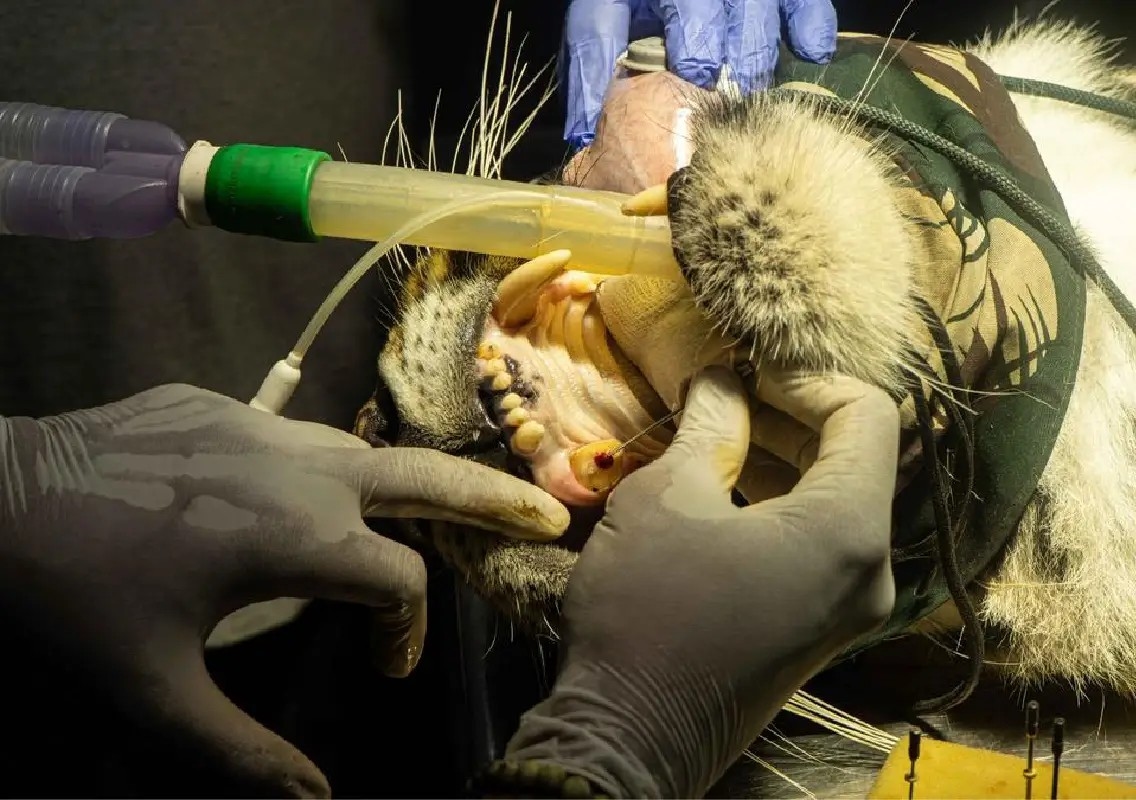


Bengaluru: In a rare milestone in wildlife veterinary care, veterinarians from Bannerghatta Biological Park (BBP) and Wildlife SOS have successfully performed a complex root canal surgery on a four-year-old Bengal tigress, Sinchana, preserving her damaged canine tooth instead of extracting it.
The procedure is being hailed as a significant achievement in wildlife dentistry, highlighting advances in specialised medical care for captive wild animals.
Tigress suffered tooth injury from cage-biting
According to officials, Sinchana had severely damaged one of her canine teeth due to repeated cage-biting, a behaviour that can occur in captive animals under stress or other conditions.
Following a detailed examination, veterinary experts from BBP and Wildlife SOS jointly assessed the injury and concluded that a root canal procedure would provide the best long-term outcome, allowing the tooth to be preserved rather than removed.
Three-hour surgery successfully completed
The intricate procedure was carried out at the operating theatre of Wildlife SOS’s Bannerghatta Bear Rescue Centre. The surgery lasted for nearly three hours and required careful planning and precision by the veterinary team.
By opting for a root canal instead of extraction, the veterinarians were able to retain the tigress’s natural canine tooth, which plays a vital role in feeding, grooming and overall oral health.
The successful surgery marks one of the few such procedures performed on a Bengal tiger in India, demonstrating the growing expertise in wildlife dental treatment.
Milestone for wildlife healthcare
Officials said the collaborative effort between Bannerghatta Biological Park and Wildlife SOS reflects the increasing focus on providing advanced veterinary care for rescued and captive wild animals.
The successful treatment is expected to improve Sinchana’s long-term health and quality of life while setting an important benchmark for future wildlife dental procedures.
Wildlife experts noted that specialised interventions such as this are becoming increasingly important in ensuring the welfare and conservation of animals under human care.