







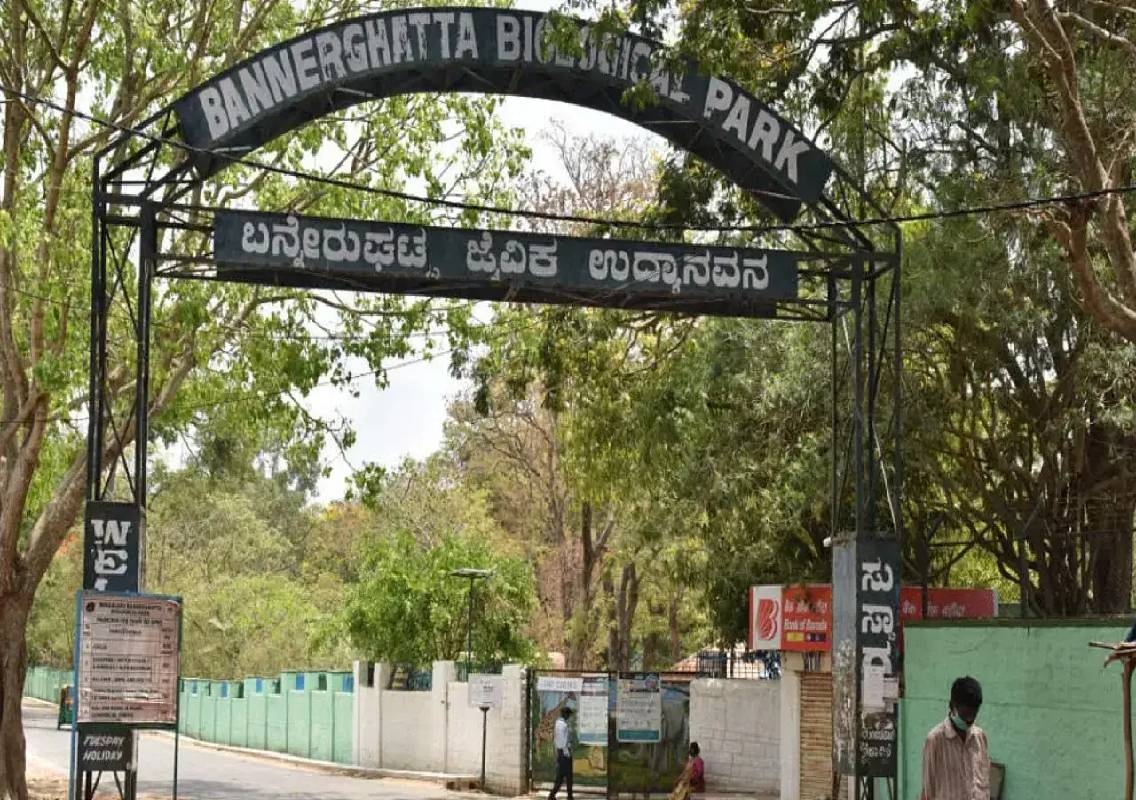


Bengaluru: The proposed international cricket stadium project in Anekal taluk near Bannerghatta National Park has triggered environmental and political concerns, with the Karnataka Rajya Samithi strongly opposing the development and demanding that the Karnataka government cancel the project.
The organisation has raised concerns over the stadium’s proximity to ecologically sensitive areas connected to the national park and warned that large-scale construction, crowd movement and floodlights could disturb wildlife habitats and increase environmental pressure in the region.
The proposed stadium is planned on nearly 70 acres of land in Indlawadi village in Anekal taluk and is reportedly expected to cost over Rs 900 crore.
Stadium project sparks environmental concerns
According to Karnataka Rajya Samithi leaders, the proposed cricket stadium site lies approximately 1.5 kilometres from Bannerghatta National Park, a protected forest region located on the outskirts of Bengaluru.
The park is ecologically significant because it forms part of a larger wildlife corridor linked to the Cauvery Wildlife Sanctuary and the MM Hills forest region.
The organisation argued that a large sports infrastructure project in such close proximity to the forest ecosystem could negatively impact wildlife movement and biodiversity.
Speaking on the issue, KRRS representative L. Mohan alleged that the project also includes plans for a sports complex estimated to cost around Rs 1,000 crore in addition to the stadium itself.
Environmental activists and local groups have increasingly raised concerns over urban expansion and infrastructure development around Bannerghatta National Park in recent years.
Concerns over wildlife disturbance and traffic
The Karnataka Rajya Samithi said it fears that stadium operations could create long-term ecological disruption due to heavy traffic, bright floodlights and crowd activity.
The proposed venue is expected to accommodate crowds of up to 80,000 spectators during major sporting events.
According to the organisation, such large gatherings could significantly increase vehicular congestion, noise pollution and pressure on nearby forest zones.
The group also warned that powerful floodlights used during night matches may affect nocturnal animal behaviour and disturb wildlife movement patterns around the protected area.
Environmental experts have previously highlighted how increased urbanisation near wildlife corridors can contribute to habitat fragmentation and human-animal conflict.
Eco-sensitive zone reduction questioned
The organisation also questioned the earlier reduction of the eco-sensitive zone surrounding Bannerghatta National Park.
According to KRRS, the eco-sensitive zone area was reduced from 268 square kilometres to 168 square kilometres in 2020.
The group claimed that the matter is currently under judicial scrutiny and referred to ongoing proceedings linked to the issue.
KRRS leaders argued that further large-scale infrastructure development near the park should not proceed until environmental concerns and legal questions surrounding the eco-sensitive zone are fully addressed.
Demand for transparency from government
The Karnataka Rajya Samithi has demanded that the state government publicly release the environmental impact assessment (EIA) report and the detailed project report (DPR) related to the stadium proposal.
The organisation said transparency is necessary to understand the long-term environmental and social implications of the project.
It also questioned the necessity of constructing another major cricket stadium in Bengaluru when the city already has established cricket venues.
Critics of the proposal have argued that Karnataka could instead consider alternative locations in regions with lower ecological sensitivity and greater infrastructure requirements.
Concerns over land acquisition and displacement
Apart from environmental issues, the Karnataka Rajya Samithi also raised concerns regarding land acquisition and possible displacement of farmers and local residents in the project area.
The organisation claimed that some people may lose agricultural land if the project proceeds and called for clarity regarding rehabilitation and compensation plans.
KRRS additionally alleged that questions surrounding land ownership near the proposed stadium site could create concerns regarding potential conflicts of interest.
The group urged the government to consider developing large sports infrastructure projects in other regions of Karnataka, including parts of North Karnataka, where such facilities could support regional development without affecting sensitive ecological zones.
Debate over development versus conservation
The controversy reflects the broader debate in Karnataka over balancing urban infrastructure expansion with environmental conservation.
Bengaluru’s rapid growth has increasingly pushed development projects closer to forested and ecologically sensitive regions surrounding the city.
Environmentalists have repeatedly warned that unchecked infrastructure growth near protected areas could threaten biodiversity, increase pollution and intensify human-wildlife conflicts.
At the same time, supporters of new sports infrastructure argue that Bengaluru requires modern venues capable of hosting international events and supporting future urban growth.
The Karnataka government has not yet issued a detailed public response regarding the environmental objections raised against the stadium proposal.
As discussions continue, the future of the project is likely to remain under close public and environmental scrutiny.