







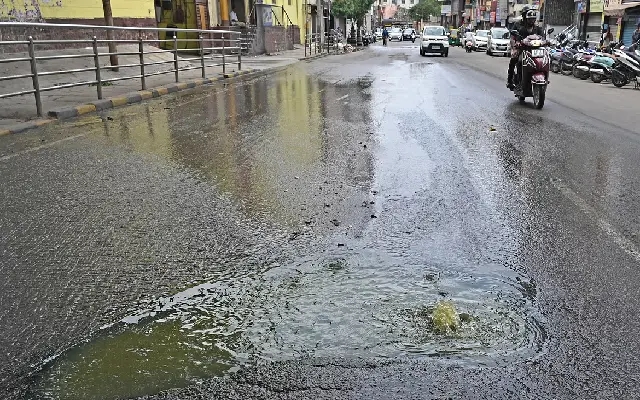


Resident Welfare Associations (RWAs) have urged the Bangalore Water Supply and Sewerage Board (BWSSB) to take swift action against fat, oil, and grease (FOG) effluents, which clog underground drainage systems.
While BWSSB often fixes the issue by replacing broken pipes, RWAs insist on tackling the root cause—how restaurants dispose of used oil. The problem is severe in Koramangala 5th Block, where a 2019 pipe burst was linked to FOG waste from cloud kitchens, restaurants, and homes.
Unchecked Growth of Commercial Kitchens
The boom in food delivery services has led to a surge in commercial kitchens, worsening the issue. When FOG waste mixes with cool sewage water, it solidifies into ‘fatbergs’, leading to severe blockages and pipe damage.
Businesses Also Affected
Magrath Road near Brigade Road saw similar issues during the pandemic, leading to sewage pipeline replacement. However, the road remains in poor condition a year later, affecting hotels, salons, clinics, and malls.
Restaurants Defend Themselves
Restaurant groups argue they are not solely responsible, as many eateries use grease traps and oil filters. Excess oil is sold for diesel production, says P.C. Rao of the Bruhat Bangalore Hotels Association.
Possible Solutions
BWSSB officials stress that grease traps should be mandatory in all restaurants. Fines may be imposed on non-compliant businesses.
RWAs suggest dedicated underground FOG storage tanks to collect waste for oil reprocessing units, an initiative already adopted by a popular Koramangala restaurant.
Read Also: