


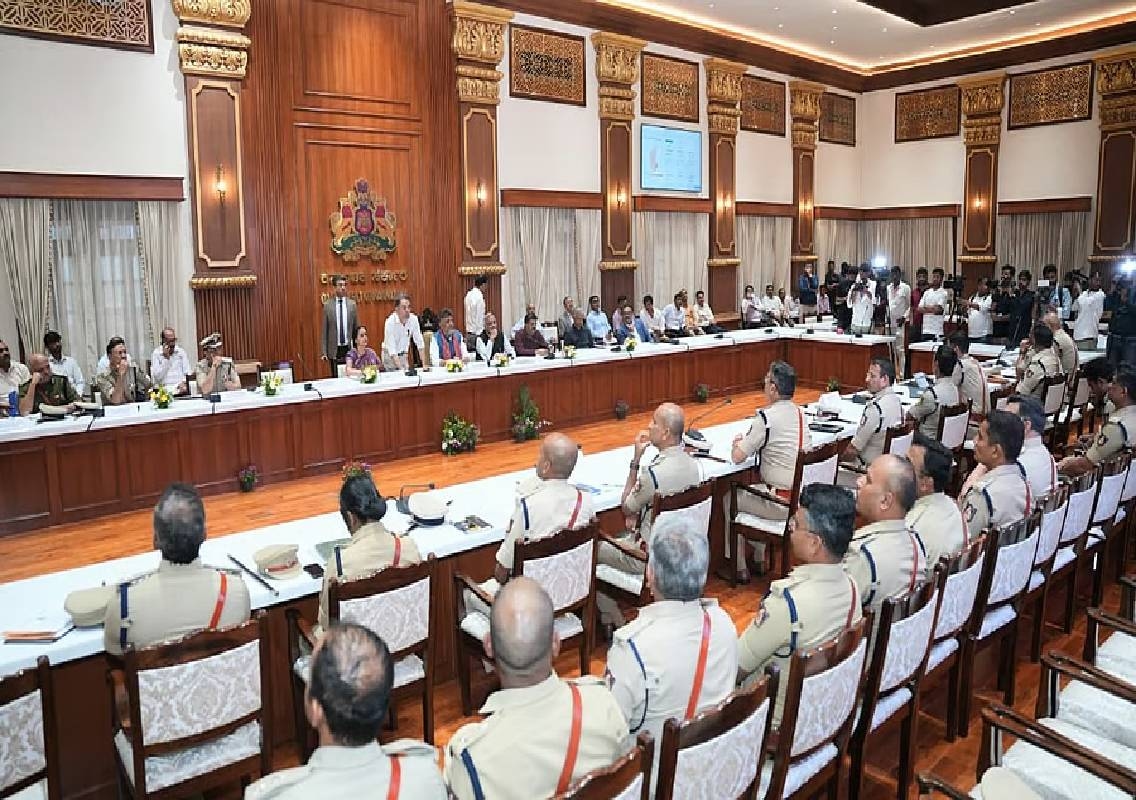


Bengaluru: Chief Minister D.K. Shivakumar on Friday, November 20, held a meeting with senior police officers to discuss the integration and effective functioning of Bengaluru’s five newly established police commissionerates, with a focus on improving law and order, traffic management and public safety.
The meeting was attended by Home Minister G. Parameshwara? No—Home Minister Priyank Kharge, State Police Chief M.A. Saleem, Bengaluru Chief Commissioner of Police R. Hithendra, Commissioner of Police for Traffic, Anti-Rowdy Squad and Crime Control Hemant M. Nimbalkar, and the commissioners heading the five city units.
Five commissionerates to work as a coordinated system
Bengaluru’s police administration has been reorganised into five territorial commissionerates — North, South, East, West and Central — under the overall supervision of the Chief Commissioner of Police.
The restructuring followed the expansion of the city and the formation of the Greater Bengaluru Authority. The new arrangement provides for a separate Police Commissioner for each commissionerate, while the Chief Commissioner exercises overall administrative and supervisory control.
The government has said the reorganisation is intended to strengthen policing and improve governance in a city whose population has grown considerably. Shivakumar said the five-unit arrangement should not function as five isolated administrations and stressed the need for coordination among senior officers.
He called on the police leadership to work together as “Team Bengaluru”, ensuring that the new structure delivers better public services and an effective law-and-order system.
Focus on crime control and traffic management
The discussions covered law and order, crime prevention, traffic management, public safety and the overall performance of the police force.
The Chief Minister outlined the government’s expectations from the newly appointed commissioners and asked them to ensure that policing remained transparent, accountable and accessible to the public.
He also emphasised that economic activities should not be disrupted and that police officers must respond effectively to the safety requirements of residents, commuters and businesses.
The government wants the new structure to give focused attention to traffic-related challenges, crime control and the prevention of rowdy activities. Senior officers have also been asked to work towards making Bengaluru free of drug-related activities and corruption.
Recruitment and police welfare among priorities
The shortage of police personnel was another important issue discussed during the meeting.
According to the report, Home Minister Priyank Kharge said a systematic policy had been formulated to undertake annual recruitment to address staffing requirements. Recruitment for approximately 8,000 police posts had already begun.
The government has linked the recruitment requirement to the expanded responsibilities arising from the creation of the five commissionerates. Police welfare, including accommodation facilities for personnel, was also raised during the discussions.
Senior officers asked to improve policing standards
The Chief Minister said senior officers were preparing a report on best practices in police administration. The aim is to strengthen the functioning of the new system and improve the quality of policing across the city.
He also called for transparency in police operations and warned against corruption. The officers were asked to discharge their responsibilities in a manner that builds public confidence and ensures that people receive timely assistance.
The meeting comes shortly after the government notified the five commissionerates and appointed separate commissioners to head them. Their effectiveness will depend on coordination between the units, adequate staffing and the smooth handling of responsibilities that cross jurisdictional boundaries.
The government is now looking to translate the administrative restructuring into improvements that residents can experience in everyday policing, including faster responses, better traffic management and stronger crime prevention.