







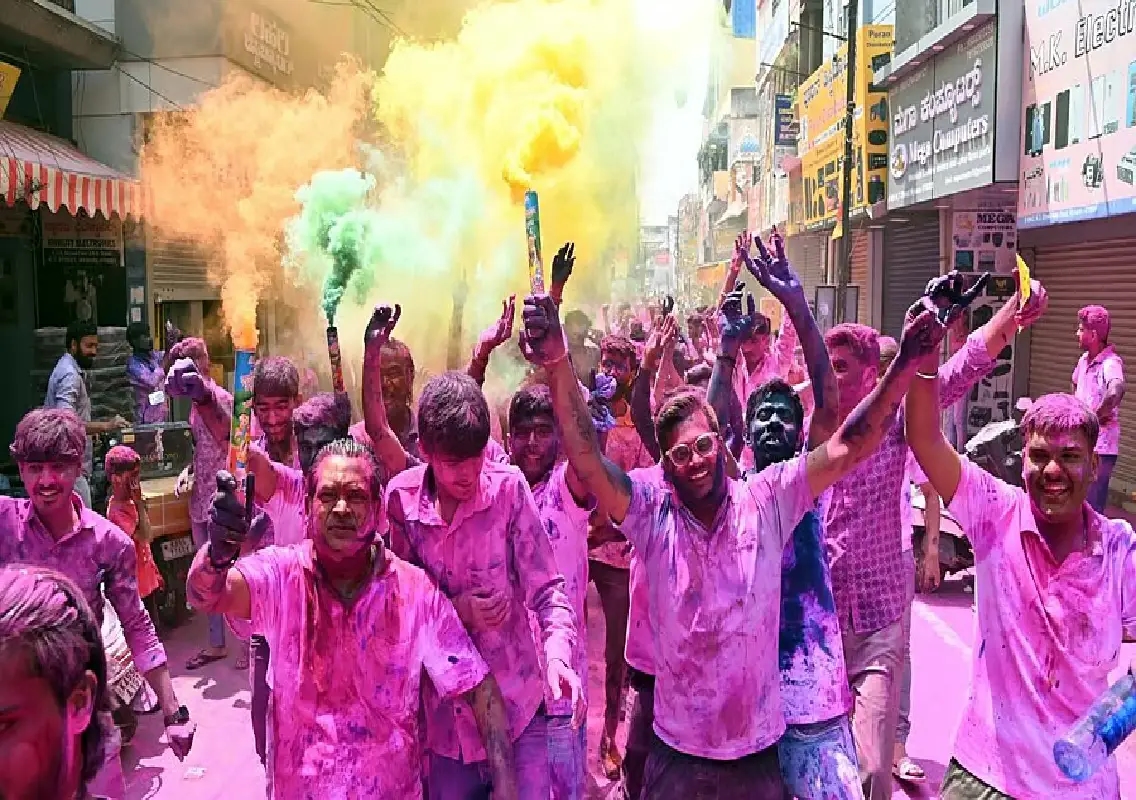


Bengaluru: A social media post criticising the city for not celebrating Holi “enthusiastically” has sparked a heated debate online, with users discussing cultural differences in festival celebrations across India.
The discussion began after a user named Vanshita posted on the social media platform X (Twitter) claiming that Bengaluru did not appear to celebrate the festival of colours with the same energy seen in some parts of the country.
In her post, Vanshita wrote, “Bangalore doesn’t know how to celebrate festivals.” She further explained that when she stepped out around 1 pm on the day of Holi, she did not see people playing with colours in public spaces.
“I stepped out now at 1pm and don’t see a single person in holi rang? no kids throwing balloons? not even colours by the roadside,” she wrote, adding, “why is this city so boring.”
The post quickly went viral, attracting more than 1.2 million views and prompting thousands of comments from users who expressed differing opinions on the issue.
Social media reactions highlight cultural differences
Many users criticised the remark, arguing that it reflected a lack of understanding of regional cultural practices in India.
Several commenters pointed out that festivals are celebrated differently across the country and that expecting uniform celebrations everywhere overlooks India’s cultural diversity.
One user responded by comparing Holi celebrations with other regional festivals. “Do you celebrate Pongal or Sankranti the same way we do? Would your mother prepare as many dishes as ours for that festival? Probably not. We understand that it is not your major festival, but that understanding is not always reciprocated,” the comment read.
Another user remarked that assuming every region celebrates the same festivals in the same way reflects cultural ignorance.
“This is called being culturally unaware. People from north think what they celebrate should be celebrated by everyone,” another comment stated.
A different user highlighted a similar example, writing that asking why Holi is not widely celebrated in southern states is similar to questioning why some northern regions do not celebrate festivals like Varamahalakshmi Vratha.
Celebrations often limited to private communities
Some social media users also pointed out that Holi is indeed celebrated in the city, but often within private spaces such as apartment complexes, gated communities, and cultural associations.
They noted that residents frequently organise celebrations within housing societies, where families and children gather to play with colours and enjoy festive food.
One user explained that many people living in Bengaluru travel to their hometowns during major festivals such as Holi or Diwali, which reduces visible public celebrations in the city.
“Mostly because people leave for home during Holi and Diwali. Major festivals are celebrated inside apartment complexes,” the user commented.
Others echoed similar sentiments, emphasising that the city’s multicultural population celebrates festivals in diverse ways, often within community groups rather than on public streets.
Holi celebrations across India
Holi, widely known as the “festival of colours,” was celebrated across India on March 4 this year. The festival symbolises the arrival of spring and is marked by people applying coloured powders, sharing sweets, and participating in community gatherings.
While cities in northern and central India often witness large public celebrations with colours and water balloons, festivities in southern parts of the country can be comparatively subdued in public spaces.
However, cultural experts note that southern states have their own prominent festivals such as Pongal and Sankranti, which are celebrated with significant enthusiasm and traditional rituals.
The online debate has once again highlighted the diversity of cultural practices across India, where different regions celebrate festivals in their own distinctive ways.
Online debate reflects wider cultural discussion
The viral post has sparked a broader conversation about cultural sensitivity and the importance of recognising regional traditions.
Many users emphasised that the diversity of celebrations across India should be viewed as a strength rather than a shortcoming.
As discussions continue on social media, the incident underscores how digital platforms can quickly turn personal observations into nationwide conversations about culture, identity, and traditions.