







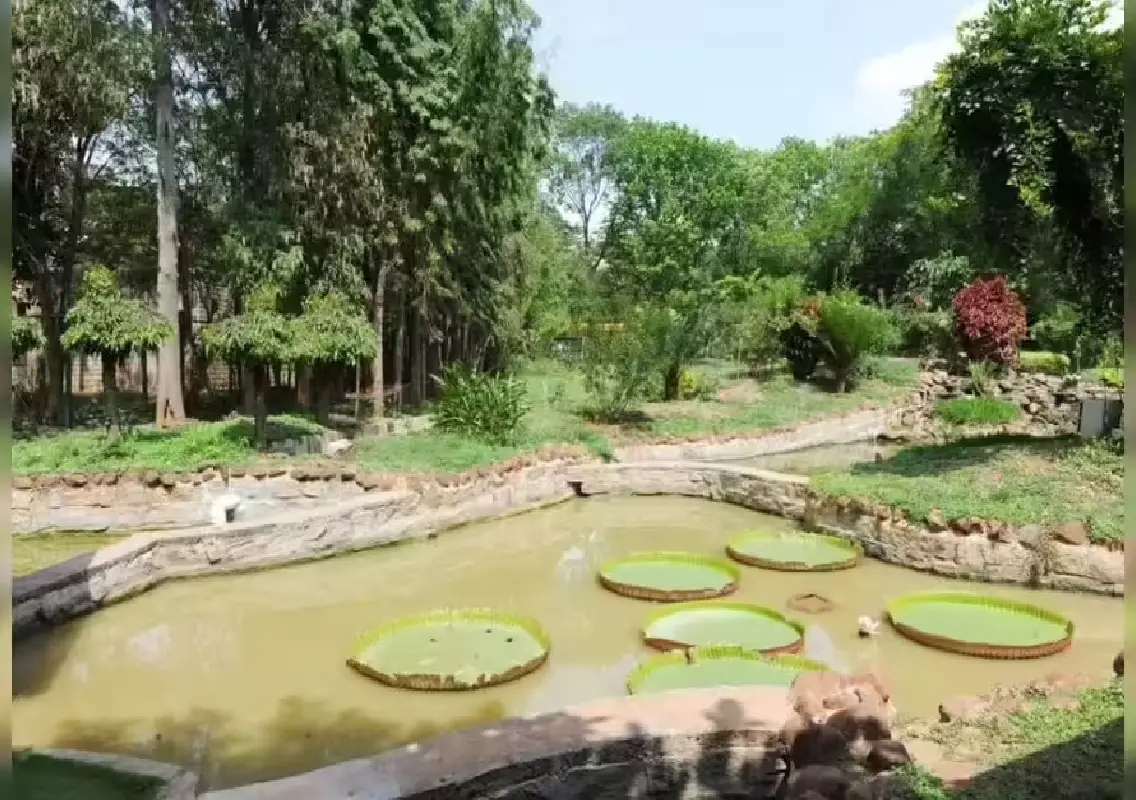


Bengaluru: A large group of students, farmer activists and local residents gathered to oppose the proposed construction of an international flower market on a section of the University of Agricultural Sciences’ GKVK campus. The protesters voiced concerns over environmental impact, safety issues and potential disruption to the academic ecosystem.
Students fear safety, loss of research trees
Research scholars at the College of Horticulture expressed anxiety about the plan, noting that a dawn-to-dusk commercial market inside the campus could compromise student safety, especially for women. Research student Alfiya A said that the trees on campus have been nurtured as part of academic work and must be protected. “We are not against development, but we have grown these trees as part of our research and want to protect them. It is better to prevent the destruction now than to address it when it is too late,” she said.
Residents propose alternative sites
Residents from neighbourhoods surrounding GKVK argued that the flower market should be established elsewhere. Jagadish BN of Doddabettahalli pointed to the existing International Flower Auction Bengaluru (IFAB) near the veterinary college in Hebbal as an example of suitable placement. He suggested that the APMC yard in Byatarayanapura, which has direct access to the airport road, would be a more appropriate location.
Vidyaranyapura resident Nirmala JP raised concerns about worsening traffic congestion if the market comes up inside GKVK. “We are not against the market, but our appeal is not to build it here. We request the authorities not to ruin GKVK campus,” she said.
GKVK called city’s ‘oxygen bank’
For many residents, GKVK is a crucial green space. HM Venkatesh from Judicial Layout noted that nearly 500 local residents visit the campus daily for morning walks. He described GKVK as the “oxygen bank for this part of the city, just like Lalbagh or Cubbon Park.” Environmentalists echoed that conserving the campus is essential for the ecological health of the region.
Activists urge collective pressure
Environmental activist Dattatraya T Devare from the Bangalore Environment Trust emphasised the importance of strong public opposition. He referred to past successes where large-scale tree felling was halted due to public resistance, including at All Saints’ Church and the Cantonment Railway Colony.
Farmer activist Attahalli Devaraj highlighted GKVK’s contributions to agricultural advancement. “Saving the nation starts from saving agriculture. To save agriculture, we must save GKVK,” he said.
Questions over project intent
Kannada activist Gurudev Narayanakumar criticised the government’s reasoning behind the proposed project, alleging that it was driven by real-estate interests rather than public demand. “The intention behind several projects is real estate development. Neither have the people asked for this nor do these projects benefit them,” he stated.
Conclusion
As opposition intensifies, residents, students and activists continue to urge the government to reconsider the proposed flower market site. With concerns spanning safety, environment and urban planning, they insist that development must not come at the cost of Bengaluru’s vital green lung.