







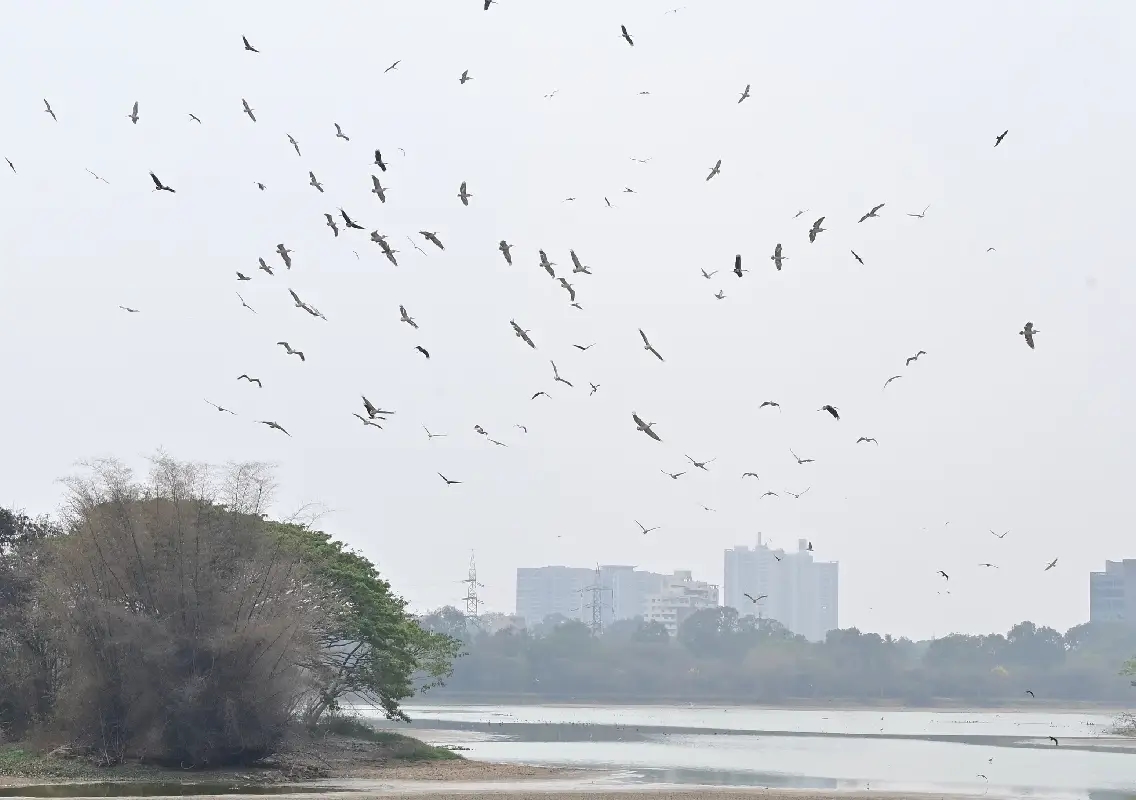


A new study has revealed a concerning shift in Bengaluru’s lake ecosystem, with sewage now replacing rainwater as the primary source feeding many downstream lakes in the Hebbal–Nagavara Valley.
The research, titled Cascading Urban Lakes, conducted by scientists from WELL Labs and published in Frontiers in Water, analysed 44 interconnected lakes across the region.
Sewage dominates lake inflow
The findings show that during dry years, nearly 95 per cent of downstream lakes rely predominantly on sewage inflow. Even in wetter years, around 62 per cent of these lakes receive more sewage than rainwater runoff.
This shift has altered the natural rhythm of the lakes. Many that once filled during monsoons and dried up in summer have now become perennial, sustained by continuous domestic wastewater.
Upstream vs downstream contrast
Researchers highlighted a stark contrast between upstream and downstream lakes. Lakes located on the outskirts, where urbanisation is limited, still depend largely on monsoon rains and function as natural flood buffers.
In contrast, downstream lakes accumulate the effects of urban activity, effectively becoming repositories of wastewater flowing from across the city.
Not all sewage is equal
Lead researcher Rashmi Kulranjan noted that while untreated sewage is harmful, treated wastewater—if properly managed—can help maintain water levels and recharge groundwater.
However, she cautioned that lakes filled primarily with sewage lose their ability to act as flood mitigation zones, making careful planning essential.
One-size solutions not effective
The study found that interventions by civic bodies like the Bruhat Bengaluru Mahanagara Palike and the Greater Bengaluru Authority may not work uniformly across all lakes.
Measures such as sluice gates, which are effective in upstream lakes by creating storage space for rainwater, offer limited benefit downstream where sewage inflow remains constant. In such cases, diverting treated wastewater is more effective.
Interconnected system needs holistic approach
Researchers emphasised that Bengaluru’s lakes function as a connected network. Actions taken at one lake directly impact others downstream.
Proper treatment or diversion of sewage at upstream points can significantly improve water quality across the system, while mismanagement can worsen conditions throughout.
Dry lakes due to diversion drains
Interestingly, some lakes have gone in the opposite direction—becoming nearly dry. Of the 44 lakes studied, 13 have diversion drains that redirect sewage away during dry periods. While intended to reduce pollution, this has cut off their primary water source.
As a result, these lakes now receive water only during heavy rainfall, leaving them dry for most of the year.
Urgent need for balanced planning
The study underscores the need for a balanced and lake-specific management strategy that considers both ecological health and urban flood control.
With Bengaluru’s rapid urbanisation continuing, experts warn that sustainable water management will be critical to preserving the city’s historic lake systems.