







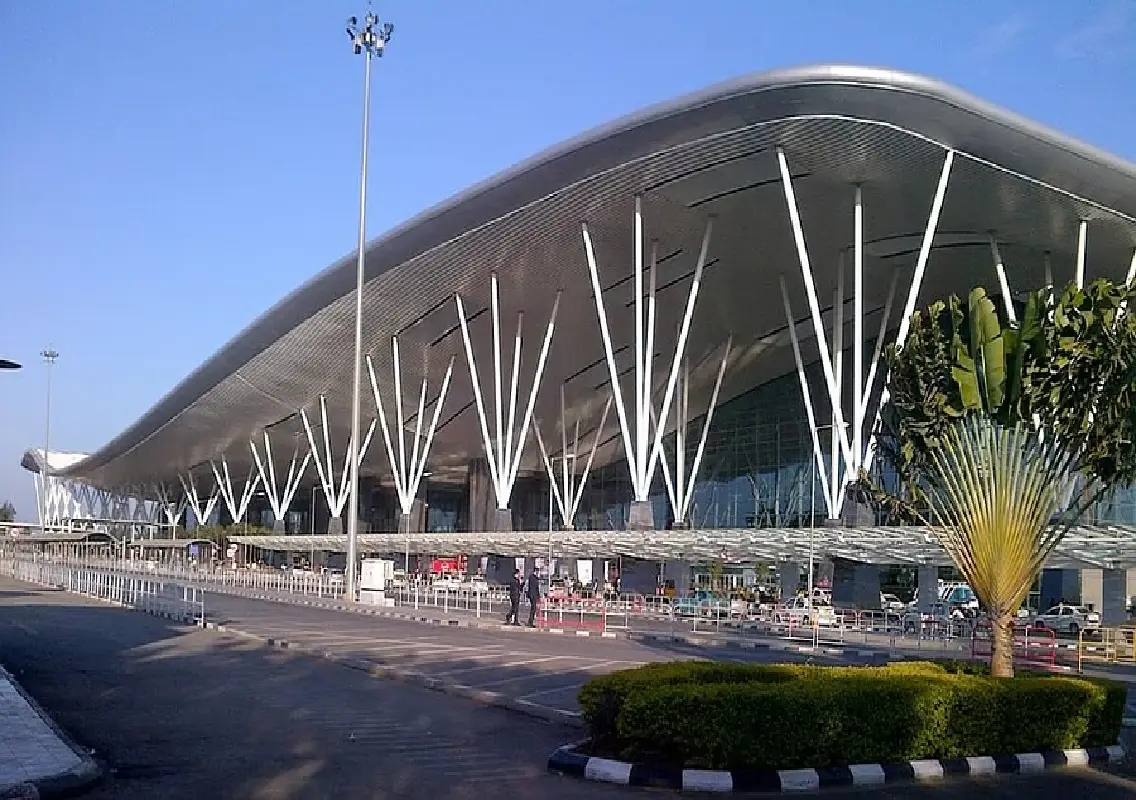


Bengaluru: The Karnataka State Industrial and Infrastructure Development Corporation (KSIIDC) has formally set the process in motion for the development of a second airport for Bengaluru by inviting tenders to conduct a detailed feasibility study, marking a significant step towards addressing the city’s rapidly growing aviation demand.
The move comes amid sustained growth in passenger traffic at Kempegowda International Airport (KIA), which has emerged as one of the busiest airports in the country. With Bengaluru continuing to expand as a technology, startup and manufacturing hub, the state government has been exploring options to augment air connectivity and long-term capacity through the establishment of a second airport.
Invitation of tenders and scope of study
KSIIDC has floated tenders to appoint a consultant who will carry out a comprehensive feasibility study for the proposed second airport. The selected agency will be tasked with examining technical, financial, environmental and operational aspects associated with setting up a new airport in and around Bengaluru.
According to officials, the study will assess potential locations, land availability, airspace compatibility, connectivity with the city and surrounding regions, and compliance with aviation safety norms. It will also evaluate passenger and cargo demand projections for the next several decades, keeping in mind Bengaluru’s steady economic growth and rising air travel trends.
The consultant will be required to recommend the most viable site and suggest an implementation model, including options such as public-private partnership (PPP), government-led development, or a hybrid structure.
Rising pressure on Kempegowda International Airport
Kempegowda International Airport, located in Devanahalli, has seen exponential growth in recent years. Passenger traffic at the airport has crossed 3.5 crore annually, placing it among the top three busiest airports in India. Despite ongoing expansion works, including the development of Terminal 2 and additional runways, projections indicate that demand could outpace capacity in the coming years.
Aviation experts have repeatedly pointed out that a single airport may not be sufficient to cater to Bengaluru’s long-term needs, especially as international travel, cargo movement and regional connectivity continue to rise. The proposed second airport is expected to play a crucial role in decongesting KIA and providing flexibility for future growth.
Identifying a suitable location
One of the key challenges in developing a second airport is identifying a suitable location that meets aviation norms while minimising social and environmental impact. The feasibility study will explore multiple sites, including regions on the outskirts of Bengaluru and neighbouring districts.
Factors such as distance from the existing airport, wind patterns, airspace overlap, ecological sensitivity and accessibility by road and rail will be carefully examined. Officials indicated that the study would also consider the potential for integrated development, including logistics hubs, aero cities and commercial zones around the airport.
The state government has earlier indicated that it is keen to ensure that the new airport complements, rather than competes with, the existing facility.
Regulatory clearances and Centre’s role
Any proposal for a second airport will require multiple approvals from the Union government, including the Ministry of Civil Aviation and the Airports Authority of India (AAI). The feasibility study is expected to form the foundation for discussions with central agencies and help the state make a strong case for regulatory clearances.
Karnataka officials have noted that the Centre has been encouraging states to plan aviation infrastructure proactively, particularly in fast-growing metropolitan regions. However, airspace constraints and national aviation planning considerations will play a decisive role in the final approval.
Economic and infrastructure impact
The development of a second airport is expected to have a significant economic impact on the region. Apart from generating direct employment during construction and operations, it is likely to spur ancillary industries such as hospitality, logistics, real estate and tourism.
Industry bodies have welcomed the move, stating that improved air connectivity is critical for sustaining Bengaluru’s position as a global business destination. They have also emphasised the importance of integrating the new airport with mass transit systems, including metro and suburban rail networks, to ensure seamless connectivity.
Timeline and next steps
Once the consultant is appointed, the feasibility study is expected to take several months to complete. Based on its findings, KSIIDC will submit recommendations to the state government, which will then decide on the next course of action, including land acquisition, funding models and engagement with the Centre.
Officials cautioned that while the invitation of tenders marks an important milestone, the actual development of a second airport will be a long-term project requiring careful planning, stakeholder consultations and phased execution.
Conclusion
The invitation of tenders for a feasibility study signals Karnataka’s intent to plan ahead for Bengaluru’s aviation future. With passenger numbers continuing to rise and economic activity expanding, a second airport could become a strategic necessity rather than a luxury. The outcome of the study will be closely watched by industry, policymakers and residents alike, as it will shape the city’s air connectivity and infrastructure landscape for decades to come.