









Bengaluru: The Bengaluru Traffic Police (BTP) have intensified a special enforcement drive against light pollution on city roads, with the number of cases booked rising sharply to 9,782 as of Sunday. Officials said the surge reflects stricter checks on unauthorised vehicle lighting that poses serious risks to motorists after sunset, including blinding glare and confusion caused by deceptive colours and flashing patterns.
The special drive, which began on January 7, has gained momentum over the past few days. On Saturday night alone, traffic police booked 1,843 fresh violations, indicating both the scale of the problem and the increased enforcement focus. Authorities said the crackdown will continue in the coming weeks, particularly during night hours.
West Division emerges as major hotspot
Data released by the traffic police shows that the West Division remains the biggest hotspot for violations, accounting for more than half of the total cases registered so far. As many as 4,994 bookings have been recorded in the division, prompting senior officers to deploy additional teams in the area.
Traffic officials attributed the high numbers to a concentration of private vehicles, including SUVs and modified cars, as well as autorickshaws and two-wheelers fitted with high-intensity lights. Several arterial roads in the division witness heavy night-time traffic, increasing the risk posed by glare and non-standard lighting.
Focus on unauthorised LEDs and flashers
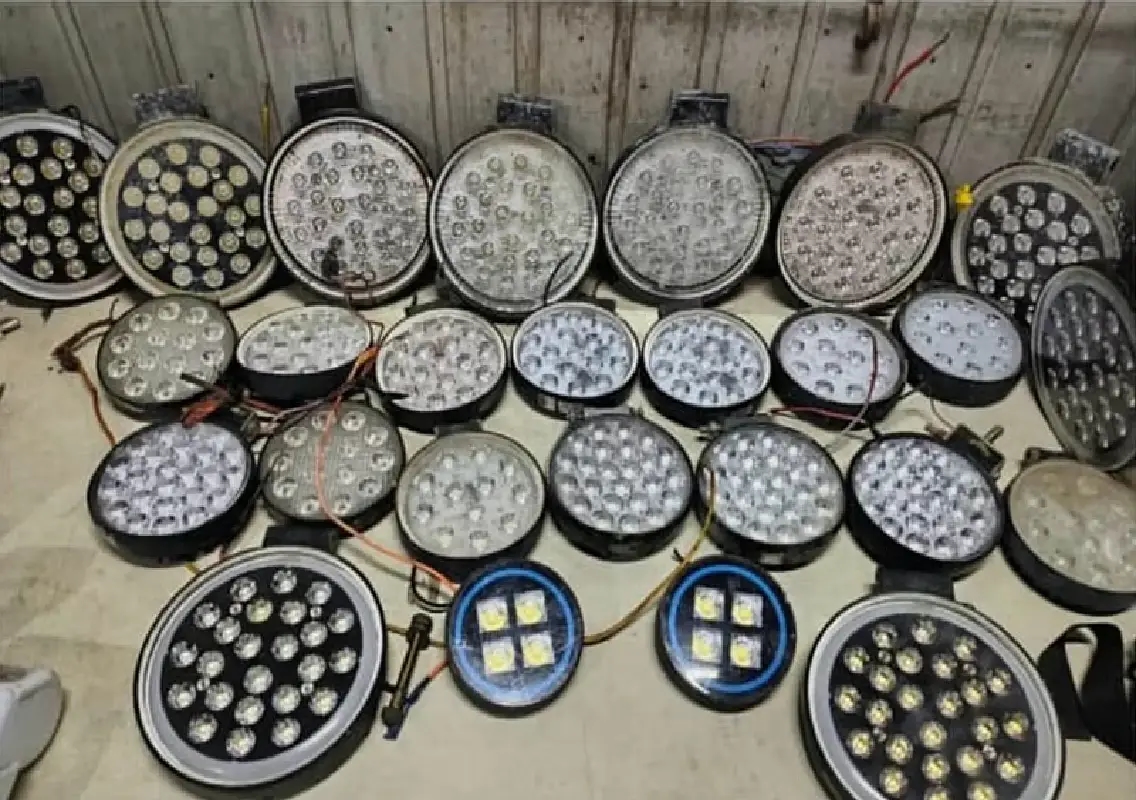
The ongoing drive specifically targets unauthorised LED lights, high-intensity discharge (HID) lamps, LED light bars and coloured flashlights fitted to private vehicles. Officials said these lights often exceed permissible wattage and are installed without regard for safety norms.
From luxury SUVs to autorickshaws, vehicles across categories are being stopped and checked for lighting violations. Police said there has been a noticeable rise in the use of coloured flashlights—particularly red, blue and yellow—on private vehicles. Such lights are prohibited for non-emergency use but are increasingly being fitted to give vehicles a “premium” or “official” look.
Traffic police data suggests that these modifications are not limited to a particular vehicle segment, making enforcement more challenging.
Commuters describe dangerous glare
Regular night-time commuters have welcomed the drive, saying excessive lighting has made driving increasingly hazardous. Rohan Das, a software professional who travels daily along the Outer Ring Road, described the impact of illegal high beams. “It is like being hit by a laser beam. When an SUV with a high beam comes from the opposite side, I have to stop my bike because I cannot see the road for the next five seconds,” he said.
Other motorists shared similar experiences, noting that intense glare often forces sudden braking or lane deviation, increasing the risk of accidents. One driver recalled stopping abruptly on a flyover after mistaking a private vehicle’s flashing LED lights for those of a police interceptor.
Such deceptive lighting, officials said, creates confusion on busy roads and can trigger panic responses among drivers.
What the law permits and prohibits
Transport authorities have clarified that any lighting modification that deviates from manufacturer specifications is illegal under the Central Motor Vehicles Rules (CMVR). In particular, Automotive Industry Standard AIS-130 governs the approval and performance of LED light sources used in vehicles.
Under AIS-130 norms, a standard white LED headlamp should typically operate between 4 and 12 watts, producing around 725 lumens with a controlled and road-focused beam pattern. This ensures adequate visibility for the driver without causing glare to oncoming traffic.
In contrast, many illegal aftermarket lights operate at 50 to 100 watts or even more, producing thousands of lumens concentrated into a narrow, piercing beam. Officials said this creates a “laser-like” effect that can temporarily blind other road users.
The law permits only standard white or warm yellow headlights for private vehicles. Blue, red or multi-colour flashing lights are strictly prohibited, as these colours are reserved for emergency and enforcement vehicles.
Safety concerns flagged by officials
Senior Transport Department officials warned that the safety risks associated with illegal lighting are often underestimated by vehicle owners. “Many aftermarket LED lights lack UV radiation control and normalised luminous intensity,” an official said. “When you jump from 12 watts to 100 watts, you are not just lighting the road; you are creating a blinding wall of light that can lead to head-on collisions.”
Officials stressed that misuse of high beams and illegal lighting can directly endanger lives. “Your vehicle’s high beam can cause harm to another person’s life. Use low beam at night,” the official added.
On-the-spot enforcement ordered
Joint Commissioner of Police (Traffic) Karthik Reddy has instructed all traffic police stations to ensure strict enforcement during the drive. Officers have been directed to register cases, remove unauthorised fittings on the spot and dismantle illegal LED bars and flashers from vehicles.
The action applies to all categories, including two-wheelers, cars, autorickshaws and commercial pick-up vehicles. Police said repeat offenders will face higher penalties and continued monitoring.
Conclusion
With nearly 10,000 cases booked in less than a week, the BTP’s intensified drive underscores the scale of illegal vehicle lighting in the city. Officials believe sustained enforcement, combined with public awareness about the dangers of excessive and coloured lighting, is essential to improve night-time road safety. The traffic police have reiterated that the aim of the drive is not just penal action, but safer roads for all commuters after dark.