









Bengaluru: The Centre’s decision to introduce a Merchant Discount Rate (MDR) on specified UPI payments above ₹2,000 has triggered a debate over whether the cost could eventually reach consumers.
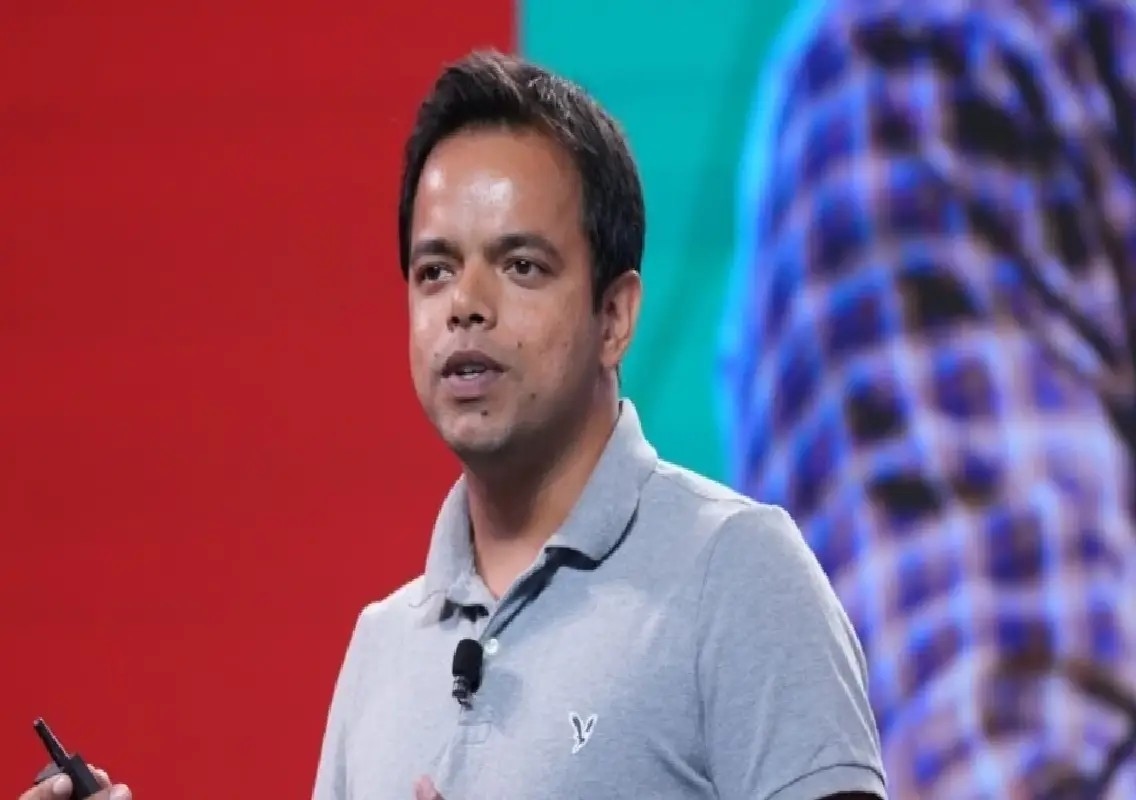
Bengaluru-based entrepreneur Siddharth Dialani, founder and CEO of BharatAgri, has joined the discussion, arguing that merchants may ultimately pass the additional payment cost on to customers. His comments came after the government announced a new UPI framework under which a 0.4% MDR will apply to specified person-to-merchant (P2M) transactions above ₹2,000.
The government, however, has clarified that MDR is a charge within the merchant payment ecosystem and not a fee to be collected from customers. Banks have been advised to ensure that merchants do not pass the MDR on to consumers.
What is changing under the new UPI framework?
Under the framework announced by the Centre, person-to-person (P2P) UPI transactions will remain free irrespective of the amount transferred.
Payments made to merchants up to ₹2,000 will also continue without MDR. The government said approximately 96% of P2M transactions will remain unaffected, while MDR will apply only to specified merchant transactions above the ₹2,000 threshold.
For eligible P2M transactions above ₹2,000, the MDR has been set at 0.4%. For transactions of ₹75,000 and above, the MDR will be capped at ₹300 per transaction.
Certain essential sectors, including railways, telecommunications, insurance, fuel and agricultural inputs, will instead attract a flat MDR of ₹5 for eligible transactions above ₹2,000. Capital market transactions will have a separate rate of 0.02%, subject to a ₹300 cap.
The framework is scheduled to take effect from October 15, 2026.
What Siddharth Dialani said
Dialani raised concerns about the possibility of merchants transferring the additional cost to customers.
Drawing a comparison with food-delivery platforms, he referred to the experience of companies such as Swiggy and Zomato. According to his argument, restaurants did not necessarily pass on the savings associated with online orders to aggregators, resulting in food-delivery companies introducing different fees and mark-ups to generate revenue.
Dialani suggested that a similar dynamic could emerge with UPI MDR if merchants choose not to absorb the additional payment cost.
He argued that merchants and banks could be reluctant to pass on savings associated with cash handling, potentially leaving customers to bear additional costs indirectly.
His comments have prompted further discussion on social media, with users expressing differing views on whether merchants will absorb the MDR or incorporate it into the prices of goods and services.
Government says customers cannot be charged MDR
The Centre has sought to draw a distinction between MDR and a direct UPI transaction fee.
According to the Finance Ministry, MDR is not a tax and is not collected by the government or NPCI. Instead, it is distributed among participants in the payment ecosystem, including banks and payment service providers.
The government has also stated that customers will not be required to pay MDR when making UPI payments. Banks have been advised to prevent merchants from passing the charge on to customers, while UPI application providers have been prohibited from imposing platform fees or hidden charges on users under the framework.
This means that, under the stated rules, a customer making an eligible UPI payment above ₹2,000 should not be charged an additional MDR separately at the time of payment.
The debate therefore centres on a different question: whether merchants might adjust prices or introduce other charges to account for their payment-processing costs.
Small merchants remain protected
The new framework also provides a zero-MDR provision for small merchants receiving payments through UPI QR codes under the specified P2PM category.
Small merchants, including street vendors and neighbourhood shops, receiving up to ₹1 lakh per month through UPI QR codes will continue to benefit from zero MDR on their transactions under the framework.
The government has said the provisions are intended to protect small businesses and maintain the affordability of digital payments while creating a mechanism to support the long-term sustainability of the UPI ecosystem.
The introduction of MDR marks a change from the earlier framework under which UPI P2M transactions were not subject to MDR. In August, the government had already indicated that any future MDR would be restricted to a limited set of merchant transactions above a specified threshold.
Debate continues over the impact on consumers
The policy has nevertheless generated concerns among sections of consumers and businesses. Social media discussions have focused on whether the formal prohibition on passing MDR directly to customers can prevent indirect recovery of costs through pricing.
Dialani’s comments represent one such argument, while the government’s position is that the MDR remains a merchant-side payment ecosystem charge and cannot be imposed on UPI users.
The actual impact on merchants and consumers will become clearer after the new framework takes effect on October 15. For now, UPI users will continue to have free P2P transactions, while payments to merchants up to ₹2,000 and transactions covered under the zero-MDR provisions will remain free.