







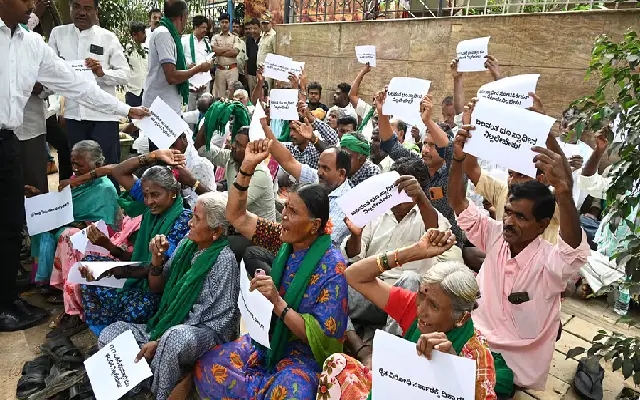


On Bengaluru’s outer rim, areas like Devanahalli have been swept by the tide of rapid urbanisation. Farmlands now sit squeezed between hotels, highways, and factories. Two decades after the Kempegowda Airport arrived, uncertainty still shadows families forced out for its construction.
Bhagyalakshmi, a 70-year-old former farmer, now survives on daily wages in Balepet Colony. Promised amenities — from hospitals to public halls — never came. Many, like her, were left with only enough compensation to build a home, not a future.
Once self-reliant through farming, families lost more than land — they lost food security and independence. As more farmers sell plots to real estate agents or industrial projects, North Bengaluru’s green cover steadily shrinks.
Though close to high-paying jobs in new economic zones, rural communities often lack the education or skills needed. Temporary jobs in security or housekeeping offer little stability. A study revealed that after selling land, over a third of families didn’t take up any new trade.
Corruption and middlemen eat into compensation. Legal gaps, missing documents, and fake acquisition notices worsen distrust. Many end up with less than promised.
The absence of clear regional planning leads to chaotic development. Agricultural pockets are surrounded by concrete, making cultivation harder due to pollution and lack of water.
Experts stress the need for zoning reforms, stronger village voices in planning, and preservation of peri-urban agriculture. As Gangappa, a protesting farmer, puts it: “Everyone wants land, but who thinks about those who live on it?”
Read Also: