







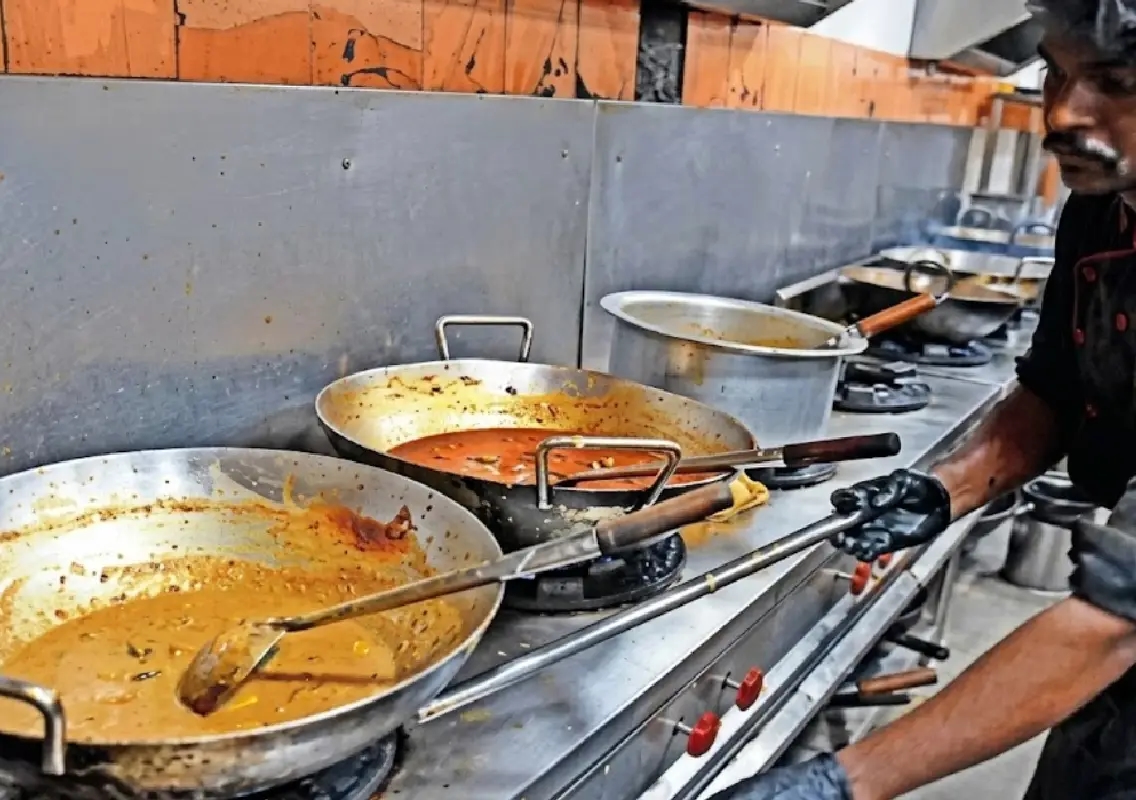


As Karnataka faces an acute LPG shortage linked to the ongoing West Asia tensions, many eateries and darshinis across the state have been forced to shut temporarily or reduce their menus. However, one restaurant in Bengaluru’s busy Koramangala neighbourhood has managed to continue operations without disruption—thanks to biogas produced from household waste.
The Empire Restaurant outlet in 5th Block has become the largest beneficiary of a local biogas initiative that converts domestic wet waste into cooking fuel. The plant processes waste from nearly 5,000 households, ensuring a steady fuel supply even during the current LPG cylinder shortage.
Biogas powers most kitchen operations
The biogas facility is a collaborative project involving Bruhat Bengaluru Solid Waste Management Ltd, Saahas, and clean energy company Carbon Masters. For nearly four years, the restaurant’s kitchen has been powered largely by this renewable fuel.
According to restaurant chain CEO Shakir Haq, the early adoption of biogas has proved to be a major advantage during the current crisis.
“Since it is a direct supply line, we are not facing the disruptions seen with LPG cylinders. Looking at the situation now, I regret not expanding this model to more outlets earlier,” Haq said.
Among the chain’s 60 outlets, the Koramangala branch is currently the only one insulated from the fuel shortage.
Turning household waste into cooking fuel
The plant converts wet waste into cooking gas through a controlled anaerobic digestion process. According to Som Narayan, about 25–30 kg of biogas can be generated from processing one tonne of waste.
At present, the Koramangala outlet consumes roughly 150 kg of biogas daily, enabling nearly 80% of its kitchen operations to function without LPG.
The restaurant chain is now exploring a dual-fuel strategy, where bulk cooking may be carried out at the Koramangala outlet and distributed to other branches, allowing the chain to continue operating even with a reduced menu.
Renewed focus on Bengaluru’s biogas plants
The ongoing LPG crunch has drawn renewed attention to Bengaluru’s waste-to-energy initiatives. According to civic authorities, the city currently has 12 biogas plants with a combined processing capacity of around five tonnes of waste per day. However, only six plants are operational, with much of their output currently used for powering streetlights.
Officials believe the current crisis could encourage greater adoption of sustainable waste-to-energy solutions, particularly in a city that generates thousands of tonnes of wet waste daily.
If expanded effectively, such initiatives could not only reduce landfill waste but also provide an alternative cooking fuel for businesses and communities.