







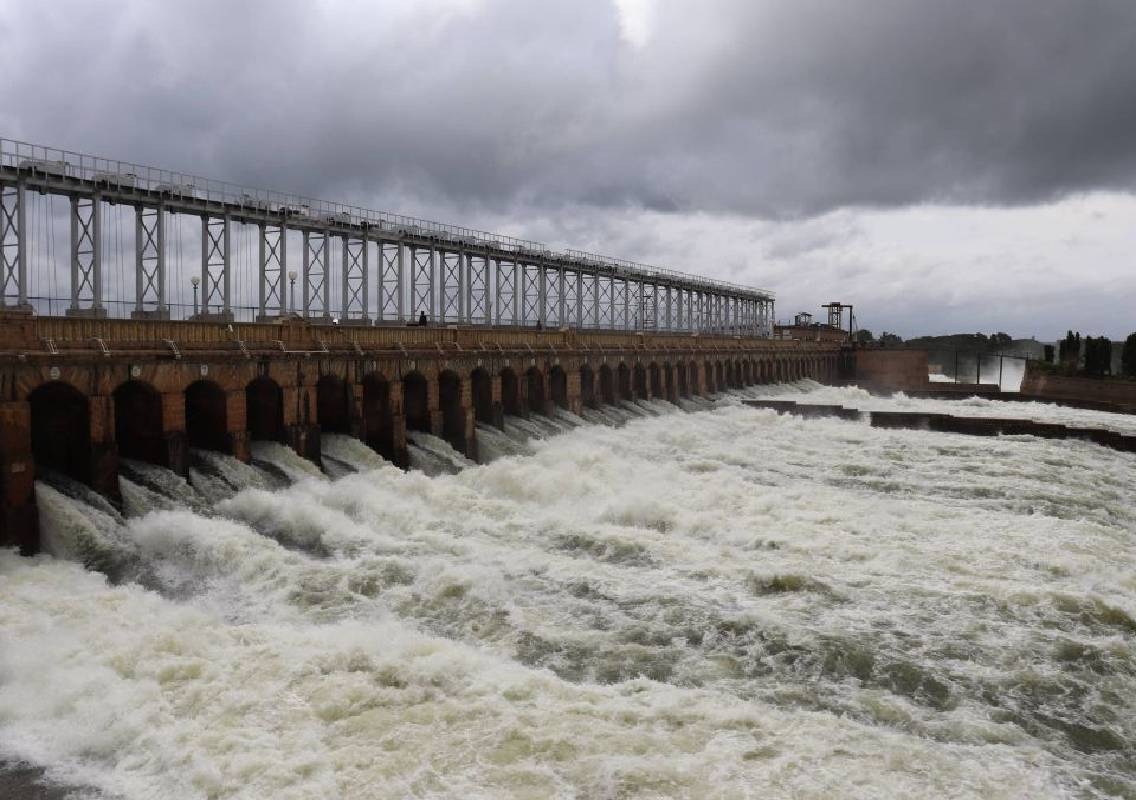


Bengaluru: The Cauvery Water Regulation Committee (CWRC) has directed Karnataka to ensure a flow of 9,000 cusecs of Cauvery water to Tamil Nadu every day for 15 days, in a fresh development in the long-running inter-State water dispute. The direction, issued at the committee’s 141st meeting on August 25, requires Karnataka to release water from its reservoirs so that the stipulated flow is maintained at the Biligundulu border point.
The 15-day release is expected to amount to approximately 11.6–11.7 thousand million cubic feet (TMC) of water. The decision has come amid renewed demands from Tamil Nadu for its share of Cauvery water and concerns in Karnataka over reservoir levels, drinking water requirements and the needs of farmers in the State.
The latest order also follows a Supreme Court direction asking Tamil Nadu to approach the Cauvery Water Management Authority (CWMA) with its grievance over the release of its proportionate share. The CWMA subsequently met in Delhi and upheld the CWRC recommendation.
CWRC directs 9,000 cusecs daily for 15 days
At its meeting on August 25, the CWRC recommended that Karnataka maintain a continuous flow of 9,000 cusecs at Biligundulu for 15 days. The water is to be released from Karnataka’s reservoirs to ensure that the required flow reaches the inter-State border.
The quantity works out to approximately 11.66 TMC over the 15-day period. The committee’s decision comes after considering the water availability and requirements raised by the two States.
Tamil Nadu had sought a substantially higher quantity of water. Karnataka, meanwhile, argued that it was difficult for the State to release larger quantities given its own water requirements.
The latest figure therefore represents a middle ground between the competing demands presented before the water management authorities, although Karnataka has continued to raise concerns about its ability to release water.
Karnataka sought reduction in water release
Karnataka officials opposed the higher demand from Tamil Nadu during discussions before the CWMA. According to Karnataka official Gaurav Gupta, the State requested that the recommended release be reduced from 9,000 cusecs to 6,000 cusecs. Tamil Nadu, on the other hand, reportedly sought an increase to 28 TMC of water.
After considering the positions of both States, the CWMA decided to uphold the CWRC recommendation.
The decision means Karnataka will now have to ensure the stipulated 9,000-cusec flow at Biligundulu for the specified period. The issue is likely to remain politically sensitive in Karnataka, where farmers and political organisations have repeatedly opposed releases to Tamil Nadu when reservoir storage is considered insufficient.
For Tamil Nadu, the decision provides an immediate allocation that the State says is important for agriculture and drinking water requirements.
CWMA upholds CWRC recommendation
The Cauvery Water Management Authority held its 56th meeting in New Delhi on August 25 under the chairmanship of S K Haldar. Representatives and officials from Karnataka, Tamil Nadu, Puducherry, Kerala and Andhra Pradesh participated in the meeting.
The meeting was convened shortly after the Supreme Court directed Tamil Nadu to raise its grievance before the CWMA rather than seeking an immediate order from the apex court.
The Supreme Court had been hearing Tamil Nadu’s plea seeking directions regarding Karnataka’s release of its proportionate share of Cauvery water. On August 24, the court asked Tamil Nadu to pursue the issue before the designated water management authority.
With the CWMA now upholding the CWRC’s recommendation, the immediate responsibility for implementing the release lies with Karnataka.
Water to benefit Kuruvai cultivation in Tamil Nadu
The release is expected to benefit Kuruvai cultivation in Tamil Nadu, apart from helping meet drinking water requirements. Kuruvai is a short-duration paddy crop cultivated in the Cauvery delta, making timely availability of irrigation water particularly important.
Tamil Nadu has consistently maintained that adequate Cauvery water is necessary to protect standing crops in the delta region. Water availability during the agricultural season has been a recurring point of contention between the two States.
The latest decision could provide some relief to farmers in Tamil Nadu who depend on Cauvery water for irrigation. However, the quantum of water remains below the larger quantity sought by the State.
The authorities will also have to monitor the actual flow at Biligundulu to determine whether the stipulated quantity is being maintained throughout the 15-day period.
Karnataka faces concerns over its own water needs
Karnataka’s objections are rooted in concerns about its own water requirements. The State has repeatedly argued during Cauvery disputes that water stored in its reservoirs must also meet the needs of its farmers and residents.
The latest release order comes after a period of intense discussion over the availability of Cauvery water. Karnataka has sought to balance the requirements of its own regions with its obligations under the Cauvery water-sharing framework.
The issue is especially sensitive in the southern districts of Karnataka, where farmers depend heavily on Cauvery basin reservoirs and rivers for irrigation.
On August 25, farmers in Karnataka also protested against the release of water from the Kabini reservoir to Tamil Nadu, reflecting the concerns among sections of the farming community over water availability and crop requirements.
The protests highlight the difficult political and agricultural balance surrounding every release decision.
Earlier order had sought 12,000 cusecs
The latest 9,000-cusec direction follows an earlier Cauvery water release order. The CWRC had previously directed Karnataka to release 12,000 cusecs of water daily to Tamil Nadu for 15 days from August 12, a decision that was subsequently upheld by the CWMA.
The reduction to 9,000 cusecs in the latest recommendation provides some relief to Karnataka compared with the earlier direction.
However, the dispute over the quantity of water remains unresolved. Tamil Nadu has argued for a larger release, while Karnataka has consistently sought to limit the amount in view of its own requirements.
The difference in the positions of the two States means that the Cauvery issue is likely to remain under close observation even after the current 15-day period ends.
Cauvery dispute continues despite institutional mechanism
The latest development once again demonstrates the role of the CWRC and CWMA in managing the Cauvery dispute. These institutions were created to monitor water releases and implement the broader water-sharing framework following the Supreme Court’s decisions on the Cauvery dispute.
The authorities are expected to assess reservoir storage, rainfall, inflows, crop requirements and other relevant factors before issuing directions.
The Supreme Court’s decision to direct Tamil Nadu towards the CWMA also reinforces the role of the designated water management mechanism in resolving disputes between the two States.
However, the history of the Cauvery dispute shows that disagreements over release quantities can quickly become politically sensitive. Orders for water releases have previously resulted in protests and political mobilisation in Karnataka, while farmers in Tamil Nadu have also demanded greater quantities during periods of agricultural stress.
What happens after 15 days?
The immediate order applies for 15 days, during which Karnataka is expected to maintain the 9,000-cusec flow at Biligundulu.
The situation after that period will depend on water availability, reservoir storage, rainfall, inflows and the requirements of both States. Further decisions could therefore be required if Tamil Nadu seeks additional releases or if the prevailing water conditions change.
The two States will also continue to monitor the Cauvery basin as the agricultural season progresses.
For Karnataka, the challenge will be to comply with the authority’s direction while ensuring sufficient water for domestic and agricultural requirements. Tamil Nadu, meanwhile, will be watching the actual inflow at Biligundulu and the quantity reaching its reservoirs and irrigation systems.
Why Biligundulu is important
Biligundulu, located near the Karnataka-Tamil Nadu border, plays an important role in monitoring Cauvery water flows between the two States. The quantity of water reaching the point is used as a key reference while assessing Karnataka’s releases to Tamil Nadu.
By directing Karnataka to ensure a flow of 9,000 cusecs at Biligundulu, the CWRC has specified the level that needs to be maintained at the inter-State border.
This also means that the amount released from Karnataka’s reservoirs may not always be identical to the quantity eventually recorded at Biligundulu because river flows and other factors can influence the movement of water downstream.
Monitoring at the border point will therefore be crucial during the 15-day period.
Long-running Cauvery dispute enters another phase
The latest order is another chapter in a dispute that has continued for decades. The Cauvery issue involves competing demands from Karnataka and Tamil Nadu, with both States relying heavily on the river for agriculture and drinking water.
Every release decision has the potential to trigger political reactions because water availability directly affects farmers and urban populations in both regions.
The present dispute is being handled through the established institutional mechanism, with the CWRC making its recommendation and the CWMA subsequently upholding it.
The Supreme Court’s recent intervention has also emphasised that grievances should be addressed through the designated authority. This could help keep future disputes within the institutional framework, although disagreements over the actual quantity of water are likely to continue.
Conclusion
The Cauvery Water Regulation Committee has asked Karnataka to ensure a flow of 9,000 cusecs of water daily to Tamil Nadu for 15 days, equivalent to approximately 11.66 TMC during the period. The CWMA subsequently upheld the recommendation at its meeting in New Delhi.
The release is expected to support Kuruvai cultivation and drinking water requirements in Tamil Nadu, while Karnataka continues to raise concerns over its own agricultural and domestic needs. The State had sought a reduction to 6,000 cusecs, whereas Tamil Nadu sought a significantly higher quantity.
With the latest order now upheld, attention will turn to Karnataka’s implementation of the directive and the actual flow recorded at Biligundulu. The developments after the 15-day period will depend largely on rainfall, reservoir storage and the water requirements of both States.