







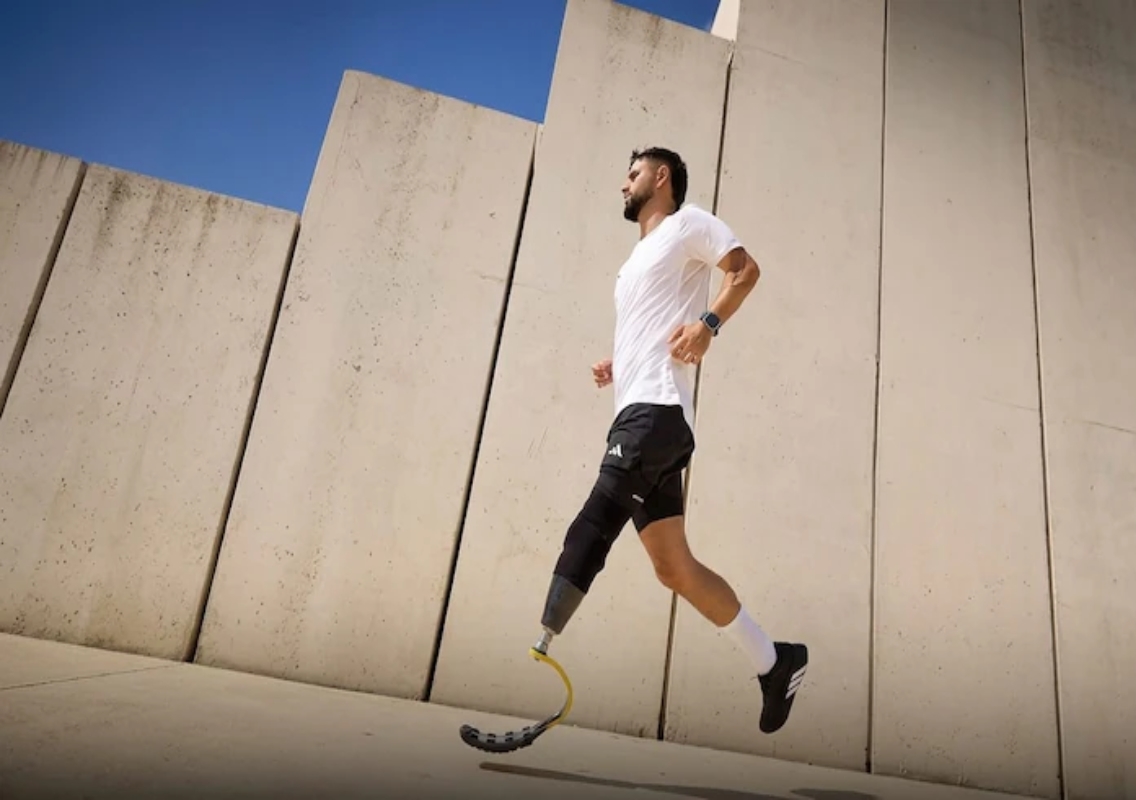


Tel Aviv: German sportswear giant Adidas is facing boycott calls after featuring Shalev Biton, a wounded Israeli military veteran, in a campaign promoting its Single Shoe Service in Israel. The campaign has triggered criticism from pro-Palestinian activists, who object to the company’s choice of an Israeli former soldier as the face of an accessibility-focused initiative.
The controversy has spread across social media, where the hashtag #BoycottAdidas has gained traction. Activists and public figures have urged consumers to boycott the sportswear brand, arguing that highlighting an Israeli soldier while Palestinians, including children, have suffered limb loss during the Gaza conflict is insensitive.
However, important details about Biton’s injury and the Adidas programme have also been highlighted amid the online debate. Biton lost his left leg in 2021, before the current Gaza war, and was not fighting inside Gaza when he was wounded. Adidas has also said the Single Shoe Service was not created specifically for Israel or military personnel.
Who is Shalev Biton?
Biton is a former combat soldier with the Israel Defense Forces’ Nahal Brigade. According to Ynet, cited by NDTV Profit, he lost his left leg after an anti-tank missile fired from Gaza struck a military vehicle near the Gaza border in May 2021.
Following the injury and subsequent amputation, Biton underwent rehabilitation and eventually returned to running with a prosthetic limb. His experience with buying footwear became relevant to Adidas’ accessibility initiative because he needed only one shoe from a conventional pair.
Biton announced his partnership with Adidas on Instagram on August 26. He explained that after returning to running, he repeatedly had to purchase complete pairs of running shoes even though he could use only one shoe.
His participation in the campaign subsequently became the focus of criticism directed at Adidas.
What is Adidas’ Single Shoe Service?
The Single Shoe Service allows people who need only one shoe, including amputees and people with limb differences, to purchase individual shoes instead of being required to buy a complete pair.
For people who use a prosthetic limb or have another condition affecting one foot, conventional footwear purchases can mean paying for a shoe they may not be able to use. The Adidas initiative is designed to address that issue by offering individual footwear.
According to NDTV Profit, Adidas launched the initiative in Europe in January 2026 and subsequently expanded it to markets across Asia and the Middle East. The company has stressed that the programme is part of a broader accessibility effort rather than an initiative designed specifically for Israel or soldiers.
Why has the campaign triggered criticism?
The controversy centres less on the Single Shoe Service itself and more on the person selected to represent the initiative in Israel.
Pro-Palestinian activists have criticised Adidas for featuring Biton because of his background as an Israeli military veteran. They argue that the campaign’s imagery is particularly problematic amid the ongoing Gaza conflict and the large number of Palestinians who have suffered injuries and amputations.
Some social media posts have also circulated claims about the circumstances surrounding Biton’s injury. However, NDTV Profit reported that Biton was wounded in 2021, before the current Gaza war, and was not fighting inside Gaza when the incident occurred.
That distinction is important because online discussions have sometimes presented his injury without the full timeline.
#BoycottAdidas gains traction online
The criticism has developed into a broader social-media campaign against Adidas.
The #BoycottAdidas hashtag has gained traction, with some posts receiving hundreds of thousands or even millions of views. Activists and public figures have also called on consumers to avoid the brand.
The episode demonstrates how global brands can become involved in politically sensitive debates through marketing campaigns, particularly when campaigns intersect with ongoing conflicts.
For Adidas, the controversy is occurring around an initiative that the company positions as an accessibility measure intended to expand consumer choice.
Adidas defends the accessibility initiative
Adidas has defended the Single Shoe Service and clarified that the programme was not developed specifically for Israel or military personnel.
The company said the service was launched in Europe in January 2026 and is intended to expand choice and accessibility for athletes and consumers globally. Adidas also said the initiative was developed in cooperation with communities and professional organisations, including the British Paralympic Association.
This means the wider programme predates the Israeli campaign featuring Biton and is not exclusively connected to the Israel-Gaza conflict.
The company has nevertheless faced continued criticism over its decision to use Biton as the face of the service in Israel.
A controversy over representation, not the service itself
The Adidas episode highlights the complicated relationship between corporate marketing and geopolitical events.
The Single Shoe Service addresses a practical issue for people with limb differences and amputations. However, the selection of an Israeli military veteran to promote the initiative has caused sections of the public to view the campaign through the lens of the ongoing Gaza conflict.
The situation also illustrates the importance of distinguishing verified facts from claims circulating on social media. Biton’s injury occurred in 2021, while the current Gaza war began later. At the same time, the criticism surrounding Adidas’ campaign is genuine, with boycott calls continuing to spread online.
What the controversy means for Adidas
For Adidas, the immediate issue is largely reputational rather than a reported change to the Single Shoe Service itself.
The company has not indicated that the accessibility programme will be withdrawn. Instead, its public explanation has focused on the global nature of the initiative and its purpose of making footwear more accessible.
The controversy nevertheless places the brand in a difficult position. Adidas must balance its accessibility messaging with concerns from consumers and activists who object to the campaign’s association with an Israeli military veteran.
Whether the boycott calls develop into a sustained consumer movement remains to be seen. For now, the campaign has placed Adidas at the centre of a wider debate over corporate branding, representation and the Israel-Gaza conflict.