


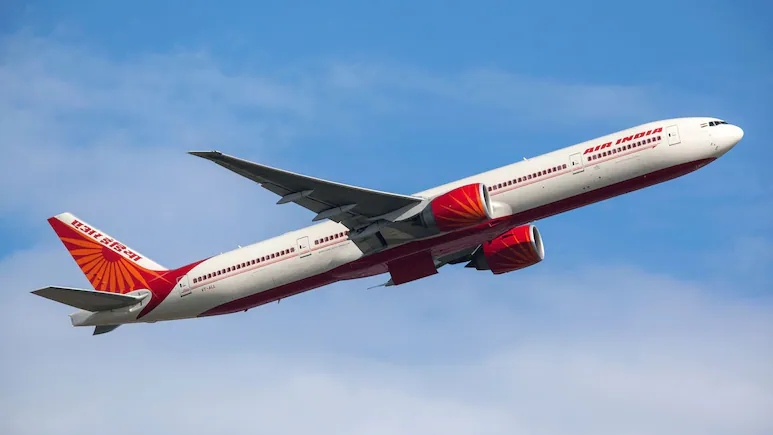


New Delhi: Air India and Air India Express will raise fuel surcharges on domestic and select international flights from October 9, making air travel more expensive for passengers booking affected routes after the revised charges take effect.
The airlines have revised their fuel surcharge structure in response to the continued rise in aviation turbine fuel (ATF) prices. The higher surcharge will apply to new bookings made from the specified times on October 9.
For Air India Express, the revised charges will apply to bookings made from 12 am on October 9. Air India will introduce the new surcharge for bookings made from 11 am the same day.
The increase comes as airlines face higher operating costs because of elevated jet fuel prices. Fuel is one of the largest expenses for airlines, making changes in ATF prices an important factor in determining ticket costs.
Domestic Air India fuel surcharge revised
For domestic flights, the new fuel surcharge will be linked to the distance travelled.
Passengers will pay a one-way surcharge of Rs 400 for sectors covering up to 500 km.
For flights between 501 km and 1,000 km, the surcharge will be Rs 600.
Journeys between 1,001 km and 1,500 km will attract a surcharge of Rs 850.
Flights covering 1,501 km to 2,000 km will carry a surcharge of Rs 1,200.
The same Rs 1,200 surcharge will apply to domestic flights travelling more than 2,000 km.
The revised structure means the additional fuel component will increase with distance for most domestic sectors, although the charge is capped at Rs 1,200 for flights beyond 1,500 km.
The new charges will be added to the overall ticket cost along with the applicable base fare, taxes and other charges.
International flights to get higher surcharge
The increase is considerably larger for several international routes.
For one-way journeys to or from India, passengers travelling to North America will face a fuel surcharge of $215.
Flights to Australia will attract a surcharge of $210.
For Europe, including the UK, the revised surcharge will be $135 per one-way journey.
Passengers travelling to West Asia and the Middle East will pay a surcharge of $55.
The international surcharge applies to the specified route categories rather than being a uniform increase across all overseas destinations.
The latest revision follows several changes to Air India’s fuel surcharge structure this year as airlines have attempted to respond to sharp movements in global jet fuel prices.
Why ATF prices matter to airfares
Aviation turbine fuel is a major component of airline operating costs.
When jet fuel prices rise, airlines face higher expenses for operating each flight. Carriers can absorb some of the increase, raise base fares or introduce a separate fuel surcharge to recover part of the additional cost.
Air India had already moved to a distance-based domestic fuel surcharge structure in April. At that time, the group announced charges ranging from Rs 299 for flights of up to 500 km to Rs 899 for sectors beyond 2,000 km.
The latest revision increases those charges further, reflecting the continued pressure from fuel prices.
Air India’s earlier announcements also highlighted how sharply higher jet fuel costs can affect airline economics. In March, the company said ATF accounted for nearly 40% of an airline’s operating costs and linked its surcharge measures to the steep increase in jet fuel prices.
New bookings will bear the revised charges
The higher surcharge will apply according to the booking times announced by the two airlines.
For Air India Express, the new rates will take effect for bookings made from 12 am IST on October 9.
For Air India, the revised charges will apply from 11 am IST on October 9.
Therefore, passengers who book flights after the respective cut-off times will see the revised fuel component reflected in their fares.
The final amount paid by a passenger will depend on the route, fare class, taxes and other applicable charges, meaning the surcharge does not represent the entire increase in the ticket price.
Earlier fuel surcharge increases
The Air India group has changed its surcharge structure several times in 2026 as jet fuel prices have risen.
In March, the airline introduced a phased fuel surcharge covering domestic and international routes. The initial domestic surcharge was Rs 399, while separate charges were introduced for international regions.
In April, the group shifted domestic flights to a distance-based system following government measures concerning the increase in domestic ATF prices.
That structure set charges at Rs 299 for flights up to 500 km, Rs 399 for 501–1,000 km, Rs 549 for 1,001–1,500 km, Rs 749 for 1,501–2,000 km and Rs 899 for flights beyond 2,000 km.
The October revision therefore represents another increase in the additional fuel component paid by passengers.
What the increase means for passengers
The immediate impact will be felt by passengers booking affected Air India and Air India Express routes after October 9.
For domestic travellers, the additional amount will range from Rs 400 to Rs 1,200 per one-way sector, depending on the distance.
The increase could be more noticeable for international passengers, particularly those travelling to North America, Australia or Europe, where the surcharge is denominated in US dollars.
However, the fuel surcharge should not be confused with a blanket increase in the base fare. The overall ticket price continues to be determined by several components, including the basic fare, fuel surcharge, taxes and other fees.
Air India and Air India Express can also review their surcharge levels as fuel prices change.
Airlines face pressure from higher fuel costs
The surcharge increase comes at a challenging time for the Indian aviation industry.
Higher fuel costs can put pressure on airline margins, particularly when carriers are unable to pass the entire increase on to passengers because of competition or weaker demand.
The impact can be especially significant during periods when airlines are already dealing with other operating expenses, including aircraft leasing, maintenance, airport charges and labour costs.
Fuel surcharges provide airlines with a way to respond to sudden changes in jet fuel prices without necessarily making an equivalent permanent change to their base fares.
For passengers, however, the distinction makes little difference to the final amount paid: a higher surcharge still raises the cost of travelling.
Airfares could remain sensitive to fuel prices
The latest increase highlights how closely airfares remain linked to global energy markets.
ATF prices can be influenced by crude oil prices, geopolitical developments, refinery operations, supply disruptions and currency movements. Airlines operating in India can also face additional pressure from domestic taxes and other costs associated with aviation fuel.
If fuel prices remain elevated, airlines could continue to adjust their surcharge structures.
Conversely, a sustained decline in jet fuel prices could create room for airlines to reduce the additional charges, depending on their operating costs and pricing strategies.
For now, passengers flying on affected Air India and Air India Express routes should expect the higher fuel component to be reflected in new bookings made from October 9.