







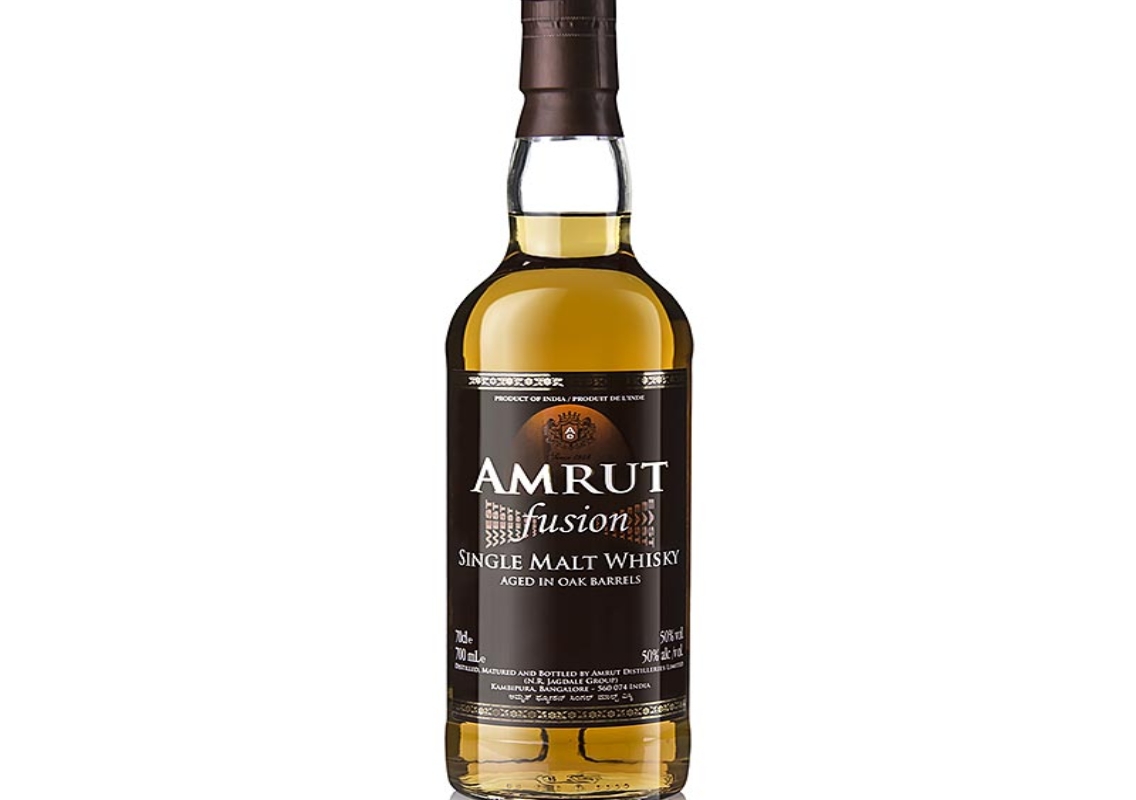


Bengaluru: Amrut Distilleries expects its sales to remain largely flat until 2030 as demand for its single malt whisky continues to outpace production. The Bengaluru-based distiller is facing supply constraints because Indian single malt whisky requires years of maturation before it can be sold, limiting the company’s ability to increase volumes quickly.
Amrut Distilleries Managing Director Rakshit Jagdale said the company would be unable to significantly increase single malt volumes in the coming years. The distillery is therefore expanding its product portfolio to reduce its dependence on a category where production cannot be scaled up immediately.
The company is also assessing the impact of lower-priced imported Scotch whisky following the India-UK trade agreement, which could increase competition for Indian spirits brands.
Single malt production constraints limit growth
Amrut Distilleries has an inventory of around 75,000 nine-litre cases of single malt whisky, according to the report. The company expanded its distillation capacity to 1.3 million to 1.4 million litres last year.
However, higher distillation capacity does not translate immediately into more whisky available for sale. Indian single malt whisky must mature for at least three years, meaning newly produced spirit needs time before it can reach the market.
This production cycle is limiting Amrut’s ability to respond quickly to rising demand. Even as the premium whisky category attracts more consumers, the company cannot immediately increase finished-product volumes to match the market’s requirements.
The expected period of largely flat sales until 2030 reflects this gap between demand and the time required to expand the supply of matured whisky.
Amrut expands its premium whisky portfolio
To address the supply challenge, Amrut is broadening its product range. The company has introduced blended malt whisky to participate in the premium spirits market without relying entirely on single malt sales.
Blended malt whisky offers the company another product category to develop while its single malt inventory remains constrained by maturation requirements. The strategy could help Amrut serve a wider range of consumers and diversify its revenue sources.
The distillery is also planning to introduce a more affordable single malt whisky in North India before December, the report said. The product is expected to be priced around 15% below its Fusion brand.
A lower price could help Amrut reach consumers who want to explore Indian single malt whisky at a more accessible price point. It may also allow the company to strengthen its presence in a competitive market without depending solely on increasing production volumes.
The planned launch is part of the company’s broader effort to expand its customer base while managing the limitations of its existing single malt supply.
Cheaper Scotch imports create fresh competition
The India-UK free trade agreement could create additional challenges for Indian whisky manufacturers by making some imported Scotch brands more competitively priced.
According to the report, Jagdale said prices of certain imported Scotch brands had fallen by more than 15%, affecting Amrut’s sales in North India.
The change in pricing could influence consumer choices in the premium whisky segment, where Indian single malts compete with international brands. Lower-priced Scotch imports may put pressure on domestic manufacturers to review their pricing and positioning.
Amrut is avoiding major price reductions while it assesses the agreement’s impact. The company is also monitoring how the changing market affects demand for Indian spirits.
The report noted that increased competition could be particularly challenging for newer Indian blended whisky brands. For domestic producers, the challenge will be to maintain their market position while responding to changes in the relative prices of imported and locally produced products.
Company explores opportunities beyond whisky
Alongside its whisky business, Amrut Distilleries also sells rum and brandy. The company is exploring a partnership with Mexican distilleries to develop a tequila brand.
Under the potential arrangement, the product could initially be bottled in Mexico, with the possibility of moving bottling operations to India at a later stage.
The proposed venture would give Amrut an opportunity to explore another category of premium spirits. However, the partnership remains an area under consideration, rather than a confirmed shift in production.
Diversifying into additional products could help the company broaden its portfolio as it navigates the constraints affecting single malt whisky.
Indian single malt market attracts more players
Amrut and Paul John were among the early Indian single malt whisky brands, having launched in the 2000s. Since then, the domestic market has attracted additional producers and international spirits companies.
Indian brands such as Indri and Kamet from Piccadilly Agro have entered the segment, while global companies have also expanded their premium offerings in India.
Pernod Ricard has introduced Longitude 77, while Diageo has developed Godawan. Their presence reflects the growing competition in India’s single malt and premium spirits categories.
For Amrut, this changing market creates opportunities as well as challenges. Demand for Indian single malt whisky provides room for growth, but maturation requirements prevent the company from increasing supply quickly enough to fully capitalise on that demand.
The distillery is responding by expanding its portfolio, planning a more affordable single malt and exploring opportunities in other spirits categories. At the same time, it must assess the impact of cheaper Scotch imports on its pricing and sales.
Amrut’s outlook through 2030 will therefore depend on how it manages its maturation pipeline, develops alternative products and responds to competition in India’s evolving premium spirits market.