







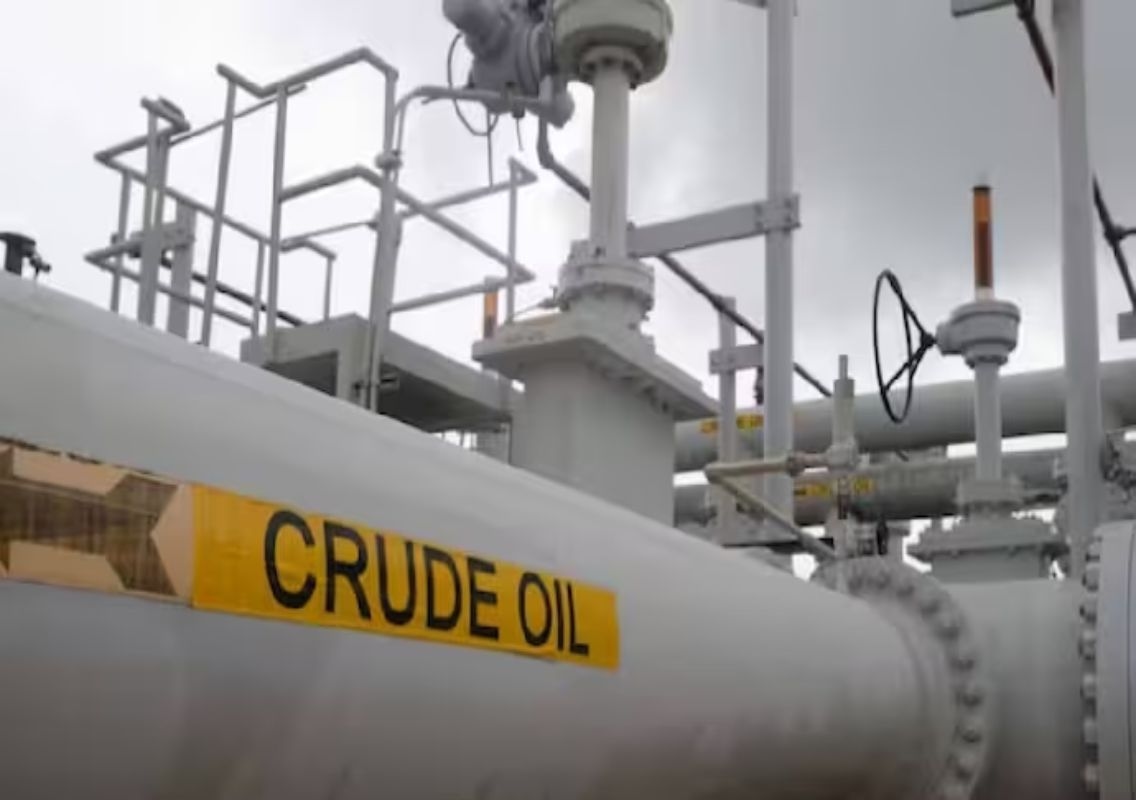


New Delhi: Global crude oil prices are once again edging towards the $110 per barrel mark, raising concerns for major importing economies such as India. Brent crude, the benchmark India closely tracks, has surged past $107 in recent sessions, driven by geopolitical tensions and supply uncertainties.
While the rise may appear gradual, experts caution that sustained high crude prices can have far-reaching implications for India’s economy—impacting inflation, currency stability, government finances and corporate profitability. Here are seven key warning signals that policymakers, businesses and consumers should closely monitor.
Brent crude back in the danger zone
Brent crude trading above $107 signals a return to triple-digit oil prices, a level often associated with macroeconomic stress for importing countries.
What makes this rise significant is the pace. A sharp rebound from lower levels tends to trigger stronger market reactions than a slow, gradual increase. If prices breach and sustain above $110, it could signal deeper supply-side concerns globally.
India’s heavy import dependence
India imports nearly 85% of its crude oil requirements, making it highly vulnerable to global price fluctuations.
Unlike oil-producing nations, India cannot cushion itself from international price shocks. Any sustained increase in crude prices directly inflates the country’s import bill, widening trade deficits and putting pressure on economic stability.
The $10 impact on the economy
Economists have long highlighted that every $10 rise in crude prices significantly affects India’s current account deficit and increases dollar outflows.
At higher price levels, the impact becomes more pronounced. A rise from $90 to $110 is far more damaging than an increase from $70 to $80, as the absolute import burden grows sharply. This can ripple through the economy, affecting inflation, fiscal balance and growth.
Fuel prices may not reflect reality yet
Despite the global surge, petrol and diesel prices in India have remained relatively stable in many regions.
This is due to a combination of factors, including taxes, exchange rates, and government pricing policies. However, such stability often creates a lag effect. If crude prices remain elevated, adjustments are likely to follow—either through higher retail prices or increased fiscal pressure on the government.
Rupee under potential pressure
Higher crude prices increase India’s demand for US dollars to pay for imports. This can weaken the rupee, especially if global investors turn risk-averse.
A depreciating rupee further raises the cost of imported oil, creating a feedback loop that amplifies economic stress. This crude-currency linkage is a critical factor closely tracked by policymakers.
Sector-specific impact on businesses
Not all sectors feel the impact of rising crude prices at the same time. However, certain industries are particularly vulnerable:
- Aviation: Higher aviation turbine fuel (ATF) costs
- Paint and chemical companies: Crude-linked raw materials
- Tyre manufacturers: Rubber and petroleum derivatives
- Logistics firms: Increased transportation costs
These sectors often experience margin pressure, which can later reflect in earnings and stock market performance.
Lessons from the last $110 phase
The last time crude oil sustained levels above $110 was during the 2022 Russia-Ukraine conflict, which disrupted global supply chains.
That period saw a surge in global inflation, aggressive interest rate hikes by central banks, and economic strain across emerging markets, including India. While current conditions may differ, the historical precedent underscores why the $110 threshold is closely watched.
What India should watch now
The immediate concern is not whether crude briefly touches $110, but whether it stays elevated over a prolonged period.
A short-term spike can be managed through policy tools and reserves. However, sustained high prices could:
- Push inflation higher
- Widen the current account deficit
- Pressure the rupee
- Increase input costs for businesses
- Affect overall economic growth
Conclusion
Crude oil nearing $110 is more than just a market headline—it is a critical economic signal for India. With high import dependence and interconnected macroeconomic factors, sustained elevated prices could trigger widespread impacts.
For now, the situation calls for close monitoring. Policymakers, businesses and consumers alike must remain prepared for potential ripple effects, as global oil dynamics continue to evolve.