









New Delhi: The Food Safety and Standards Authority of India (FSSAI) has ordered CG Foods India to stop manufacturing two Wai Wai-branded bhujia products after food safety inspectors found serious hygiene violations at the company’s factory in Rajasthan.
The action followed an inspection in which officials found broken noodles collected from the factory floor being reprocessed into bhujia without heat treatment. Authorities also seized nearly 32,000 kg of stock and found 1,925 boxes of expired finished products at the facility.
CG Foods India is part of CG Corp Global, the conglomerate led by Nepalese billionaire Binod Chaudhary, who is widely known as the “Noodle King” for building the Wai Wai instant-noodle brand.
FSSAI flags floor-collected noodles
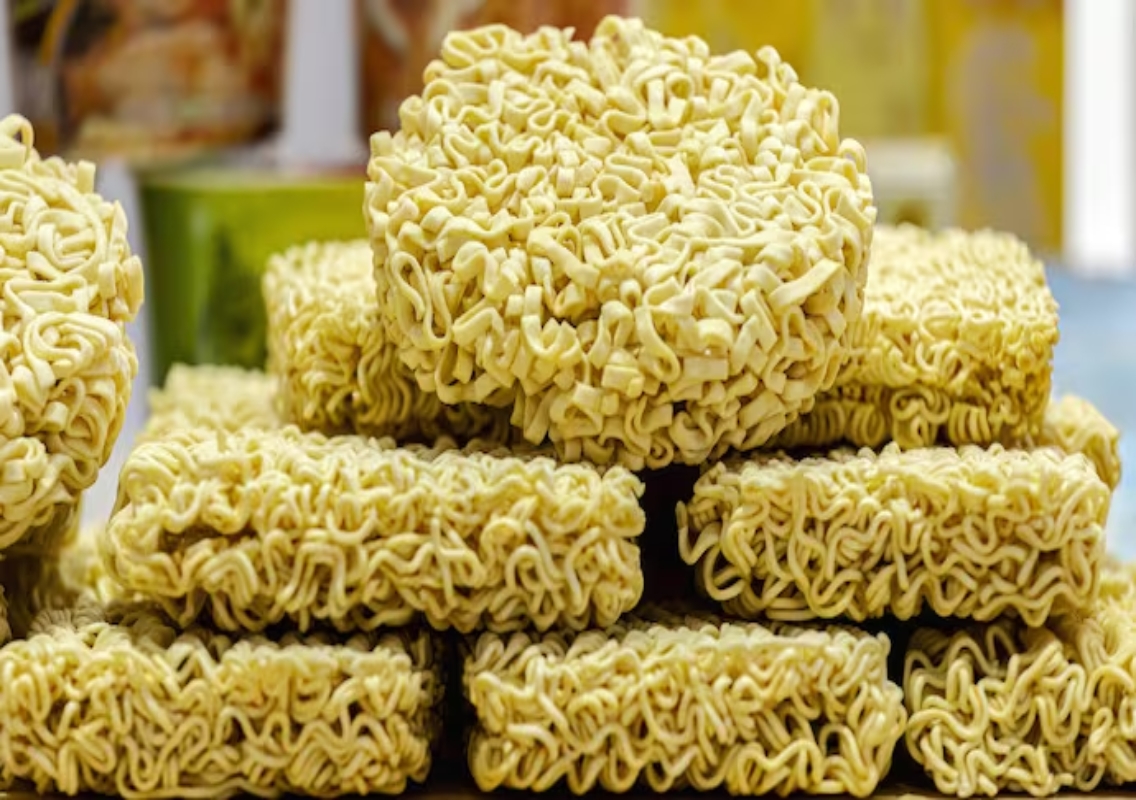
According to the FSSAI findings reported by Reuters and cited by India Today, inspectors discovered that broken noodles collected from the factory floor were being reprocessed to manufacture bhujia.
The regulator said the reprocessed material was being used without heat treatment. The finding has raised concerns about hygiene and food-handling practices at the manufacturing facility.
The inspection focused specifically on two Wai Wai-branded bhujia products. The action therefore relates to those products and the manufacturing practices identified during the inspection, rather than representing a blanket ban on all Wai Wai products.
Bhujia is a popular fried Indian snack that is widely sold in packaged form across the country. The discovery at a facility belonging to a major packaged-food company has added to growing scrutiny of hygiene standards in India’s food industry.
Nearly 32,000 kg of stock seized
The food safety authorities seized nearly 32,000 kg of stock from the Rajasthan facility during the action.
Officials also found 1,925 boxes containing expired finished products. The presence of expired packaged food at the manufacturing facility added another concern to the findings.
The FSSAI has initiated legal proceedings against the food business operator, while samples collected during the inspection are being tested. The testing process will help authorities determine whether further regulatory action is required.
The latest development shows that the regulator’s action is not limited to an inspection warning. Seizure of stock, sample testing and legal proceedings are now part of the case.
Who owns the Wai Wai brand?
CG Foods India is part of CG Corp Global, a business group led by Binod Chaudhary.
Chaudhary is Nepal’s only billionaire and has built a prominent business empire spanning multiple sectors. His association with Wai Wai has made the instant-noodle brand particularly well known across South Asia and several international markets.
The company manufactures Wai Wai products in India, while the brand itself has become one of the better-known instant-noodle names in the country’s packaged-food market.
The regulatory action at the Rajasthan facility could therefore attract attention from consumers and the wider packaged-food industry, particularly because of the brand’s scale and recognition.
Action comes amid wider food safety crackdown
The FSSAI action against CG Foods comes at a time when food safety authorities across India are increasing inspections of restaurants, factories, warehouses and other food businesses.
Several recent cases have involved expired products, poor hygiene, improper storage and suspected violations of food-safety requirements.
In Maharashtra, for example, food safety officials recently raided a Navi Mumbai warehouse and found expired and nearly expired branded products with allegedly altered expiry dates and nutrition labels. The products included brands such as Nestle, Unilever, Coca-Cola and PepsiCo.
The Maharashtra action involved nearly 5,000 cartons of consumer products stored at the facility, including Lay’s and Kurkure chips, Maggi noodles, Thums Up and Limca beverages and Knorr Mushroom Soup.
These separate enforcement actions indicate increasing regulatory attention towards the handling, storage and labelling of packaged food products.
Why hygiene standards matter
Food manufacturing involves several stages where contamination risks must be controlled, from handling raw materials to processing, packaging and storage.
Material that has fallen onto a factory floor can potentially be exposed to contaminants. Reusing such material without appropriate treatment or controls can therefore create food-safety concerns.
The FSSAI’s finding that floor-collected broken noodles were being reprocessed without heat treatment is significant because it directly relates to the hygiene controls used at the facility.
The discovery of expired finished products adds another layer to the inspection findings, although the exact nature and extent of any consumer-safety risk will depend on the samples and further regulatory investigation.
What happens next?
The company now faces the regulatory process arising from the FSSAI action.
Samples collected by inspectors will be tested, while legal proceedings have already been initiated against the food business operator. The results could determine whether additional action is necessary.
For consumers, it is important to note that the reported order concerns the manufacturing of two specific Wai Wai bhujia products at the inspected facility. The report does not state that all Wai Wai noodles or every product sold under the brand has been prohibited.
The development nevertheless highlights the importance of maintaining strict hygiene and quality-control procedures throughout the food-production chain.
Food safety scrutiny intensifies
The action against CG Foods India is the latest in a series of food-safety interventions being reported from different parts of the country.
Regulators are increasingly examining not only restaurants and street-food outlets but also organised food manufacturers, distributors and warehouses. For large consumer brands, such inspections can have implications beyond regulatory compliance because food-safety concerns can also affect consumer confidence.
For CG Foods India, the immediate focus will be on addressing the findings at the Rajasthan factory, cooperating with the regulatory investigation and complying with any further directions issued by the authorities.
For consumers, the episode serves as a reminder that packaged food products are subject to regulatory checks even when they come from well-known brands.
The FSSAI’s action also reinforces the importance of hygiene, proper handling, shelf-life controls and traceability throughout the food supply chain.