







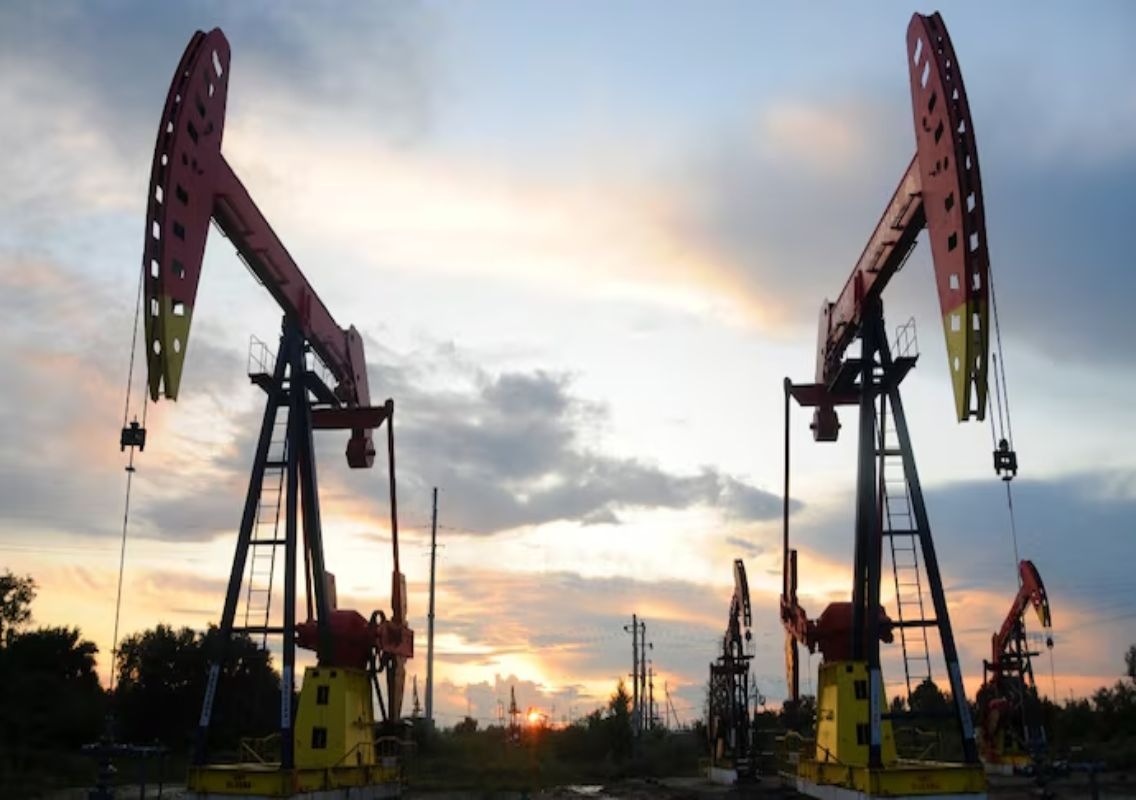


New Delhi: The ongoing conflict in West Asia has sparked an intense global competition among major oil producers for a larger share of India’s energy market, underlining the country’s growing importance in a rapidly shifting global oil landscape.
From Russia to the Gulf and the United States, leading energy exporters are recalibrating their strategies to secure long-term access to India, one of the few major economies where oil demand continues to grow steadily.
As geopolitical tensions disrupt traditional supply routes and long-term demand prospects weaken elsewhere, India has emerged as a critical battleground for global energy influence.
Why India has become the centre of attention
For decades, global oil demand growth was driven largely by China’s industrial expansion. However, slowing economic momentum, rising adoption of electric vehicles and structural shifts in consumption have made China’s future demand less predictable.
At the same time, Europe is accelerating its transition away from fossil fuels, while even the United States is witnessing more cautious long-term oil demand forecasts.
In contrast, India continues to see robust growth in energy consumption. The country currently consumes nearly 58 lakh barrels of oil per day and imports close to 90 per cent of its crude requirements. According to projections by the International Energy Agency, India is expected to account for one of the largest shares of global oil demand growth over the next decade.
This makes India one of the last major growth markets for oil exporters facing an increasingly uncertain future elsewhere.
Russia’s strong foothold in India
No country has capitalised on this opportunity as effectively as Russia.
Following the Russia-Ukraine war and subsequent Western sanctions, Moscow was forced to redirect its crude exports away from Europe. India emerged as a key buyer, attracted by deeply discounted Russian oil.
Over time, what began as opportunistic purchasing evolved into a structural shift in India’s crude sourcing strategy. Today, Russia has become India’s largest crude supplier, accounting for nearly 40 per cent of total imports in recent months.
Discounted Russian crude has helped Indian refiners manage costs and improve margins, especially in the export of refined products such as diesel and aviation fuel.
Even as discounts have narrowed due to global supply disruptions, Russian oil remains deeply embedded in India’s refining ecosystem. India has also maintained that its purchasing decisions are guided by commercial considerations and energy security, rather than geopolitical alignments.
Gulf producers step up competition
Russia’s growing dominance has prompted traditional suppliers in the Gulf to intensify their efforts to regain market share.
Countries such as Saudi Arabia, Iraq and the United Arab Emirates are now competing more aggressively in India, not just through pricing but also via long-term strategic investments.
A significant development came when the UAE decided to exit the OPEC+ framework, seeking greater flexibility to increase output and capture market share.
This move reflects a broader shift in strategy among producers—from defending prices to securing long-term demand. Gulf countries are increasingly focusing on investments in Indian refineries, petrochemical projects and storage infrastructure to lock in future consumption.
The competition is no longer limited to selling crude cargoes. It is about embedding themselves deeply within India’s energy ecosystem.
Supply disruptions reshape trade routes
The conflict in West Asia has once again highlighted vulnerabilities in global energy supply chains, particularly around the Strait of Hormuz, a critical transit point for a significant portion of India’s oil imports.
Disruptions in this region have forced Indian refiners to diversify sourcing, increasing imports from Russia, the United States and other regions during periods of instability.
This has created new opportunities for multiple suppliers to position themselves as reliable partners in India’s energy security framework.
Russia has leveraged this by presenting itself as an alternative source less exposed to Gulf-related disruptions, while Gulf producers have ramped up exports during periods of uncertainty.
The United States and strategic interests
The United States is also actively seeking a larger role in India’s energy mix, though its approach is driven by broader strategic considerations.
Beyond commercial interests, Washington aims to reduce Russia’s influence over Asian energy markets and strengthen its geopolitical presence in the Indo-Pacific region.
While US crude exports to India remain smaller compared to Russian and Gulf supplies, there is a clear push to expand ties. American policymakers have also encouraged India to diversify its oil imports amid evolving sanctions dynamics.
India’s balancing strategy
India, however, has adopted a carefully balanced approach.
Rather than aligning with any single supplier, New Delhi continues to engage with all major players—buying discounted Russian crude, maintaining strong ties with Gulf producers and expanding strategic cooperation with the United States.
This multi-alignment strategy allows India to:
- Secure competitive pricing
- Diversify supply sources
- Attract foreign investment in energy infrastructure
- Strengthen its geopolitical position
As a result, India is no longer just a passive buyer in the global oil market. It is increasingly shaping the terms of engagement.
Conclusion
The West Asia conflict has done more than disrupt oil supply routes—it has accelerated a structural shift in global energy dynamics.
With demand growth slowing in traditional markets, India has emerged as the most critical battleground for oil exporters seeking long-term relevance. Russia is defending its dominant position, Gulf producers are fighting to regain influence and the United States is pursuing strategic entry.
In this evolving landscape, India’s greatest advantage lies in its ability to balance competing interests while prioritising its own energy security. As global demand patterns continue to shift, the contest for India’s oil market is likely to intensify further in the years ahead.