







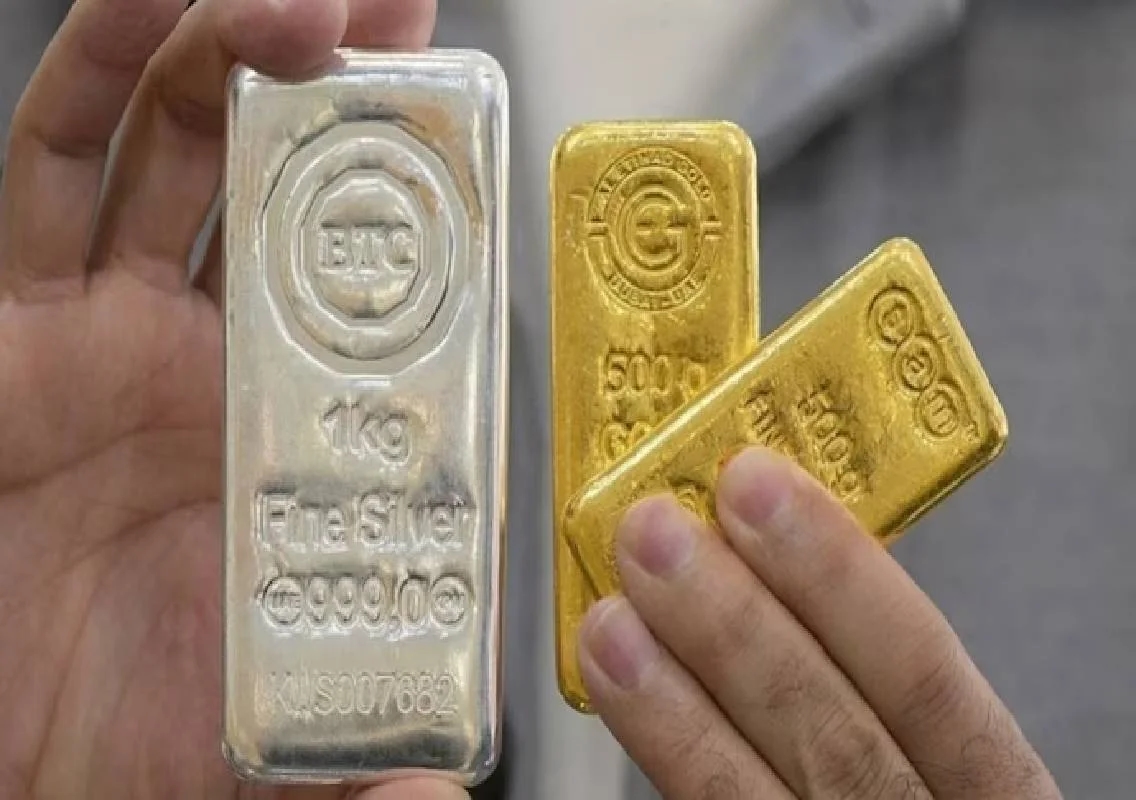


On the Multi Commodity Exchange (MCX), gold is currently trading in the range of ₹1,49,000 to ₹1,50,000 per 10 grams, while silver is hovering between ₹2,31,000 and ₹2,33,000 per kg. Analysts say the market is showing signs of fatigue at higher levels, even as underlying risks continue to support prices.
Volatility driven by global tensions
The recent swings in gold and silver prices are largely linked to geopolitical developments, particularly tensions in West Asia involving Iran. Rising uncertainty has increased demand for safe-haven assets such as gold.
However, the upside remains capped due to elevated global interest rates. Central banks, including the US Federal Reserve, are maintaining a cautious stance amid inflation concerns, making non-interest-bearing assets like gold less attractive.
Additionally, higher crude oil prices triggered by geopolitical tensions are raising fears of renewed inflation, which could keep interest rates higher for longer. This has created a push-and-pull effect in the market, preventing a clear trend from emerging.
Defined trading range for now
Market experts suggest that both metals are currently trading within a defined range as investors await clearer signals.
Gold is expected to move between approximately ₹1,44,000 and ₹1,54,000 per 10 grams in the near term. Silver, known for its higher volatility, could fluctuate between ₹2,15,000 and ₹2,43,000 per kg before a decisive breakout.
This range-bound movement reflects uncertainty in global markets, where investors are reacting quickly to news related to inflation, interest rates and geopolitical developments.
Key levels investors should watch
For investors, the current phase signals caution rather than aggressive buying. Gold is facing resistance near ₹1,50,000, while silver is struggling to break above ₹2,33,000–₹2,34,000 levels.
A sustained move above these resistance levels could trigger fresh buying momentum. On the other hand, failure to hold key support levels may lead to further correction.
Analysts indicate that a fall below ₹1,47,000 in gold could push prices toward ₹1,45,000 or even ₹1,40,000. Similarly, if silver slips below ₹2,30,000, it may decline further to ₹2,25,000 or ₹2,20,000.
Market showing signs of fatigue
Experts believe that the inability of gold to sustain rallies at higher levels points to weakening momentum.
According to market analysts, consistent selling pressure near ₹1,50,000 suggests that investors are booking profits, limiting further upside. A strong breakout above this level is required to revive bullish sentiment.
Silver, which has both industrial and investment demand, is also struggling due to lack of sustained buying interest. Its dual nature makes it more sensitive to economic slowdowns as well as market uncertainty.
What is driving the swings?
The current price movement reflects a balance between risk factors and limiting forces.
On one side, geopolitical tensions and global uncertainty are supporting demand for safe-haven assets. On the other, high interest rates and a strong US dollar are restricting upward movement.
This combination is leading to sharp, short-term fluctuations rather than a steady upward trend.
Conclusion
For now, gold and silver markets appear to be entering a cautious phase marked by volatility and indecision. Investors are advised to closely monitor global cues, especially geopolitical developments, central bank policies and inflation trends.
Rather than a one-way rally, the current environment suggests a period of consolidation, where prices may move sharply in either direction before establishing a clearer trend.