







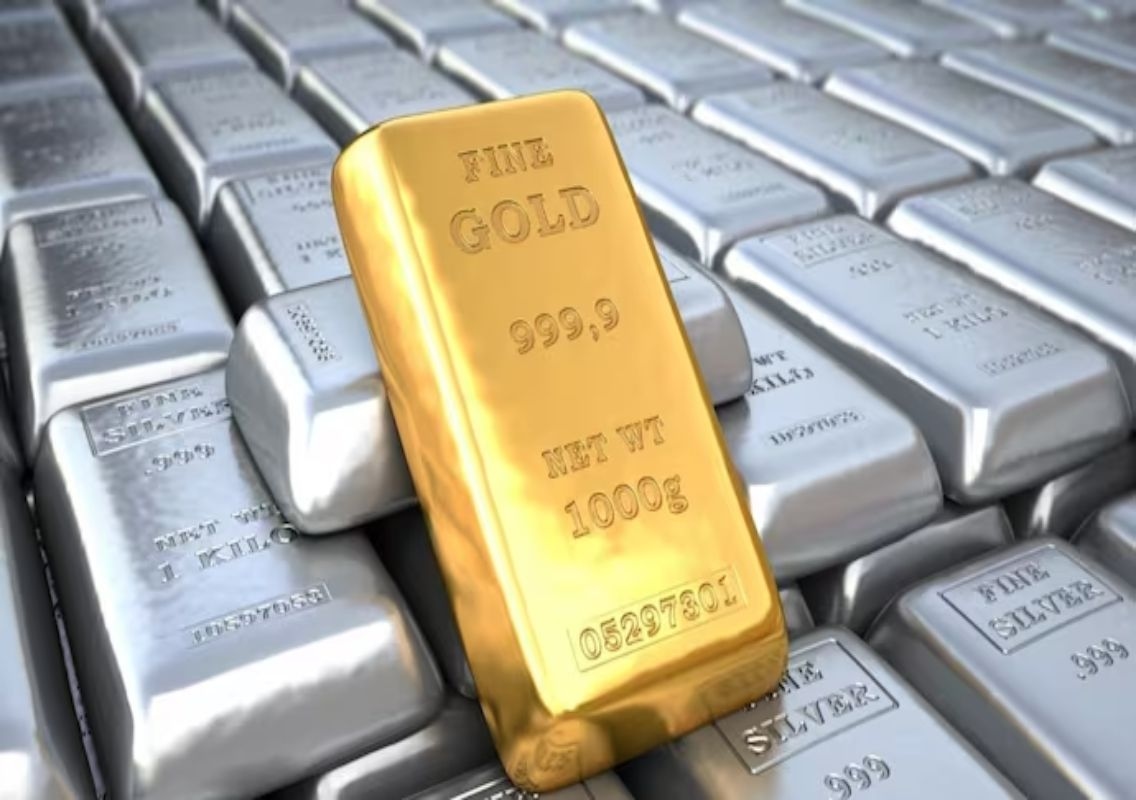


Mumbai: Gold and silver prices in India witnessed a sharp surge on Wednesday after the Centre increased import duties on precious metals, significantly raising their domestic cost. The move triggered a strong rally in futures trading on the Multi Commodity Exchange (MCX), impacting both investors and consumers.
In early trade, gold futures jumped by ₹9,206, or 6 per cent, to ₹1,62,648 per 10 grams. Silver prices also saw a steep rise, climbing ₹16,743, or 6 per cent, to ₹2,95,805 per kg as of 9 am.
Import duty hike drives price spike
The surge in domestic prices follows the government’s decision to raise import duty on gold and silver to 15 per cent from the earlier 6 per cent. The revised structure includes a 10 per cent basic customs duty along with a 5 per cent Agriculture Infrastructure and Development Cess (AIDC).
As India depends heavily on imports to meet its demand for precious metals, any increase in duty directly pushes up the landed cost. This, in turn, reflects immediately in domestic market prices.
Traders and jewellers have reacted quickly to the revised pricing, with the increased cost expected to be passed on to consumers in the coming days.
Pressure on economy behind decision
The government’s move comes at a time when the Indian economy is facing multiple external pressures. Elevated crude oil prices, largely influenced by geopolitical tensions in West Asia, have pushed up the country’s import bill.
At the same time, the Indian rupee has weakened significantly, recently touching a record low of ₹95.75 against the US dollar. A weaker rupee makes imports more expensive, further straining foreign exchange reserves.
By raising import duties, the government aims to discourage excessive imports of gold and silver, reduce the trade deficit and stabilise the rupee.
Economists have often pointed out that high gold imports can become a concern during periods of global uncertainty, especially when combined with rising energy costs.
PM Modi’s appeal to limit gold buying
The decision also follows a recent appeal by Prime Minister Narendra Modi, who urged citizens to avoid purchasing gold for weddings for at least one year. His remarks were made in the context of conserving foreign exchange amid global economic pressures.
India is among the largest consumers of gold globally, particularly during wedding seasons and festivals. However, such high demand contributes significantly to import bills, making it a sensitive issue during times of economic stress.
Global trend contrasts domestic surge
Interestingly, while domestic prices surged sharply, global gold prices showed a mixed trend. Spot gold slipped 0.4 per cent to $4,695.99 per ounce, while US gold futures for June delivery rose marginally by 0.4 per cent to $4,705.30.
Analysts attribute the subdued global movement to stronger-than-expected inflation data from the United States. Higher inflation has reduced expectations of interest rate cuts by the US Federal Reserve, putting pressure on international gold prices.
Recent data indicated that US consumer inflation rose in April, marking its biggest annual increase in three years. According to CME Group’s FedWatch tool, traders are now factoring in a 30 per cent probability of a rate hike by December.
Impact on buyers and jewellery demand
The sharp increase in domestic prices is expected to have a direct impact on consumer demand, particularly in the jewellery segment. Higher gold prices may dampen wedding-related purchases and reduce discretionary buying in the near term.
Investment demand could also see some moderation as higher entry prices make gold less attractive for short-term investors.
Jewellers and bullion traders are likely to closely monitor market reactions over the next few days, especially as consumers adjust to the new pricing levels.
Conclusion
The sudden surge in gold and silver prices highlights the immediate impact of policy changes on domestic markets. While the import duty hike is aimed at addressing macroeconomic concerns such as the trade deficit and currency stability, it comes with short-term implications for consumers and the jewellery industry.
As global uncertainties persist and domestic factors evolve, precious metal prices are expected to remain volatile. For now, buyers may adopt a cautious approach, while policymakers continue balancing economic stability with market dynamics.