







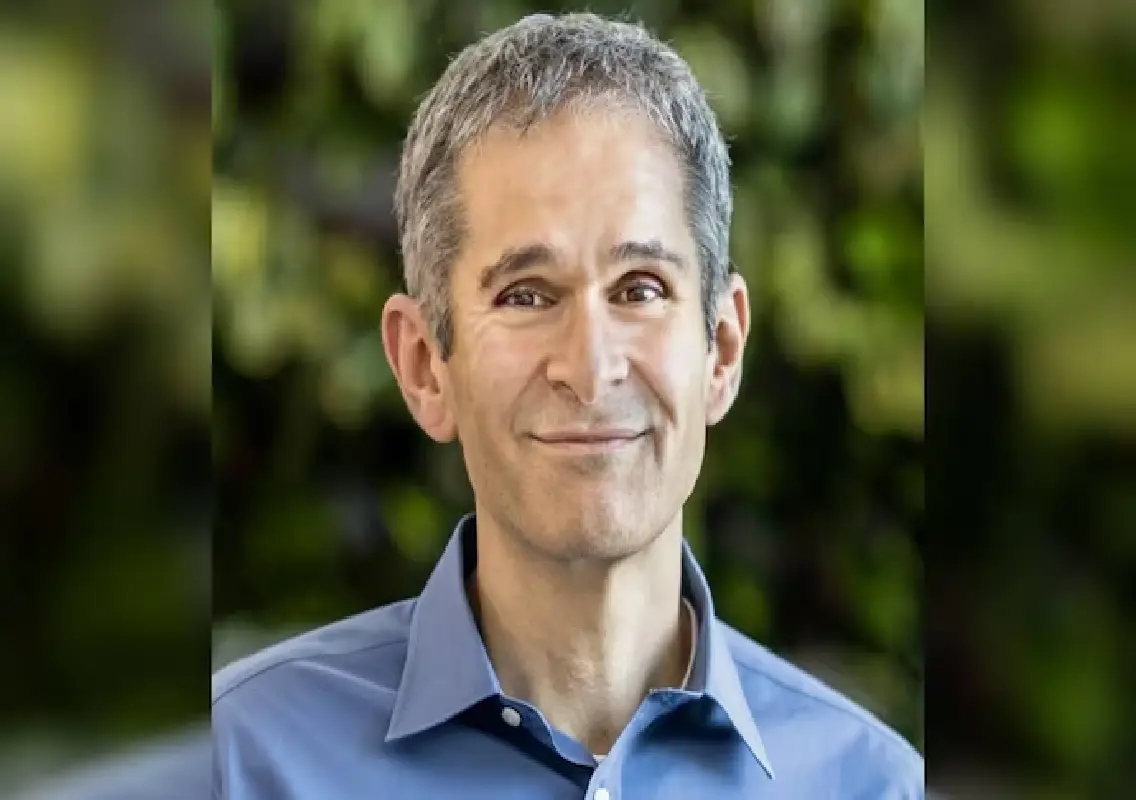


Google has appointed long-time engineering leader Amin Vahdat as its new chief technologist for AI infrastructure, a move that underscores the company’s deepening focus on the hardware and systems powering the next generation of artificial intelligence. The newly created role, which reports directly to CEO Sundar Pichai, places Vahdat at the centre of Google’s rapidly expanding AI ambitions.
The appointment was first reported by Semafor and later confirmed by TechCrunch. It comes at a time when Google’s parent company Alphabet is preparing capital expenditures of up to $93 billion by the end of 2025, with even higher investment anticipated next year. The message is clear: the future of AI will depend not just on smart models, but on the invisible infrastructure that enables them to function at scale.
A veteran engineer takes charge of Google’s AI engine
Amin Vahdat’s association with Google began in 2010, and over 15 years he has quietly shaped some of the company’s most critical computing systems. His work spans custom chips, high-speed data networks, data centre engineering and distributed systems — the backbone technology that powers Google Search, YouTube, Google Cloud and the company’s generative AI models, including Gemini.
Vahdat currently leads the teams responsible for Google’s custom Tensor Processing Units (TPUs), the company’s flagship AI chips used for training and inference. He also oversees the Jupiter network, Google’s ultra-high-speed internal data transport system. Last year he revealed that Jupiter’s capacity has reached 13 petabits per second, enough to support a video call for every person on Earth simultaneously.
At Google Cloud Next earlier this year, Vahdat unveiled the seventh-generation TPU, codenamed Ironwood. Each pod contains nearly 9,000 processors and can deliver up to 42.5 exaflops of compute. This makes the system significantly more powerful than the world’s fastest supercomputers at the time of announcement. “Demand for AI compute has grown by a factor of 100 million in just eight years,” Vahdat noted, highlighting the unprecedented pace at which AI computing requirements are evolving.
Architect of Google’s most complex systems
Much of Vahdat’s impact lies in the technologies that rarely make headlines but remain essential to Google’s operations. He has been instrumental in advancing Borg, Google’s legendary cluster management software that manages workloads across hundreds of thousands of machines.
He also co-led the development of Axion, Google’s first custom Arm-based CPU designed for large-scale data centres. Axion is expected to play a major role in improving energy efficiency and performance as Google scales its AI workloads.
Before his career at Google, Vahdat built an academic legacy teaching at Duke University and later at UC San Diego, where he served as the SAIC Chair Professor. With nearly 400 research publications, his work has consistently explored distributed computing and data-centre-scale efficiency — themes that have defined his contributions to Google.
A strategic move amid rising AI competition
In the global race for AI dominance, experienced engineering talent is highly coveted. By elevating Vahdat to a C-suite role, Google is signalling both confidence in his leadership and a commitment to retaining one of its most influential technologists.
The new position ensures that Vahdat will play a pivotal role in shaping the company’s AI roadmap — from how its data centres evolve, to how it competes with Microsoft, Amazon and OpenAI in cloud computing and AI infrastructure.
Google’s public AI narrative often focuses on consumer-facing innovations such as Gemini or search-integrated generative tools. But behind every breakthrough lies an ecosystem of chips, servers, fibre networks and distributed systems — precisely the domains Vahdat oversees.
As Alphabet gears up for its largest capital expenditure cycle yet, the appointment of Amin Vahdat signals that the company’s most powerful transformation may not be happening in its products, but deep inside its data centres. With Vahdat leading AI infrastructure, Google is preparing its technological foundation for the next decade of intelligent computing — one chip, one server rack and one petabit at a time.