







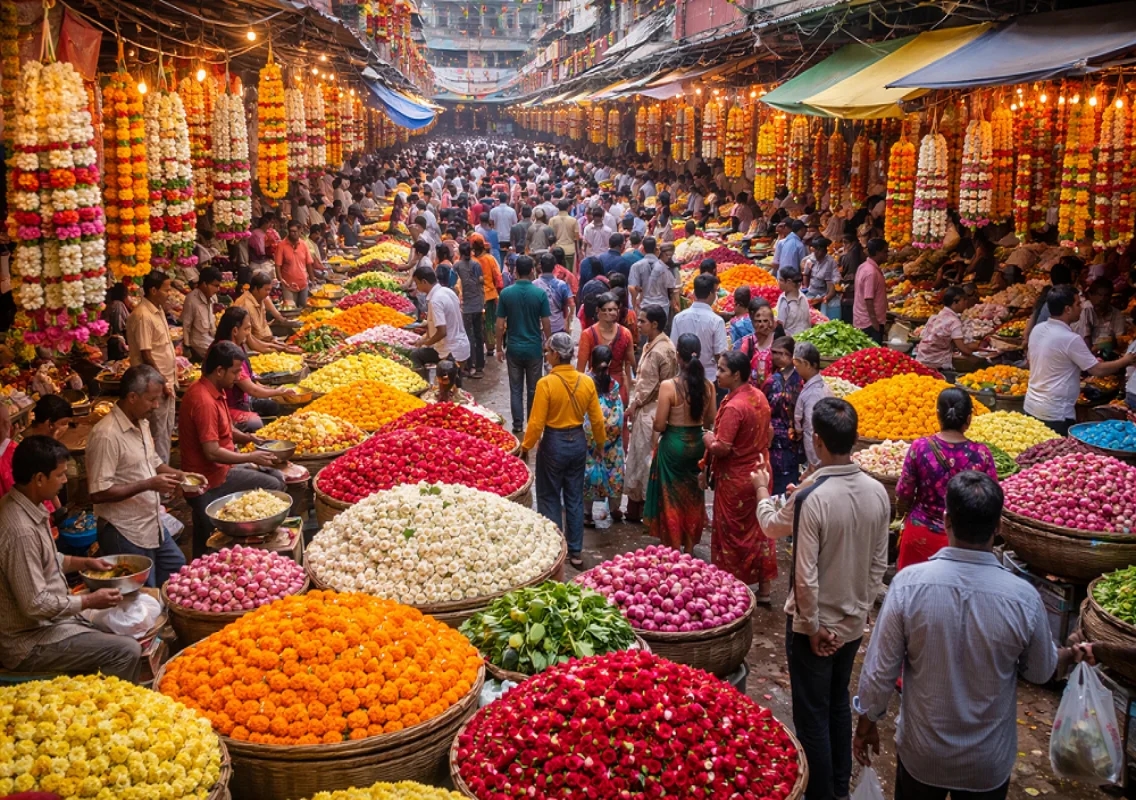


Bengaluru, known for its technology centres, also has some of India’s busiest flower markets, like KR Market and Malleswaram. These markets are important to the city’s cultural and economic fabric, supplying fresh flowers for religious ceremonies and festivals. They support the city’s flower trade and meet the needs of a growing urban population.
The Heart of Bengaluru’s Flower Economy
As of 2025, Bengaluru hosts 81 flower markets citywide, supporting the city’s growing demand for flowers for rituals, celebrations and daily use. These markets support thousands of florists, wholesalers, and vendors who rely on a steady supply of flowers. They play a crucial role in the local flower economy and significantly boost the city’s economy. Furthermore, with enhanced services, these markets can now deliver flowers directly to people’s homes.
The Economic Impact on Local Livelihoods
The flower trade is a major source of livelihood for many people, including farmers, florists, and delivery workers. The economic benefits extend beyond the markets, with local businesses in transport, packaging, and retail also thriving. The income generated from this trade expands beyond the flower markets themselves. Local businesses such as packaging units, delivery services, and retail outlets also benefit from the continuous flow of flowers moving through the system.
Growing Dreams and Livelihoods Beyond the City Limits
Farmers in nearby rural areas rely on Bengaluru’s flower markets to sell their crops of marigolds, jasmine, and roses. These markets provide a steady income, helping farmers improve their quality of life and expand their farming operations. The connection between Bengaluru’s demand and rural farming has created opportunities for local agricultural communities, turning the flower trade into a vital source of income for many families.
Floriculture Supply Chains Supporting Bengaluru’s Flower Markets
Once harvested, flowers from farms across India are transported to wholesale markets such as Bengaluru’s KR Market, which is recognised among Asia’s major floral trading hubs. India’s floriculture sector includes loose flowers (used widely for rituals, garlands and local trade) as well as cut flowers for domestic and export use. According to the National Horticulture Database (2023-24), the total area under floriculture cultivation in India was about 317,000 hectares, producing 2,659 thousand tonnes of loose flowers and 877 thousand tonnes of cut flowers during that period. Floriculture is commercially cultivated in several states, with Karnataka contributing about 15.60% of national production, alongside Tamil Nadu and Madhya Pradesh. The industry also faces challenges such as weather variability, timely transportation and post-harvest handling to maintain flower freshness. Despite these constraints, efficient supply-chain logistics and strong market demand help ensure flowers reach urban markets and end consumers reliably
The Role of Digital Platforms and Urban Demand
The growing popularity of online florist platforms has revolutionised Bengaluru’s flower market. Consumers now want to order flowers online, leading to more demand for delivery services. These platforms help florists reach more customers and create new job opportunities for delivery workers and small businesses. As more people use online services, Bengaluru’s flower market is adapting to meet the needs of tech-savvy audiences. This shift has made flower delivery in Bangalore an essential part of how urban consumers access fresh flowers today.
Challenges to the Flower Market Ecosystem
Bengaluru’s flower markets face several challenges. Environmental issues like pesticide use and plastic packaging are a concern. Transporting flowers also presents logistical challenges because they are perishable and require quick delivery. Weather conditions can disrupt supply and affect prices. Vendors and farmers tackle these issues every day to keep fresh flowers available.
Sustainability in the Flower Trade for Future Outlook
Sustainability is becoming more important in Bengaluru’s flower markets. Many vendors are now adopting eco-friendly practices, such as using biodegradable packaging and shifting to organic farming. As customers want more sustainable products, flower vendors are changing their operations to be greener. This shift is crucial for the future of the flower market, helping it stay both economically and environmentally sustainable.
Bengaluru’s flower markets are a vital part of the city’s economy.
With about 150 registered flower shops and over 500 independent vendors, KR Market is among Bengaluru’s busiest trade centres for flowers. It supports thousands of jobs and enhances the city’s cultural richness. These markets link rural farmers with urban consumers, creating a dynamic economic network. By adapting to online platforms and sustainable practices, these markets remain essential to Bengaluru’s local economy, facilitating continuous trade growth.