


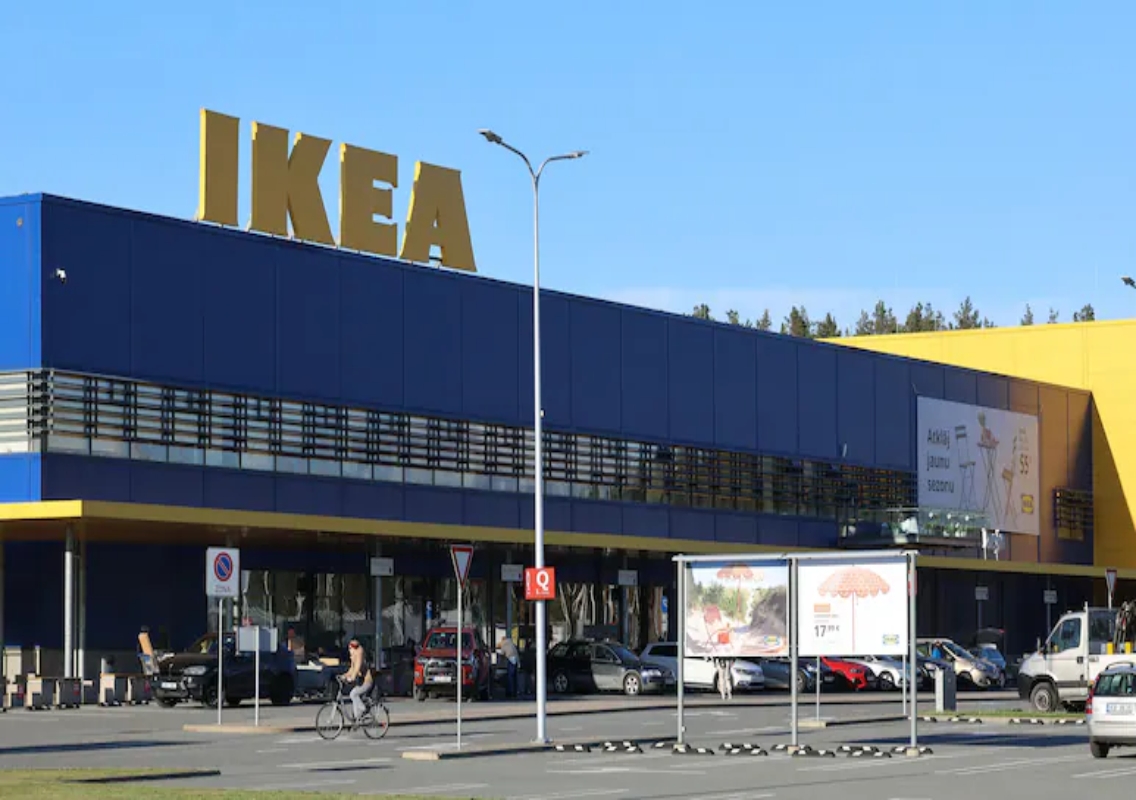


Stockholm: Swedish furniture retailer IKEA has reported its third consecutive year of declining sales as rising living costs and weak consumer confidence continue to discourage households from spending on furniture and home furnishings. The company’s global retail sales fell 2% to €43.8 billion in the financial year ended August 31, 2026, compared with €44.6 billion in the previous financial year.
The decline highlights the challenges facing the world’s largest furniture retailer, which has been cutting prices to attract budget-conscious customers. Despite these efforts, consumers are purchasing fewer products as households prioritise essential expenses amid economic uncertainty.
IKEA’s performance also reflects wider pressures on the global retail industry, including higher transportation and energy costs, geopolitical tensions and subdued demand in important markets.
Jakub Jankowski, chief executive of Inter IKEA Group, which owns the IKEA brand and supplies products to its franchisees, said the company needed to return to growth by selling more products and making home furnishings more affordable.
Third consecutive year of declining sales
IKEA’s global retail sales have declined for three consecutive financial years. The company recorded retail sales of €45.1 billion in FY24, followed by €44.6 billion in FY25 and €43.8 billion in FY26.
The latest figures cover IKEA’s retail operations across 64 countries and include sales of products, food and services through its franchise network.
The decline reflects the pressure on household budgets, particularly as consumers become more cautious about purchasing furniture and other non-essential household items. Furniture purchases are often linked to major life decisions such as moving homes, buying property or renovating living spaces. When households face financial uncertainty, such spending can be postponed.
IKEA has traditionally attracted customers through affordable, functional furniture and home accessories. However, the company is now facing a difficult environment in which even budget-conscious shoppers are reducing their purchases.
The company has also reported that weaker demand resulted in lower purchasing volumes and less efficient use of production capacity among its suppliers and manufacturing operations.
Inter IKEA revenue and profit also decline
The financial performance of Inter IKEA Group, the company responsible for the IKEA brand, product development, sourcing and franchise operations, also weakened during FY26.
Its revenue declined 2% to €25.9 billion from €26.3 billion in FY25. Net profit fell to €1.4 billion from €1.5 billion, while its operating result declined to approximately €1.5 billion from €1.7 billion.
Inter IKEA’s financial results should be distinguished from the global retail sales figures. The €43.8 billion figure represents combined sales across IKEA’s franchise network, while Inter IKEA’s €25.9 billion revenue includes sales of products to franchisees, franchise fees and revenue from its own retail operations.
The company said it maintained a solid operating result despite difficult market conditions, using cost controls to manage external pressures and lower demand.
Its financial performance indicates that the challenges are not limited to customer-facing stores. The brand owner and product supplier is also dealing with the effects of lower demand and higher operating costs.
IKEA invests €1.2 billion in price reductions
To attract customers and improve affordability, IKEA and its franchise partners have committed approximately €1.2 billion towards price reductions across European markets.
The latest initiative, announced in September 2026, covers more than 1,000 products. Price reductions of around 15% to 25% are being introduced on selected items in more than 20 European countries.
Popular products, including the Billy bookcase and Kallax storage range, are among the items highlighted in the affordability push.
The investment is intended to make everyday home furnishings more accessible to customers who are struggling with higher living costs. IKEA has indicated that affordability is a long-term priority rather than a temporary promotional campaign.
The strategy follows earlier price reductions introduced after the pandemic, when supply-chain disruption and higher shipping costs had pushed furniture prices upwards.
However, reducing prices creates a difficult balance for the retailer. Lower prices can attract more customers and increase sales volumes, but they can also put pressure on revenue and profit margins if demand does not recover sufficiently.
Weak demand and geopolitical tensions add pressure
IKEA’s performance has been affected by weak consumer demand in several markets, particularly China and parts of the Middle East. Growth in Europe and Latin America was not enough to offset the weakness elsewhere.
The company is also facing higher freight and energy costs linked to geopolitical tensions and the conflict in the Gulf region. Rising transportation expenses can affect the cost of moving furniture and raw materials through international supply chains.
These pressures come at a time when households in several markets are already dealing with elevated living costs. Customers are becoming more selective about major purchases, making it harder for furniture retailers to generate consistent growth.
Inter IKEA’s leadership has acknowledged that the current financial year could remain challenging. The company will therefore need to focus on controlling costs while making its products more accessible to customers.
Store expansion strategy shifts towards city centres
Alongside its pricing initiatives, IKEA is changing how it reaches customers. The retailer has traditionally relied on large warehouse-style stores located outside major cities, where customers often travel by car to purchase furniture.
However, changing consumer habits have encouraged the company to expand its presence through smaller stores in urban locations.
IKEA added 30 stores to its global network during FY26, including 15 smaller European city-centre locations. The company is also looking to increase the number of smaller outlets during FY27.
Jankowski has pointed to the growing number of consumers who do not own cars or hold driving licences. Smaller city-centre stores can make IKEA more accessible to these customers and encourage more frequent visits.
The retailer is also reviewing the products offered at these outlets. Customers visiting smaller urban stores more frequently may expect a fresher and more seasonally relevant selection of products.
The shift represents an attempt to adapt IKEA’s traditional large-store business model to changing shopping habits and urban lifestyles.
Seven stores closed in China and 850 jobs cut
IKEA is also restructuring parts of its business to improve efficiency. The company closed seven stores in China during the financial year amid weak consumer demand.
In May 2026, Inter IKEA announced plans to cut approximately 850 jobs as part of a wider effort to simplify its organisation and reduce costs.
The restructuring reflects the need to adjust operations to changing market conditions. The company is reviewing its organisational structure and focusing resources on priorities such as product affordability, customer experience and operational efficiency.
These measures underline the pressure facing even established global retailers when consumers reduce spending and operating expenses remain high.
The company will need to ensure that cost reductions do not affect its ability to develop products, serve customers and maintain its international supply network.
IKEA CEO targets a return to growth
Jankowski, who took over as Inter IKEA Group chief executive at the beginning of 2026, has made restoring growth a central priority.
The company’s strategy will focus on offering relevant products, maintaining competitive prices and improving the customer experience. It also plans to expand access through smaller stores and online channels.
However, the latest results show that price reductions alone may not be enough to encourage customers to spend more. The retailer must also respond to changing household needs, improve product relevance and manage the cost pressures affecting its supply chain.
IKEA’s third consecutive annual sales decline is a significant warning about the state of consumer spending in the global furniture market. Its €1.2 billion affordability investment and expansion into smaller stores demonstrate the scale of its response.
The coming financial year will show whether these measures can bring customers back and restore growth to a business that has built its global reputation on affordable home furnishings.