







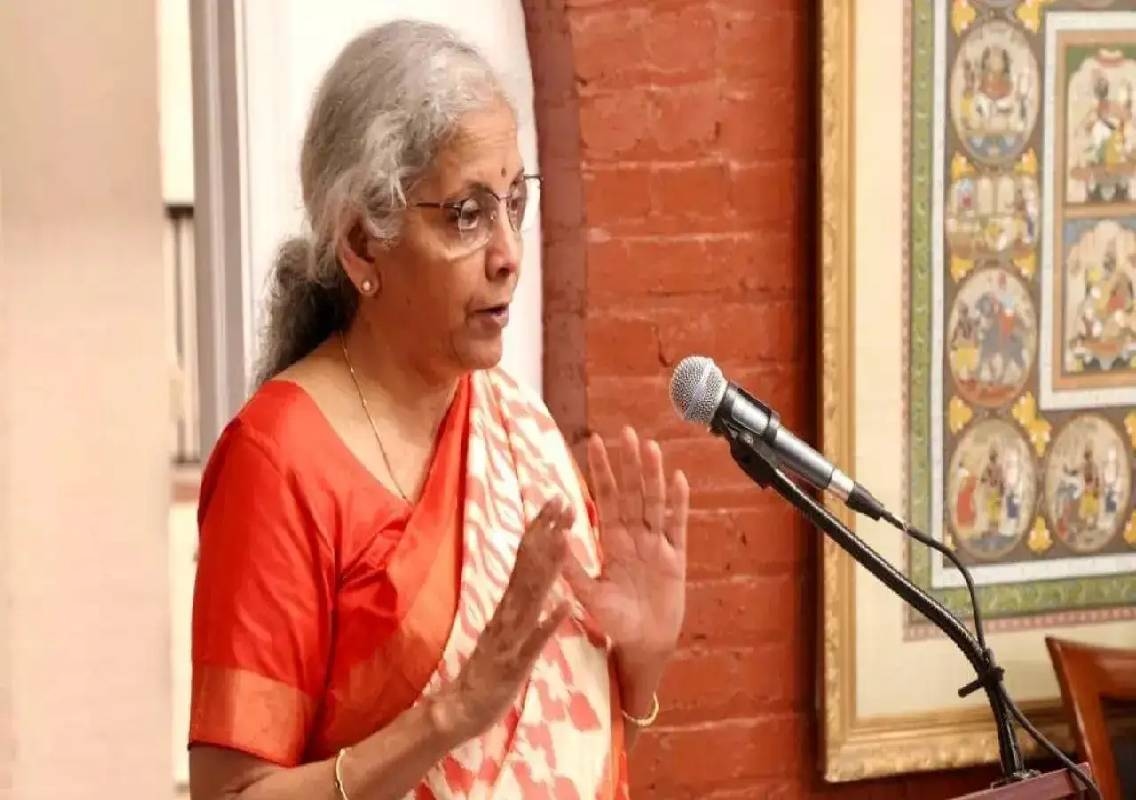


New Delhi: Union Finance Minister Nirmala Sitharaman on Monday said India is navigating a period of uncertainty driven by rising crude oil prices, foreign exchange requirements, fertiliser costs and concerns over below-normal rainfall. She also highlighted that recent policy measures aimed at attracting foreign investment are expected to strengthen capital inflows into the country.
Speaking at the Mindmine Summit 2026, the Finance Minister said the government and the Reserve Bank of India (RBI) are working together to ensure sufficient capital inflows to support India’s growing economic requirements.
Crude Oil Prices Remain A Key Concern
Sitharaman said crude oil continues to be one of the three major imports that place significant pressure on India’s foreign exchange reserves.
She noted that while India has substantial refining capacity, the rising global prices of crude oil are creating challenges. In addition to the cost of oil itself, expenses related to insurance, transportation and risk management have increased the overall import bill.
“The three major items that we import using foreign exchange include crude oil. Fortunately, we have the capacity to refine it, but the price of crude oil continues to rise,” she said.
The minister added that maintaining adequate foreign exchange reserves remains critical as the economy expands and demand for essential imports increases.
Foreign Exchange And Fertiliser Costs Under Pressure
The Finance Minister highlighted that India is also facing uncertainty regarding foreign exchange requirements and fertiliser prices.
She explained that a growing economy naturally requires higher imports of key raw materials and commodities, increasing pressure on foreign exchange reserves. At the same time, volatility in global commodity markets continues to influence fertiliser costs, which remain important for the agriculture sector.
Sitharaman also pointed to concerns over a potential shortfall in rainfall this year, which could have implications for agricultural output and rural demand.
Domestic Consumption Offers Stability
Despite external challenges, the minister said India benefits from having a large domestic market supported by rising consumption.
She noted that strong domestic demand provides a degree of resilience against global economic disruptions. However, the country continues to rely heavily on imported raw materials, making it vulnerable to fluctuations in international prices and supply chains.
“A nation operates much like a business, facing similar strategic considerations. India’s challenge is comparable, but our country finds comfort in having a large domestic market with rising consumption,” she said.
Data Centre And GCC Expansion Gains Momentum
Sitharaman also highlighted the rapid expansion of India’s data centre and Global Capability Centre (GCC) ecosystem.
According to her, government policies and active participation from state governments are helping the sector expand beyond traditional hubs such as Bengaluru, Hyderabad and Delhi-NCR.
She said emerging cities including Tumakuru and Mangaluru are increasingly attracting investments in data centres and GCC operations.
The expansion is expected to generate employment opportunities, strengthen data security infrastructure and contribute to local economic growth across Tier-2 cities.
Government Working To Attract More Foreign Capital
Addressing capital inflows, Sitharaman said the government recognises the need for greater foreign investment and is taking steps to facilitate it.
She pointed to recent measures by the RBI that allow public sector undertakings (PSUs) and banks to raise funds from overseas markets. According to the minister, these initiatives are part of broader efforts to ensure sufficient investment flows into the economy.
“We recognise we need more foreign capital to come in. The RBI has now allowed PSUs and banks to go out and raise money from outside, but that is not the end of the story. We will be doing more,” she said.
Recent tax changes for foreign investors in government bonds and other central bank measures are also expected to support higher capital inflows.
Outlook
While India continues to remain one of the world’s fastest-growing major economies, policymakers are closely monitoring risks arising from global energy prices, foreign exchange pressures, fertiliser costs and weather-related uncertainties. At the same time, strong domestic demand, infrastructure expansion and efforts to attract foreign investment are expected to support economic growth in the coming years.