







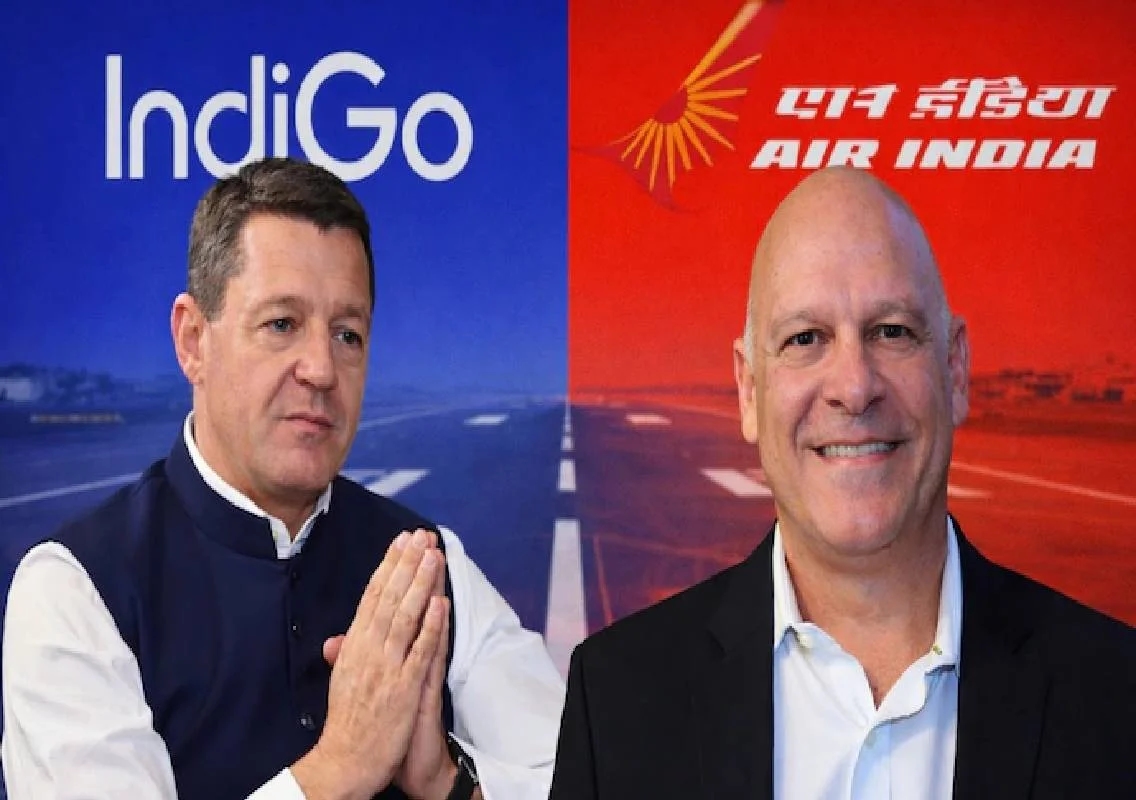


Together, IndiGo and Air India dominate India’s skies, accounting for nearly 90 per cent of the domestic aviation market. IndiGo alone holds close to 60 per cent share, while Air India commands around 30 per cent. The recent departures of their chief executives are being seen not as isolated developments, but as indicators of a sector under strain.
IndiGo faces operational setback and leadership change
IndiGo’s CEO Pieter Elbers stepped down following one of the airline’s most challenging operational periods in recent years. In December, the carrier cancelled around 4,500 flights during the peak holiday season after failing to adequately prepare for stricter pilot rest regulations.
The disruption stranded thousands of passengers and exposed gaps in crew planning, denting the airline’s reputation for reliability. The airline has since moved quickly to appoint Willie Walsh as its new CEO, signalling urgency in addressing operational issues.
Analysts note that restoring reliability and strengthening internal systems, particularly crew scheduling, will be key priorities for the airline going forward.
Air India CEO exits amid losses and scrutiny
At Air India, CEO Campbell Wilson has resigned before the end of his tenure, even as the airline continues to face financial and regulatory challenges.
The airline has reported ongoing losses and has come under scrutiny following safety lapses. A major crash last year that claimed around 260 lives further intensified pressure on management. Regulators have also flagged compliance issues, including instances of operating aircraft without proper certification checks.
Air India acknowledged the need for improvements in process discipline and compliance culture, even as industry experts credit Wilson with stabilising operations after the Tata Group took over the airline.
Global tensions pushing costs higher
Beyond internal challenges, airlines are also battling external pressures. Ongoing geopolitical tensions in West Asia, particularly involving Iran, have led to rising fuel prices and longer flight routes.
Higher crude oil prices have directly increased aviation turbine fuel costs, a major expense for airlines. Carriers are also being forced to carry additional fuel and adjust schedules, further adding to operational complexity.
To cushion the impact on passengers, the Indian government has capped monthly increases in aviation fuel prices for domestic routes at 25 per cent.
Airspace restrictions add operational strain
Regional geopolitical tensions have compounded the situation. Following the India-Pakistan conflict last year, Pakistan closed its airspace to Indian airlines, forcing them to take longer routes for west-bound flights.
These detours have increased fuel consumption and reduced profitability on key international routes. For airlines like Air India, which are already managing losses and scaling back certain international operations, the added burden could affect recovery plans.
Expansion plans increase execution pressure
Despite these challenges, both airlines are pushing ahead with ambitious expansion strategies.
IndiGo is planning a significant expansion into long-haul international travel, with orders for Airbus A321XLR and A350 aircraft. The appointment of Willie Walsh, known for his experience in building global airline operations, is seen as a move to support this transition.
Air India, meanwhile, has placed orders for over 500 aircraft as part of its long-term turnaround strategy. However, delivery delays and global supply chain issues continue to slow its progress. The airline and its low-cost arm, Air India Express, reported a combined loss of ₹9,808 crore in FY25, underlining the scale of financial pressure.
What the twin exits signal
The back-to-back leadership changes at IndiGo and Air India reflect a broader shift in India’s aviation sector. Airlines are no longer dealing only with post-pandemic demand recovery—they are navigating a complex mix of rising costs, regulatory oversight, geopolitical risks and expansion challenges.
The new leadership at both carriers will need to address immediate operational issues while steering long-term growth strategies in an increasingly competitive and volatile environment.
Conclusion
As India continues to be one of the fastest-growing aviation markets globally, the current turbulence signals a critical phase of transition. The ability of airlines to manage costs, maintain operational discipline and execute expansion plans will determine how the sector evolves in the coming years.