


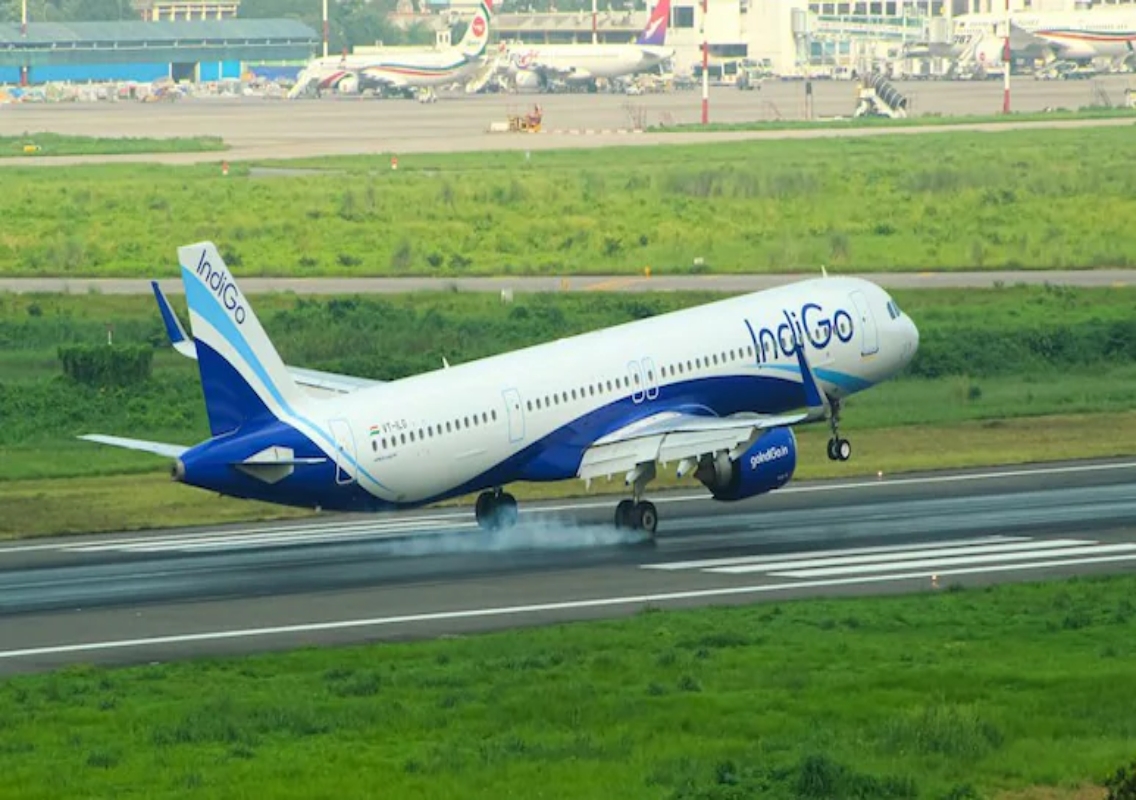


New Delhi: Shares of InterGlobe Aviation, the parent company of IndiGo, extended their gains for a third consecutive trading session on November 3, rising more than 4% in early trade as falling crude oil prices and expectations of strong festive-season travel demand supported investor sentiment.
The stock climbed as much as 4.07% to ₹5,120.10 on the National Stock Exchange (NSE). It later pared some gains and was trading 3.2% higher at ₹5,077 at 9.55 am, compared with a 0.77% rise in the Nifty at that time.
The rally came after crude oil prices recorded a steep decline in the previous session. Lower fuel costs are generally favourable for airlines because aviation turbine fuel (ATF) is one of the industry’s major operating expenses.
Investors were also assessing IndiGo’s latest passenger traffic figures and September-quarter financial performance, which showed higher revenue and a narrower net loss compared with the corresponding period last year.
Crude oil decline supports aviation stocks
The fall in international crude oil prices was one of the major factors supporting the airline stock.
Brent crude futures had settled at $104.77 per barrel on Monday, recording a decline of 7.6%. This was its steepest single-day fall since the recent escalation in the Middle East conflict. US West Texas Intermediate (WTI) crude also declined 7.4% to settle at $96.46 per barrel.
The decline followed renewed hopes of progress in diplomatic negotiations between the United States and Iran, which eased some concerns about disruptions to global energy supplies.
Brent was trading around $104.50 per barrel on Tuesday morning, down 0.24%
For airlines, a sustained reduction in crude and aviation fuel prices can improve operating economics by reducing one of their largest cost components. However, the benefit to an individual carrier depends on domestic ATF pricing, currency movements, fuel hedging practices and the timing of cost adjustments.
The oil-price decline therefore provided a supportive signal for IndiGo shares, although it does not automatically translate into an immediate or proportionate improvement in the airline’s profitability.
IndiGo records higher passenger traffic in October
IndiGo’s October passenger traffic increased on a month-on-month basis, reflecting stronger travel activity during the festive period.
The airline carried 135.4 lakh passengers in October, compared with 118.2 lakh in September. This represented an increase of approximately 14.5% over the previous month.
However, the year-on-year comparison showed a different trend. October passenger traffic was lower than the 142.5 lakh passengers carried in the corresponding month last year.
The figures indicate that the airline experienced a sequential improvement in passenger numbers, while traffic remained below the year-ago level.
Festive travel demand is an important factor for Indian airlines, as holidays, family visits and leisure trips can support bookings across domestic and international routes. Higher passenger volumes can also help airlines improve aircraft utilisation and spread fixed operating costs across more travellers.
The October numbers will therefore be watched alongside capacity deployment, passenger load factors and yields to understand whether the improvement in traffic translates into stronger financial performance.
September-quarter loss narrows to ₹1,879 crore
IndiGo’s September-quarter results for fiscal year 2027 showed an improvement in revenue and a reduction in its consolidated net loss.
The airline reported a net loss of ₹1,879 crore for the quarter, compared with a loss of ₹2,582 crore in the same period last year. The loss was also lower than the market consensus estimate of ₹2,063 crore.
Revenue from operations increased 25.9% year-on-year to ₹23,364 crore, against ₹18,555 crore in the corresponding quarter of the previous financial year. The reported revenue was higher than the market estimate of ₹22,988 crore.
The company’s earnings before interest, taxes, depreciation and amortisation (EBITDA) rose sharply by 229% to ₹1,908 crore from ₹579 crore a year earlier.
EBITDA margin improved to 8.2%, compared with 3.1% in the year-ago quarter. This indicated an improvement in the company’s operating performance on this measure.
However, not all profitability indicators moved in the same direction. Earnings before interest, tax, depreciation, amortisation and rent (EBITDAR) declined 3% year-on-year to ₹3,667 crore from ₹3,792 crore.
The EBITDAR margin also contracted to 15.7% from 20.4%. This difference highlights why investors examine multiple operating measures rather than relying only on revenue growth or the headline net loss.
What investors will watch next
The three-day rally has brought several factors into focus for IndiGo investors: international oil prices, passenger demand, operating costs and the airline’s ability to improve profitability.
A sustained decline in crude oil prices could provide support to the aviation sector, particularly if lower fuel costs are reflected in domestic aviation fuel prices. At the same time, festive-season bookings and passenger traffic will remain important indicators of demand.
The October traffic figures show a month-on-month recovery, but the year-on-year decline suggests that the broader demand picture needs to be assessed carefully.
The company’s September-quarter performance also presents a mixed picture. Revenue and EBITDA improved substantially, while the net loss narrowed. However, the fall in EBITDAR and its margin remains an important factor for investors to monitor.
The stock’s movement on November 3 reflects market expectations around these developments, rather than confirmation that the airline’s cost pressures have been fully resolved.
Investors will continue to track fuel prices, passenger yields, capacity growth and quarterly earnings to assess whether the recent gains can be supported by sustained business performance.