


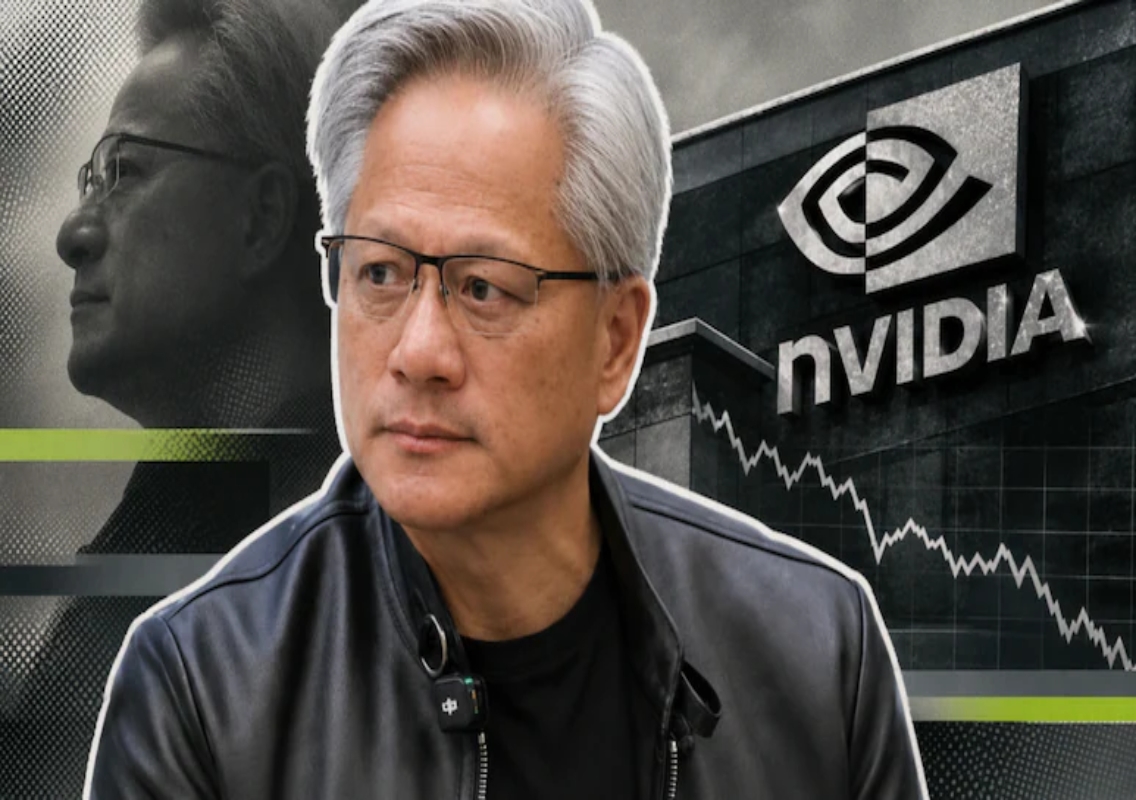


Santa Clara: Nvidia co-founder and former chief executive Jensen Huang is facing renewed scrutiny over allegations that he used public humiliation, verbal abuse and threats of physical violence to push employees to perform better. Accounts from current and former staff, along with historical legal documents, have described a demanding workplace culture in which employees were allegedly berated in front of colleagues.
A detailed investigation describes incidents spanning more than two decades. The report draws on interviews with more than a dozen current and former Nvidia employees and hundreds of pages of court records and other documents.
Among the most disturbing allegations are claims that Huang threatened to rip off an employee’s head and urinate on their brain, and told another subordinate that he would tear off both their arms and beat them to death with them. Another employee reportedly heard Huang tell an executive that their mother should have aborted them.
The accounts have brought attention to the leadership style behind one of the world’s most successful technology companies. They also raise questions about how a culture built around intense performance expectations affected employees as Nvidia expanded into a central player in the artificial intelligence industry.
Huang’s spokesperson has rejected allegations made by a former human resources executive, describing them as fabrications. Nvidia has declined to comment on the latest investigation. The allegations have not been established as findings of a court.
Allegations of humiliation as a management tool
Huang believed financial rewards were no longer enough to motivate some Nvidia employees after the company’s growth had made many of them wealthy.
He reportedly told groups of employees that humiliation was the remaining way to extract more work from them. The report describes public reprimands, personal insults and aggressive confrontations during meetings as recurring features of his management approach.
Huang is quoted as saying, “I’d rather torture you into greatness, because I believe in you.” The remark reflects the philosophy attributed to him in the investigation: that pressure and discomfort could push employees towards higher levels of performance.
Several accounts describe employees being criticised in front of their colleagues rather than receiving feedback privately. Huang reportedly avoided one-on-one meetings, preferring group discussions that he considered more transparent. However, some former executives said this approach also meant that employees challenging him could face public ridicule.
The investigation suggests that the behaviour was not limited to isolated disagreements. It describes a workplace in which employees could be subjected to extended verbal confrontations, with some questioning whether the human resources department adequately addressed their complaints.
Former HR chief Michael Winston raised concerns
Some of the earliest complaints described in the investigation date back to 2004, when Michael Winston joined Nvidia as its senior vice-president of human resources.
Winston, who had previously worked at Merrill Lynch and Motorola, reportedly attended a two-day company off-site in October 2004. The gathering included around 50 employees. According to his account, Huang made graphic threats against staff during the event.
One alleged remark involved a threat to rip out an employee’s heart and stomp on it. Winston later recorded his reaction in private notes, describing employees as being publicly humiliated and expressing distress over what he had witnessed.
Winston reportedly said that employees had approached him asking him to intervene. He raised concerns with senior executives and eventually confronted Huang directly, warning that the conduct could expose Nvidia to legal action.
According to Winston’s account, Huang defended the treatment as a rite of passage for new employees. The disagreement reportedly intensified, and Winston left the company in November 2004.
Winston maintained that he was dismissed after objecting to Huang’s behaviour. Nvidia disputed his allegations. The dispute later resulted in a confidential settlement of more than $1 million. Neither side admitted wrongdoing as part of the settlement, the report said.
Huang’s spokesperson rejected Winston’s allegations, calling them fabrications that were difficult to disprove specifically. The spokesperson also pointed to the support Huang continued to receive from thousands of Nvidia employees.
Other former executives also raised complaints
The investigation refers to other historical disputes involving senior Nvidia employees who questioned Huang’s conduct.
One of them involved Stephen Pettigrew, the company’s first in-house lawyer. Details from a 2007 California lawsuit included allegations that Huang regularly verbally abused and intimidated employees. Pettigrew claimed he was dismissed after raising concerns about the behaviour of company executives.
Nvidia gave a different explanation for his departure, citing performance issues. A representative for Huang described the allegations from former employees as false and pointed to the support he continued to receive from Nvidia staff.
The existence of past complaints and settlements does not independently establish every allegation made against Huang. However, the historical records and interviews cited by the latest investigation suggest that concerns about his management style were raised long before the company’s recent expansion into the AI market.
Jensen Huang’s daughter also faces questions over management style
The investigation also examines whether some of Huang’s management practices were adopted by other senior figures at Nvidia.
Six current and former employees reportedly told the New York Times that several managers, including Huang’s daughter Madison Huang, displayed similarly aggressive behaviour towards colleagues.
Madison Huang served as her father’s de facto chief of staff and held a senior role at Nvidia. Employees cited in the report alleged that she shouted at colleagues, including executives with more senior positions, and used dismissive labels for people who did not respond as expected during meetings.
One recording reviewed by the newspaper reportedly captured a vice-president saying that he was having an anxiety attack after repeated criticism and that he needed to leave the meeting.
Madison Huang continues to work at Nvidia and had not commented on the allegations at the time of the report. The company also declined to comment.
The accounts have drawn attention to the influence of family members and close associates in Nvidia’s internal structure. The Wall Street Journal has separately described the prominent role played by Huang’s family in the company and the tensions some employees reportedly experienced around that arrangement.
Employees remain divided over Huang’s leadership
Despite the allegations, Huang has retained considerable support among employees and people associated with Nvidia.
The investigation describes a company where some workers deeply admired his technical knowledge, ability to make difficult strategic decisions and commitment to the business. Some employees reportedly viewed working at Nvidia as an opportunity to contribute to major developments in computing and artificial intelligence.
There were also accounts of Huang showing personal concern for employees. One worker recalled that he supported her when her sister was diagnosed with brain cancer. Other employees have publicly defended his leadership, describing him as demanding but personally invested in the people working for him.
The newspaper reported that thousands of employees signed a letter asking Huang to return after his departure. The support illustrates the contrasting experiences within the organisation: some staff viewed his intense approach as part of what made Nvidia successful, while others described a culture of fear and humiliation.
Technology leaders have also weighed in on the debate. Supporters have argued that Huang’s demanding style helped build an exceptionally successful company. Critics, however, have questioned whether business performance can justify intimidation or abusive treatment in the workplace.
Colette Kress faces the challenge of leading Nvidia
The allegations have become particularly significant as Nvidia moves into a leadership transition. The company is now being run by longtime finance chief Colette Kress.
August incident in which Huang allegedly interrupted Kress during a presentation to senior finance executives and described her as “a deer in the headlights”. The account adds another dimension to the questions surrounding how senior executives were treated inside the company.
Nvidia chairman Harvey C. Jones has reportedly said the board does not intend to reinstate Huang as chief executive. That position comes despite the campaign by supporters seeking his return.
Kress now faces the task of maintaining Nvidia’s competitive position while determining which aspects of its established working culture should continue. The company’s performance has been closely associated with Huang’s leadership, but the latest accounts have raised questions about the human cost of the management practices attributed to him.
The broader issue extends beyond Nvidia. Technology companies often operate under intense pressure to innovate, meet ambitious targets and respond quickly to competitors. But the allegations underline the distinction between demanding high standards and using humiliation or threats to enforce them.
For Nvidia, the challenge will be to preserve its ability to execute ambitious plans without allowing aggressive leadership practices to define the workplace. Whether the company changes its internal culture under Kress will be an important test of its post-Huang leadership.