


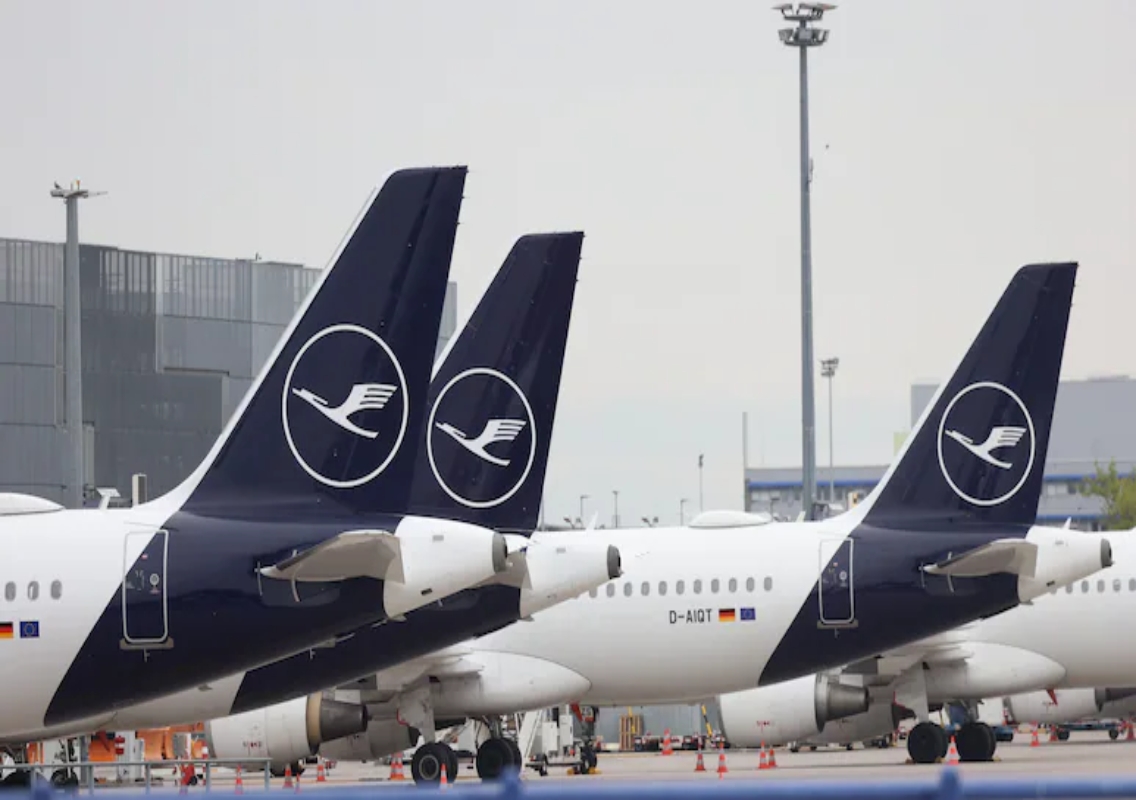


Frankfurt: German aviation major Lufthansa plans to eliminate 1,000 full-time positions at its flagship airline as high fuel costs, strike-related expenses and continuing operating losses put pressure on its financial turnaround.
The job reductions will affect the airline’s operations at its two major hubs, Frankfurt and Munich. The announcement forms part of a wider effort to improve efficiency and restore profitability at Lufthansa Airlines, the group’s mainline carrier.
According to an internal letter sent to employees and reported by Bloomberg and other news agencies, the airline’s management believes the measures introduced over the past two years are no longer sufficient to address its financial challenges.
The planned cuts come as the carrier reviews its operating structure, reduces capacity on short- and medium-haul routes and considers changes to its aircraft fleet.
Lufthansa records €180 million operating loss
Lufthansa Airlines recorded an operating loss of €180 million during the first nine months of 2026. Management said the airline was losing an average of €20 million every month during the period.
The financial performance has increased pressure on the company’s leadership to accelerate its turnaround programme.
In the letter to employees, management acknowledged that the airline’s financial position had not improved sufficiently despite extensive discussions and measures introduced over the previous two years.
The company identified several factors that had made its situation more difficult in 2026, including the conflict in the Middle East, persistently high fuel prices, nine days of strike action and an already elevated cost structure.
Management said the original turnaround measures were no longer adequate to secure the airline’s future, indicating that more extensive changes would be necessary.
The job reductions are intended to address these structural challenges and improve the competitiveness of Lufthansa’s mainline operations.
Frankfurt and Munich hubs to be affected
The proposed reduction involves 1,000 full-time positions across Lufthansa Airlines at its Frankfurt and Munich hubs.
The airline has approximately 40,000 employees, meaning the planned cuts represent around 2.5% of its workforce.
However, management has not provided a detailed breakdown of the departments or roles that will be affected. The precise timeline and process for implementing the reductions have also not been disclosed.
There is also uncertainty over whether the 1,000 positions are included in an earlier workforce-reduction programme announced by Lufthansa Group or represent additional job losses.
In September 2025, Lufthansa Group announced plans to eliminate approximately 4,000 administrative positions by 2030, mainly through greater digitalisation and the use of technology.
The latest announcement specifically concerns Lufthansa Airlines, rather than necessarily applying to every airline operating under the wider group.
The distinction is important because Lufthansa Group also owns or operates other carriers, including Swiss, Austrian Airlines, Brussels Airlines and Eurowings.
Airline plans to reduce short- and medium-haul capacity
Alongside the workforce reduction, Lufthansa Airlines is considering further cuts to capacity on short- and medium-haul routes.
The company also plans to reduce the number of Airbus A320-family aircraft operated by its mainline carrier and move towards using smaller Airbus A220 aircraft for some operations.
The shift is part of an effort to create a more efficient fleet and manage operating expenses. Aircraft size and operating costs are important considerations for airlines when deciding how to deploy capacity across different routes.
The planned changes could reshape parts of Lufthansa’s European network as the company seeks to improve the financial performance of its core airline.
The airline has also been pursuing a broader strategy of shifting some capacity towards other carriers within the group, including Discover Airlines and City Airlines, where crew costs can be lower.
The strategy reflects the pressure facing traditional full-service airlines from operating expenses and competition in the European aviation market.
High fuel prices and strikes add to pressure
Rising aviation fuel costs have emerged as a major challenge for Lufthansa during 2026.
The conflict in the Middle East has contributed to higher energy costs, increasing the financial burden on airlines that depend heavily on jet fuel.
Strike action has added another layer of pressure. Lufthansa’s management cited nine days of strikes during the year as one of the factors affecting its financial performance.
Industrial disputes involving pilots and cabin crew have also complicated the airline’s efforts to restructure operations and control costs.
The job-cut announcement comes amid continuing negotiations between Lufthansa and labour unions over pay and working conditions.
The Vereinigung Cockpit pilots’ union has been involved in a prolonged dispute with the airline. The union has sought stronger employment assurances as part of discussions over possible concessions.
The latest workforce announcement is therefore likely to become an important issue in the ongoing labour negotiations, although the full details of the proposed reductions remain unclear.
Wider Lufthansa Group reports stronger quarterly profit
Despite the difficulties facing its flagship airline, the wider Lufthansa Group has reported stronger financial performance in some areas.
The group’s third-quarter results showed improved profitability, supported by demand for premium long-haul travel.
However, the performance of Lufthansa Airlines has weighed on the overall group’s results. The mainline carrier’s third-quarter operating profit fell by around a third to €300 million, according to reported financial figures.
The group has also faced a higher fuel bill. Lufthansa expects its fuel expenditure for 2026 to reach approximately €9.3 billion, around €2 billion more than in 2025.
Earlier in November, the group reduced its full-year operating profit forecast to between €1.7 billion and €2 billion, compared with its earlier expectation of up to €2.2 billion.
The contrast between the performance of the wider group and its flagship airline highlights the challenges facing management as it attempts to improve the mainline carrier’s competitiveness.
Turnaround strategy faces a crucial test
Lufthansa began its turnaround programme in 2024 with the objective of improving earnings and addressing structural inefficiencies. The programme included more than 700 measures intended to generate €2.5 billion in additional earnings contributions by 2028.
However, management now believes the measures introduced so far need to be strengthened.
The latest job reductions, proposed capacity adjustments and fleet changes indicate that the company is moving towards a more extensive restructuring of its core airline.
For employees, the immediate concern will be the lack of clarity over which positions will be affected and when the reductions will take place. For the airline, the challenge will be implementing the changes while managing labour relations and maintaining operations across its major hubs.
Lufthansa’s ability to restore profitability at its flagship carrier will be closely watched as it navigates higher operating costs, industrial disputes and intense competition in the European aviation market.