







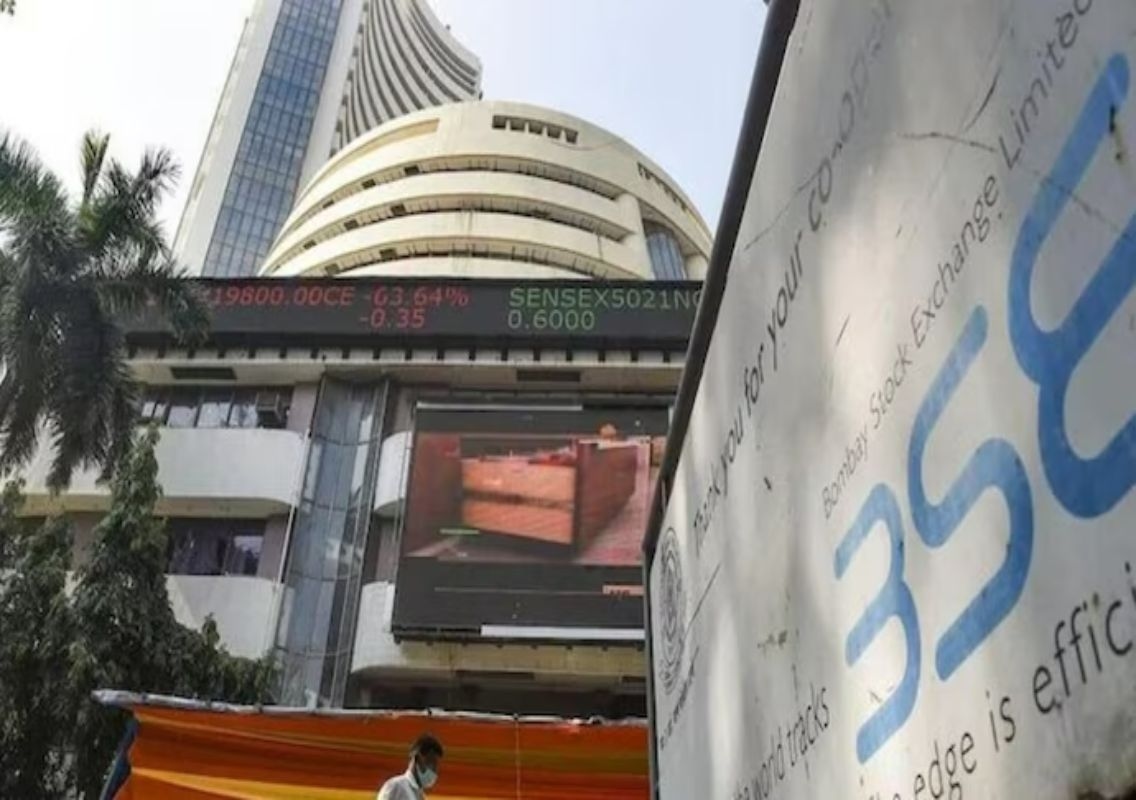


Mumbai: Trading activity across India’s major stock exchanges, including the National Stock Exchange of India and the Bombay Stock Exchange, remained suspended on May 28 on account of Bakri Id, prompting investors to take note of revised market timings.
All major segments remain closed
Due to the holiday, trading across key segments was halted for the entire day. This included equities, equity derivatives, currency derivatives, interest rate derivatives, as well as securities lending and borrowing.
The closure is part of the official trading holiday calendar for 2026 and applies uniformly across both exchanges.
Normal trading operations will resume on May 29, when markets reopen for regular sessions.
Commodity markets partially operational
While most segments remained closed, the commodity derivatives market followed a split schedule. Morning trading in commodities was suspended between 9 am and 5 pm.
However, the evening session reopened from 5 pm and continued until 11:30 pm or 11:55 pm, depending on the specific commodity category. This partial functioning ensures continuity in global commodity-linked trades despite the domestic holiday.
Upcoming stock market holidays in 2026
The Bakri Id holiday is one among several scheduled market closures during the year. Investors can expect the next trading holiday on June 26 for Muharram.
Other notable market holidays in 2026 include:
- Ganesh Chaturthi on September 14
- Mahatma Gandhi Jayanti on October 2
- Dussehra on October 20
- Diwali-Balipratipada on November 10
- Guru Nanak Gurpurab on November 24
- Christmas on December 25
These scheduled breaks are factored into trading strategies by institutional and retail investors alike.
Market performance before the holiday
The holiday follows a relatively volatile trading session, where benchmark indices ended marginally lower amid global uncertainties.
The BSE Sensex declined by 141.90 points or 0.19 per cent to close at 75,867.80. Meanwhile, the Nifty 50 slipped 6.55 points or 0.03 per cent to settle at 23,907.15.
Market sentiment was influenced by geopolitical concerns, particularly developments surrounding the US-Iran situation, despite relatively softer crude oil prices.
Sectoral trends and expert view
Sector-wise, power, capital goods, utilities, metals, industrials, automobiles, consumer discretionary, telecom and consumer durables stocks witnessed buying interest and outperformed during the session.
On the other hand, banking, financial services, information technology, oil and gas, and FMCG sectors saw mild weakness and profit booking. Banking and IT indices remained under pressure, while broader market participation stayed selective.
According to Hitesh Tailor, Technical Research Analyst at Choice Equity Broking Private Limited, the market faced resistance at higher levels, particularly in the 76,200–76,400 range on the Sensex.
He noted that while the overall bias remains cautiously positive, the lack of sustained momentum near resistance levels could keep traders selective in the near term. As long as the index holds above the 75,000–75,200 support zone, the broader undertone is expected to remain stable, with opportunities in stock-specific trades.
Conclusion
The closure of stock markets for Bakri Id offered a brief pause in trading activity, while also giving investors time to reassess market trends. With markets set to reopen on May 29, attention will return to global cues and domestic indicators that continue to shape investor sentiment.
(Disclaimer: The views, opinions, recommendations, and suggestions expressed by experts/brokerages in this article are their own and do not reflect the views of the News Karnataka Group. It is advisable to consult a qualified broker or financial advisor before making any actual investment or trading choices.)