


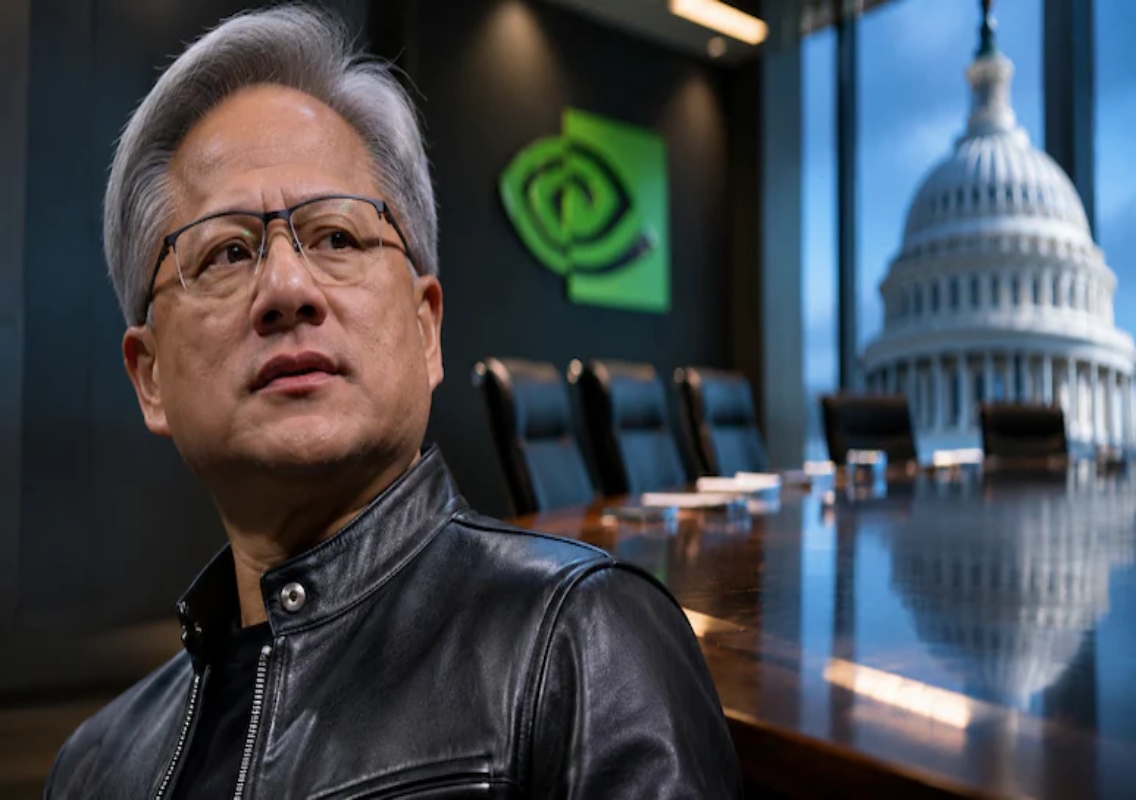


Santa Clara: Nvidia‘s board has launched an independent investigation into chief executive Jensen Huang following reports that he was the target of a Chinese intelligence operation and revelations about an alleged personal relationship. The company has said it has no reason to believe that national security information or confidential corporate data was compromised.
Huang, 63, continues to serve as Nvidia’s chief executive while the inquiry is underway. The investigation comes after reports linked a Chinese citizen and former technology executive, Alice Huang, to an alleged intelligence-gathering effort by China’s Ministry of State Security.
The controversy has attracted attention because of Nvidia’s central role in the global artificial intelligence industry and the importance of its advanced chips to US technology and national security policy.
Nvidia’s board announced that a committee of independent directors, supported by external legal counsel, would oversee the review. The board also said Huang fully supports the investigation and will cooperate with the process.
The company has maintained that it has confidence in Huang and its leadership team.
What is Nvidia investigating?
The investigation follows reports that Huang was the subject of a Chinese intelligence effort involving Alice Huang, a Chinese citizen and former executive at Singapore-based data centre company Megaspeed.
A report cited by NDTV Profit said a classified US intelligence memo alleged that Alice Huang had been recruited by China’s Ministry of State Security to gather information. The memo reportedly raised concerns about her relationship with Jensen Huang and her professional connections within the technology industry.
The allegations have not been established as fact. Reports have also linked Alice Huang to a separate investigation into the alleged smuggling of advanced Nvidia chips into China.
Nvidia’s board is examining the matter amid questions about whether any sensitive company information or national security interests could have been affected. However, the board has said it currently has no reason to believe that company secrets or national security information were compromised.
The review is being overseen by independent directors rather than being handled solely by the company’s executive leadership.
Who is Alice Huang?
Alice Huang, also known as Huang Le, is a Chinese citizen who previously worked as a television reporter in China before moving into the technology sector.
She later became a senior executive at Megaspeed, a Singapore-based data centre company that has emerged as a significant Nvidia customer in Southeast Asia.
Megaspeed purchased approximately $4.8 billion worth of Nvidia equipment. The company’s business relationship with Nvidia has added significance to the allegations involving Alice Huang.
The reported US intelligence memo identified her as a suspected recruit of China’s Ministry of State Security and raised questions about her relationship with Jensen Huang.
Forbes also reported that the memo referred to an investigation into alleged efforts to smuggle advanced Nvidia chips into China. These claims remain allegations and have not been proven.
Nvidia had previously described Huang’s interactions with Alice Huang as ordinary business dealings with a customer. The company has not publicly established that any confidential information was passed to her.
Jensen Huang acknowledges being unfaithful to his wife
The controversy has also drawn attention to Huang’s personal life. In a message to employees, the Nvidia chief executive apologised and acknowledged that he had been unfaithful to his wife.
“I was unfaithful to my wife,” Huang wrote, according to the report.
The revelation came alongside the wider scrutiny surrounding his reported relationship with Alice Huang. The company’s board has opened its investigation against this backdrop, although the existence of a personal relationship does not by itself establish that corporate information was compromised.
The board has reiterated its confidence in Huang and the company’s leadership while the review proceeds. Huang remains in charge of Nvidia during the investigation.
The distinction between the personal allegations and the national security concerns is important. The investigation will need to establish whether there was any breach of company policies, access to sensitive information or other conduct that could have affected Nvidia.
What have Nvidia and China said?
Nvidia had earlier characterised Huang’s interactions with Alice Huang as normal customer-related contact.
China has rejected the allegations. Beijing described the claims as “groundless speculation”,
The response reflects the diplomatic sensitivity surrounding accusations of intelligence activity and technology transfers between the United States and China.
Advanced semiconductor technology has become a major point of tension between the two countries. Washington has introduced export restrictions aimed at limiting China’s access to some of the most powerful chips used in artificial intelligence and advanced computing.
Any credible allegation involving the transfer of restricted technology or sensitive corporate information could therefore have implications beyond Nvidia itself.
How has Washington reacted?
The reports have drawn criticism from lawmakers across party lines in the United States Congress.
US President Donald Trump said he had not spoken to Huang. However, he praised the Nvidia chief executive’s work and indicated that he would be open to including him on an upcoming Asia trip.
Secretary of State Marco Rubio declined to comment on the matter, citing its sensitive nature. The intelligence memo was reportedly prepared under Rubio’s supervision.
The issue is particularly sensitive for Washington because Nvidia’s products are central to the country’s artificial intelligence ambitions. The company’s advanced processors are widely used in data centres that train and operate AI systems.
The United States has sought to maintain restrictions on the export of certain high-performance chips to China, making any possible connection between Nvidia executives, intelligence operations and chip transfers a matter of national interest.
Why the investigation matters for Nvidia
Nvidia is the world’s most valuable company, and its processors play a major role in the development and deployment of artificial intelligence systems. Its chips power data centres used by technology companies, research organisations and other businesses to train and run AI models.
The company has also reported substantial earnings growth amid strong demand for AI infrastructure. Nvidia posted a quarterly profit of $59.69 billion in August.
The investigation therefore comes at a time when the company occupies a strategically important position in the global technology industry.
For investors, the immediate questions include whether the inquiry will uncover any breach of corporate or national security obligations, whether it will affect Huang’s position and whether the controversy could create additional regulatory scrutiny.
For now, Nvidia’s board has expressed confidence in its chief executive, and Huang remains in office. The allegations involving Alice Huang and the reported intelligence operation remain unproven.
The independent investigation is expected to be important in establishing whether the reported connections involved any transfer of sensitive information or posed a risk to the company. Until its findings are available, the claims should be treated as allegations rather than established wrongdoing.