







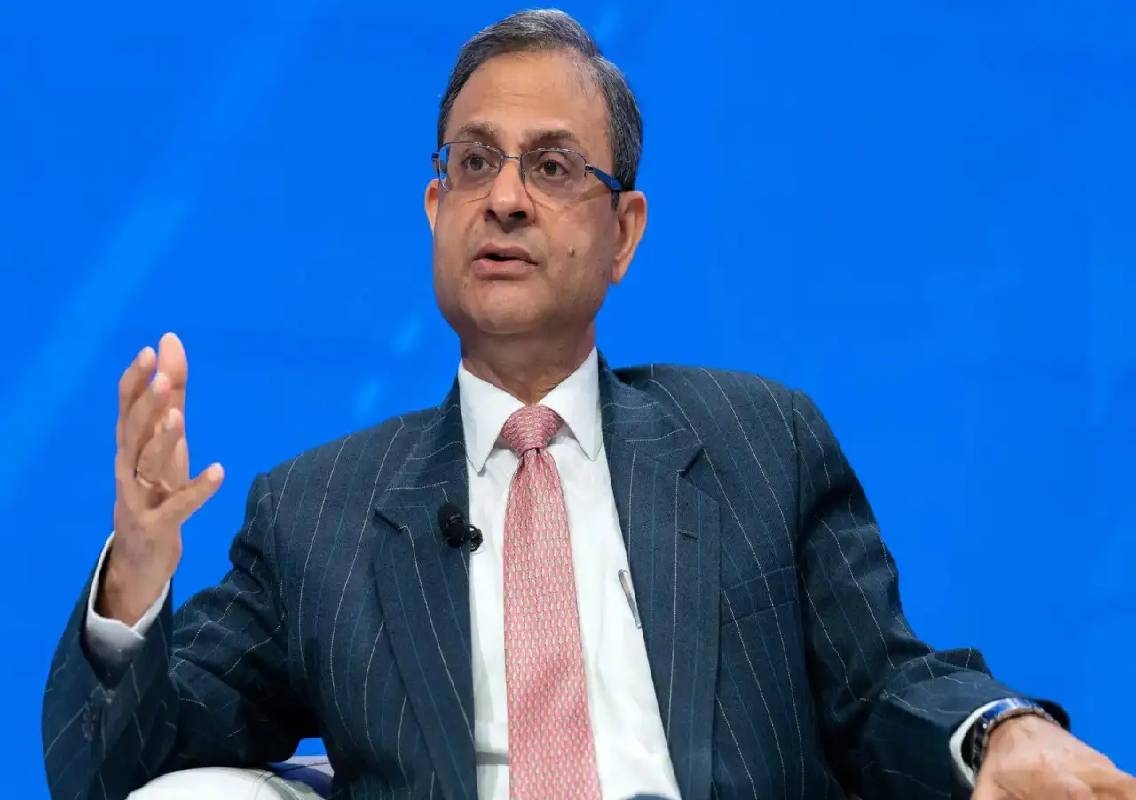


New Delhi: Reserve Bank of India Governor Sanjay Malhotra has warned that petrol and diesel prices in India may eventually increase if geopolitical tensions in the Middle East continue to keep global crude oil prices elevated.
Speaking at an international conference organised by the Swiss National Bank and the International Monetary Fund in Switzerland, Malhotra said the government may have to pass on higher fuel costs to consumers if the situation persists for a prolonged period.
RBI Governor flags pressure from rising crude oil prices
Malhotra stated that India remains vulnerable to global oil market disruptions because of its heavy dependence on imported crude oil.
“If this is to continue for longer period of time, it is just a matter of time before the government will pass on some of the price increases,” he said during the conference.
The comments come amid ongoing tensions linked to the US-Iran conflict and uncertainty surrounding the Strait of Hormuz, one of the world’s most critical oil shipping routes.
Strait of Hormuz crisis raises energy security concerns
The geopolitical instability in the region has triggered volatility in international crude oil markets, pushing up prices and increasing fears over supply disruptions.
India, being one of the world’s largest crude oil importers, faces direct exposure to rising global energy costs.
Higher crude prices not only increase the country’s import bill but also place pressure on inflation, transportation costs, manufacturing expenses and the value of the Indian rupee.
Economists warn that prolonged increases in oil prices could impact household expenses and overall economic growth.
Government and oil companies absorbing costs for now
At present, the Union government and state-run oil marketing companies are reportedly absorbing much of the burden arising from expensive crude imports.
Retail prices of petrol, diesel and domestic LPG cylinders have remained unchanged despite rising global oil prices.
However, certain fuel-linked products have already witnessed price increases.
State-owned oil firms recently raised prices of:
- Commercial LPG cylinders
- Industrial diesel
- Small 5-kg LPG cylinders
- Aviation turbine fuel for international airlines
Reports indicate that the price of 19-kg commercial LPG cylinders was recently increased by Rs 993.
Fuel price freeze may not continue indefinitely
Experts believe the current price stability in petrol and diesel may become difficult to maintain if crude oil prices remain elevated for an extended period.
Oil Minister Hardeep Singh Puri also acknowledged concerns regarding the growing financial pressure on oil marketing companies.
“How long will the oil companies be able to take it? Frankly, that worries me,” Puri said during an industry conference.
PM Modi urges fuel conservation
The developments come shortly after Prime Minister Narendra Modi appealed to citizens to reduce unnecessary fuel consumption and avoid excessive gold purchases.
The appeal was aimed at helping protect India’s foreign exchange reserves amid rising import costs and global economic uncertainty.
Rising oil prices could affect inflation
Financial analysts say any increase in petrol and diesel prices could have a wider impact on inflation since fuel costs influence transportation and supply-chain expenses across sectors.
A sustained rise in energy prices may also complicate efforts by the Reserve Bank of India to maintain inflation within its target range.
The situation is expected to remain closely tied to geopolitical developments in the Middle East and movements in international crude oil markets over the coming weeks.