







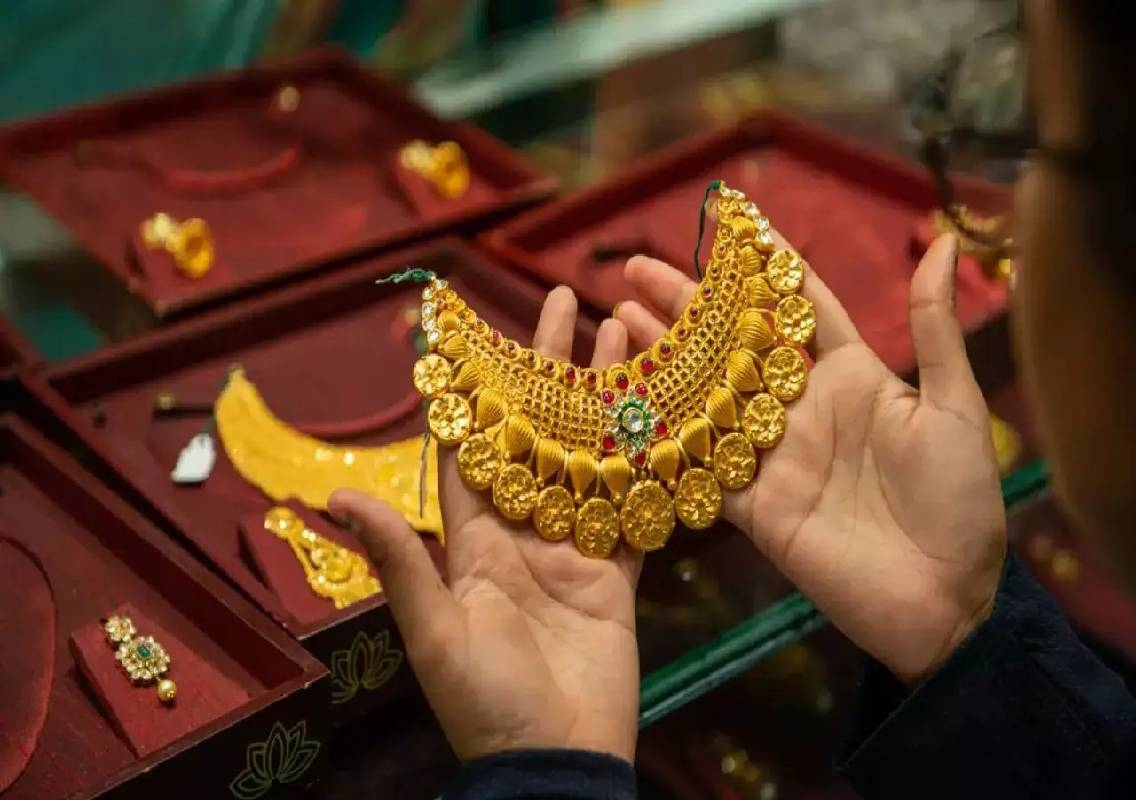


New Delhi: Jewellery industry associations are expected to meet officials from the Prime Minister’s Office (PMO) on Tuesday following Prime Minister Narendra Modi’s appeal urging citizens to temporarily avoid buying gold and reduce non-essential spending for the next year.
The remarks, made during a public rally in Hyderabad, have triggered widespread discussions across the jewellery sector and raised concerns among traders, retailers and bullion market participants.
According to reports, industry representatives are likely to seek clarity from government officials regarding the broader economic message and its potential impact on consumer sentiment and the gold market.
PM Modi urges cautious spending
During his address, Prime Minister Modi encouraged citizens to adopt a cautious financial approach amid ongoing global economic uncertainties.
He urged people to reduce discretionary spending, postpone avoidable expenses such as gold purchases and overseas travel, conserve energy and support locally manufactured products.
The Prime Minister’s comments are being viewed as part of a broader effort to reduce pressure on India’s foreign exchange reserves and curb non-essential imports.
The jewellery industry, however, fears that the remarks could significantly affect consumer confidence in one of India’s largest retail and cultural sectors.
Gold remains deeply connected to Indian traditions, weddings, festivals and investment habits, making any public appeal regarding purchases highly sensitive for the market.
Forex reserve pressure behind appeal
The Prime Minister’s remarks come at a time when India is facing increasing pressure on its foreign exchange reserves amid elevated global commodity prices and persistent geopolitical uncertainty.
According to official data, India’s forex reserves declined by $7.794 billion to $690.693 billion during the week ending May 1.
India remains heavily dependent on imports for key commodities such as crude oil, edible oils, fertilisers and gold.
Economists say fluctuations in global commodity prices and international supply chain disruptions continue to place pressure on the Indian rupee and the country’s trade balance.
Gold imports, in particular, represent a major source of foreign currency outflow because India imports the vast majority of the gold consumed domestically.
Gold imports hit record high
India consumes nearly 700 to 800 tonnes of gold annually, while domestic production is estimated at only around one to two tonnes.
As a result, more than 90 per cent of India’s gold demand is fulfilled through imports.
Official figures show that India’s gold imports surged to a record $72 billion in FY26, marking a sharp 24 per cent increase compared to $58 billion in FY25.
Gold now accounts for nearly 9 per cent of India’s total imports, making it one of the country’s largest import categories after crude oil.
Experts note that while gold remains a preferred investment and cultural asset for Indian households, it contributes little to industrial production or export growth compared to other imported commodities.
The government has long attempted to discourage excessive gold imports through import duties and financial instruments aimed at encouraging alternatives such as sovereign gold bonds and digital investments.
At present, gold imports attract an effective duty of around 6 per cent, including customs charges and related levies.
Jewellery sector seeks clarity
The Prime Minister’s appeal has sparked concern within the jewellery industry, which fears a slowdown in demand if consumers begin postponing purchases.
Industry associations are expected to discuss the issue with PMO officials and understand whether the remarks indicate possible future policy measures relating to gold imports or consumption.
Jewellery traders are particularly concerned because India’s wedding and festive seasons traditionally drive strong gold demand and support millions of jobs linked to jewellery manufacturing, retail and exports.
Analysts say any prolonged decline in consumer demand could affect jewellers, artisans and small businesses across the sector.
At the same time, some economists believe reducing non-essential imports could help stabilise India’s external finances during periods of global economic volatility.
The discussions between jewellery associations and government officials are expected to provide greater clarity on the government’s approach toward gold imports and consumer spending in the coming months.
For now, PM Modi’s remarks have already created noticeable uncertainty across bullion markets and jewellery trade circles nationwide.