







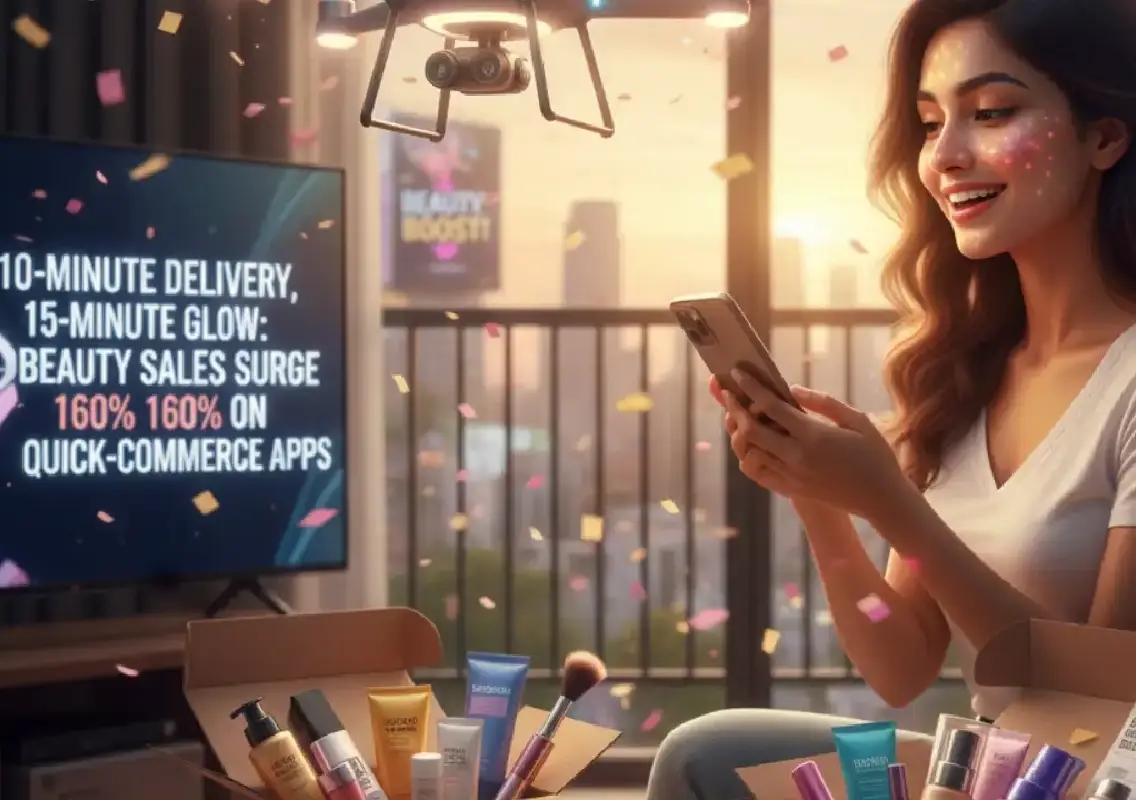


Quick commerce platforms are poised to fundamentally reshape India’s beauty and personal care (BPC) market, emerging as the largest online sales channel by the end of the decade, according to a new industry report.
Rapid rise of quick commerce in BPC
A report by Redseer Consulting projects that the share of quick commerce in the BPC segment will surge from around 15 per cent in FY25 to 30–40 per cent by FY30. Platforms such as Blinkit, Zepto and Swiggy Instamart are expected to drive this growth through hyperlocal models promising delivery within 30 minutes.
India’s overall BPC market is estimated to expand from $23 billion in FY25 to $40 billion by FY30, with online channels accounting for 34–38 per cent of total spends.
Marketplaces face declining share
The report suggests quick commerce will not merely add a new layer to e-commerce but reorder the existing hierarchy. Horizontal marketplaces such as Amazon and Flipkart are projected to see their share of online BPC fall from about 40 per cent in FY25 to 20–30 per cent by FY30.
Similarly, value-focused platforms like Meesho and Shopsy may see a moderation in growth as consumer preferences shift towards speed and convenience.
Younger consumers driving demand
Gen Z and Gen Alpha are expected to account for nearly 50 per cent of BPC spending by FY30, up from 32 per cent in FY24. Their preference for instant access and digital-first discovery is accelerating the shift towards quick commerce.
New-age brands and future growth
Redseer also projects that over 150 digital-first BPC brands will cross ₹100 crore in annual revenue by 2030, collectively contributing up to 30 per cent of category spends. With quick commerce addressing long-standing distribution gaps, speed and convenience are set to become central to how urban India shops for beauty and personal care.