







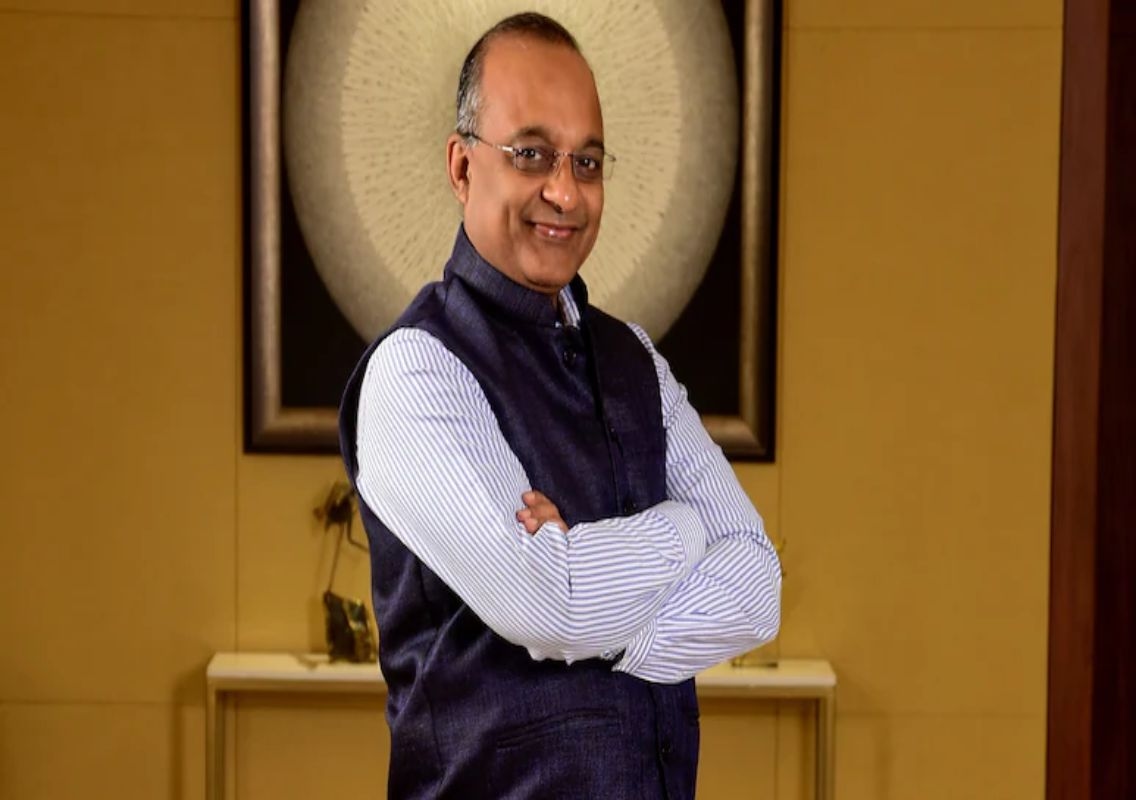


Mumbai: HDFC Bank Managing Director and Chief Executive Officer Sashidhar Jagdishan will step down from his position on October 26, 2026, after deciding not to seek reappointment, the country’s largest private sector lender informed the stock exchanges on Saturday.
Jagdishan’s decision brings an unexpected turn to the leadership succession process at HDFC Bank. The bank’s board had been considering his reappointment as his existing tenure approached its end. However, Jagdishan has now conveyed that he does not wish to seek another term.
According to the exchange filing, the bank’s board attempted to persuade Jagdishan to continue, but he reiterated his decision not to seek reappointment. He will retire from the services of HDFC Bank at the close of business hours on October 26, 2026.
The HDFC Bank board has now decided to fast-track the process of selecting and appointing his successor, ensuring that a new managing director and CEO is identified well before Jagdishan’s departure.
Jagdishan confirms decision not to seek another term
HDFC Bank said Jagdishan communicated his decision to the bank on Saturday.
The lender stated that Jagdishan had conveyed his decision not to seek reappointment as Managing Director and Chief Executive Officer. The bank also said that despite its efforts to persuade him to continue, he maintained his decision.
As a result, Jagdishan will retire from the bank’s services at the end of October 26.
The announcement marks a significant leadership transition for HDFC Bank, given Jagdishan’s central role in steering the lender during a period of major changes in India’s banking sector.
Jagdishan took over as HDFC Bank’s MD and CEO in October 2020, succeeding Aditya Puri, who had led the bank for more than two decades.
His tenure has included the landmark merger of HDFC Ltd with HDFC Bank, one of the largest corporate transactions in India’s financial sector.
HDFC Bank to fast-track successor selection
With Jagdishan deciding against reappointment, the bank’s immediate priority is finding his successor.
The board has said that it will fast-track the process for selecting and appointing the next MD and CEO. The objective is to complete the succession process well within the required timeline.
The appointment of the chief executive of a major private sector bank involves regulatory processes and board-level scrutiny.
The succession decision will therefore be closely watched by investors and the banking industry, particularly because HDFC Bank is one of India’s most systemically important private lenders.
The bank’s ability to ensure a smooth transition will be important for maintaining continuity in strategy, operations and investor confidence.
Decision comes months after Jagdishan expressed interest
Jagdishan’s latest decision is notable because he had earlier indicated that he was keen to continue in the role.
Speaking to NDTV Profit months ago, Jagdishan had said he was interested in being reappointed but would allow the established appointment process to take its course.
He had described the board’s nomination process as robust and transparent.
The change in position therefore comes as a surprise, particularly given that the bank had been working through the formal process concerning his tenure.
The latest development means the succession question has now moved from a potential reappointment to the search for a completely new chief executive.
What happens to HDFC Bank leadership now?
Jagdishan will continue as MD and CEO until October 26, giving the bank nearly two months to complete the succession process.
The board’s decision to fast-track the search is aimed at ensuring that the leadership transition does not create prolonged uncertainty.
The successor will inherit responsibility for leading one of India’s largest banking institutions, with a vast customer base and a significant presence across retail banking, corporate banking, digital banking and financial services.
The new CEO will also take charge at a time when the banking sector is dealing with changing interest-rate conditions, evolving digital banking requirements, competition from financial technology companies and increasing expectations around asset quality and growth.
Investors closely watch leadership transition
Jagdishan’s departure is likely to receive considerable attention from investors because leadership continuity has traditionally been an important factor in the valuation of large private sector banks.
HDFC Bank’s leadership transition comes after the lender has already experienced significant corporate governance and board-level developments in 2026.
The bank’s former chairman Atanu Chakraborty resigned abruptly earlier this year, after which Keki Mistry was appointed interim chairman with the approval of the Reserve Bank of India.
Against this backdrop, the announcement regarding Jagdishan’s departure adds another major leadership transition at the lender.
The bank will therefore be expected to communicate clearly about its succession plans to maintain confidence among shareholders and other stakeholders.
Macquarie had flagged succession uncertainty
The potential impact of Jagdishan’s tenure on HDFC Bank’s shares had already been highlighted by brokerage Macquarie.
In an earlier note, the brokerage said the decision regarding Jagdishan’s tenure could determine whether uncertainty surrounding the bank’s leadership eased or continued to affect the stock.
Macquarie had suggested that a full-term renewal could provide greater clarity, while a temporary extension could leave the succession question unresolved for longer.
The brokerage also warned that uncertainty could persist during the transition and that a new CEO might require time to settle into the role.
Jagdishan’s decision not to seek reappointment now removes the possibility of a straightforward continuation of the existing leadership, making the appointment of his successor the key issue for investors.
A major transition after HDFC merger
Jagdishan’s tenure has coincided with one of the most important milestones in HDFC Bank’s history — the merger with Housing Development Finance Corporation.
The merger created a larger financial services institution by combining HDFC Bank with its parent housing finance company, HDFC Ltd.
The integration required significant management attention and was closely followed by investors and regulators.
Under Jagdishan, HDFC Bank also continued its expansion in retail and digital banking while working to integrate the operations and customer relationships inherited through the merger.
His departure will therefore come at an important point in the bank’s post-merger journey.
The incoming CEO will be responsible for building on the integration work while maintaining growth and profitability.
Successor faces a significant mandate
The person chosen to replace Jagdishan will take charge of a bank with a large balance sheet and a wide-ranging business portfolio.
Maintaining asset quality while supporting credit growth will remain a key priority.
The new management will also need to navigate competition across retail loans, deposits, digital payments, wealth management and corporate banking.
Another important area will be the continued integration and optimisation of the HDFC group businesses following the merger.
The successor will also need to work closely with the board, regulators, employees and investors during the transition.
Leadership stability remains important for banks
Leadership stability is particularly important for large banks because strategic decisions often involve long-term commitments relating to lending, capital allocation, technology and branch expansion.
A change at the top can lead to adjustments in strategic priorities, although the extent of any change depends on the successor and the board’s broader vision.
For HDFC Bank, the board’s decision to begin the succession process early could help minimise disruption.
The bank has indicated that the process will be fast-tracked, signalling an intention to ensure that the next leader is appointed within the required timeframe.
HDFC Bank’s next phase
The leadership change comes at a crucial stage for HDFC Bank.
The lender remains one of India’s biggest private sector banks, and its performance has significant implications for the country’s banking and financial markets.
The next CEO will be expected to maintain the bank’s long-term growth trajectory while addressing challenges related to deposits, credit growth, technology, competition and profitability.
Investors are likely to closely examine the credentials and experience of potential candidates once the succession process progresses.
The market may also assess whether the new management intends to maintain the existing strategy or introduce changes in the bank’s approach to growth and capital allocation.
Why October 26 is important
October 26, 2026, will mark the end of Jagdishan’s tenure as HDFC Bank’s MD and CEO.
Until then, he is expected to continue in his current role and oversee the bank’s operations.
The board’s decision to accelerate the appointment process means the coming weeks could see developments regarding the selection of his successor.
A timely appointment would allow the bank to plan a structured handover and reduce uncertainty around the transition.
For employees, customers and investors, continuity during this period will be important.
Conclusion
Sashidhar Jagdishan will step down as Managing Director and Chief Executive Officer of HDFC Bank on October 26, 2026, after deciding not to seek reappointment.
The decision comes despite efforts by the bank’s board to persuade him to continue. Jagdishan has reiterated his decision, prompting HDFC Bank to fast-track the process of selecting and appointing his successor.
The development represents a major leadership transition for India’s largest private sector lender. Jagdishan has led HDFC Bank since 2020 and oversaw the institution during the landmark merger with HDFC Ltd.
His departure also comes after other leadership developments at the bank earlier this year, making the succession process particularly important for investors.
Macquarie had previously highlighted the potential impact of uncertainty surrounding Jagdishan’s tenure on HDFC Bank’s shares. With the CEO now set to leave, attention will shift towards the board’s choice of successor and the ability of the new leadership to maintain the bank’s growth and strategic direction.
The coming weeks will therefore be crucial for HDFC Bank as it prepares for its next phase under a new managing director and CEO.