







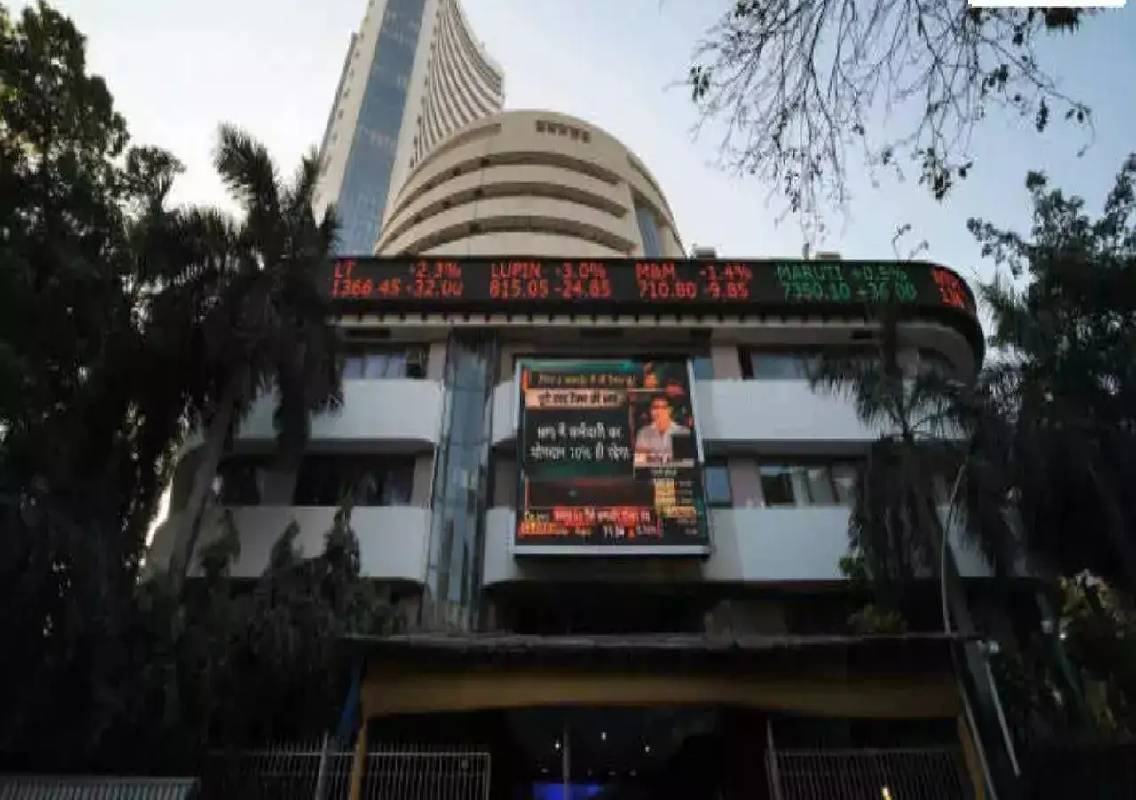


Mumbai: Indian stock markets began the week on a negative note on Monday, with benchmark indices falling sharply amid weak global cues, rising crude oil prices and concerns over foreign investor selling.
The BSE Sensex opened over 400 points lower, while the NIFTY 50 slipped below the 23,750 mark during early trade.
Market analysts attributed the weak opening to rising geopolitical tensions, elevated crude oil prices and pressure on emerging market equities.
Sensex and Nifty trade in red
At the opening bell, the Sensex was trading at 74,807.97, down 430.02 points or 0.57 per cent.
The Nifty also witnessed losses and was trading near the 23,731 level during early market activity.
Meanwhile, GIFT Nifty signalled a weak start for domestic equities, trading at 23,558 in early morning trade, down nearly 150 points or 0.63 per cent.
Broader market sentiment also remained cautious as investors monitored global economic developments and commodity price movements.
Rising crude oil prices weigh on markets
Market experts pointed to the sharp rise in Brent crude oil prices as one of the key reasons behind the decline in equities.
According to Dr VK Vijayakumar, Brent crude prices had surged to around USD 111 per barrel amid concerns over disruptions linked to the Strait of Hormuz.
The Strait of Hormuz is considered one of the world’s most critical oil shipping routes, and any disruption there can significantly affect global energy supplies and prices.
Analysts warned that higher crude oil prices could increase fuel costs in India and potentially lead to another round of petrol and diesel price hikes.
Such increases may add pressure on inflation and affect consumer spending and economic growth.
Bond yields and rupee concerns add pressure
Another factor weighing on investor sentiment was the rise in US bond yields.
The US 10-year bond yield reportedly climbed to 4.62 per cent, making emerging market equities less attractive for foreign investors.
Higher US bond yields often lead to capital outflows from emerging markets like India as investors shift towards safer dollar-denominated assets.
Analysts also expressed concerns over continued weakness in the Indian rupee.
A depreciating rupee could further intensify foreign portfolio investor (FPI) selling, creating additional pressure on Indian equities.
Market experts believe the government and financial authorities may soon introduce measures aimed at stabilising the rupee and controlling volatility.
Pharma and private banks seen resilient
Despite the weak market sentiment, analysts indicated that some sectors may continue to perform relatively better.
Export-oriented industries such as pharmaceuticals are expected to remain resilient due to the benefits of a weaker rupee, which improves export competitiveness.
Dr Vijayakumar also noted that leading private sector banks, though currently under pressure due to foreign investor selling, remain fundamentally strong and attractively valued for long-term investors.
He suggested that investors with a long-term perspective could consider accumulating quality banking stocks during periods of market weakness.
Global uncertainty impacts investor mood
The weak opening in Indian markets reflects broader uncertainty in global financial markets driven by geopolitical tensions, commodity price volatility and inflation concerns.
Investors are closely watching developments in global oil markets, US interest rate expectations and foreign institutional investment trends.
Market participants believe volatility may continue in the short term until there is greater clarity on geopolitical risks and energy price movements.
Analysts also expect inflation trends and central bank policy decisions to play a major role in determining market direction in the coming weeks.
Conclusion
Indian stock markets started the week under pressure as rising crude oil prices, global uncertainties and foreign investor concerns affected sentiment. While benchmark indices traded sharply lower in early trade, experts believe selective sectors such as pharmaceuticals and strong private banks may continue to offer opportunities for long-term investors despite near-term volatility.