







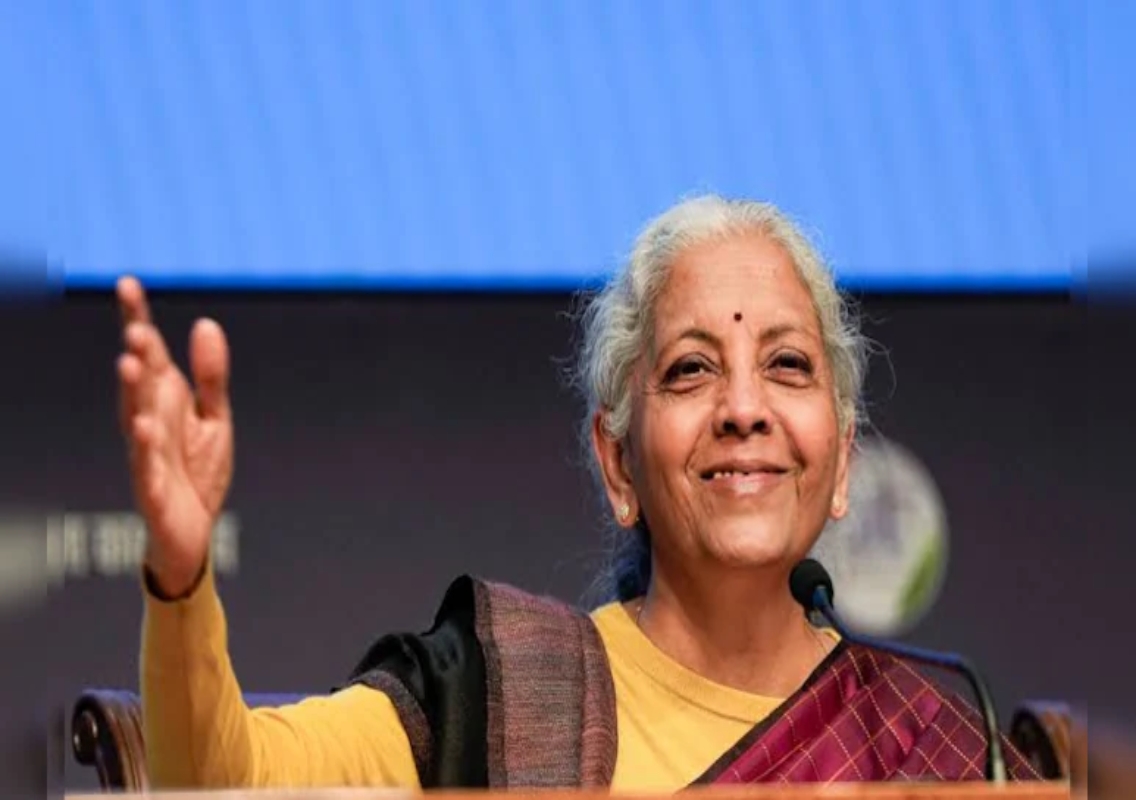


New Delhi: Union Finance Minister Nirmala Sitharaman has strongly responded to Samajwadi Party president Akhilesh Yadav’s criticism of the Centre’s proposed disinvestment of IDBI Bank, accusing opposition parties of shedding “crocodile tears” over the lender’s sale.
The exchange followed Yadav’s description of the government’s asset-sale approach as a “Season End Sale”. He criticised the Bharatiya Janata Party-led government on social media, alleging that it was selling off public assets ahead of a potential political decline.
Sitharaman rejected the allegations and countered by highlighting the bad-loan legacy of the Congress-led United Progressive Alliance (UPA) government, which the Samajwadi Party had supported between 2004 and 2014.
The public exchange has brought the proposed strategic disinvestment of IDBI Bank into the political spotlight, with the government defending its banking reforms and the opposition questioning its approach to public-sector assets.
Sitharaman Questions SP’s Stand on Banking
Responding to Yadav’s post on X, Sitharaman pointed to the Samajwadi Party’s support for the UPA government and questioned its criticism of the current administration’s banking policies.
She argued that public-sector banks faced serious challenges during the UPA years, including political interference and mounting non-performing assets (NPAs).
The finance minister said Yadav’s party had supported the UPA coalition during a period when, according to her, public-sector banks were struggling with bad loans. She questioned why the Samajwadi Party was now raising concerns about banking when it had not challenged its allies over the issues she described.
Sitharaman’s response shifted the debate from the proposed sale of IDBI Bank to the record of successive governments in managing public-sector lenders.
Finance Minister Alleges ‘Phone Banking’ and Crony Capitalism
Sitharaman also accused parties associated with the opposition alliance of contributing to the problems faced by public-sector banks through what she described as “phone banking” and “crony capitalism”.
She specifically referred to IDBI Bank’s past lending practices, arguing that the lender had extended loans to borrowers from whom recovering even the principal and interest remained difficult.
According to the finance minister, these problems formed part of the legacy inherited by the current government. Her remarks were aimed at defending the Centre’s position that reforms and changes in bank management were necessary to strengthen the financial system.
The comments underline the political disagreement over the interpretation of India’s banking history. While Yadav criticised the proposed disinvestment as part of a wider sale of public assets, Sitharaman argued that the government had strengthened the banking sector after years of financial stress.
Centre Defends Banking Reforms Under NDA
Defending the National Democratic Alliance (NDA) government’s record, Sitharaman said the administration led by Prime Minister Narendra Modi had worked to revive IDBI Bank and the broader public-sector banking system.
She cited capital infusions, efforts to recover bad loans and changes intended to improve transparency and governance as part of the government’s approach.
Sitharaman argued that these measures had helped improve the condition of public-sector banks, including IDBI Bank. She questioned the opposition’s criticism, saying the government had strengthened the lender before proceeding with the proposed disinvestment.
The finance minister’s defence centres on the argument that the sale process follows efforts to improve the bank’s financial position rather than an attempt to dispose of a failing institution without addressing its problems.
IDBI Bank’s Recovery and Disinvestment Plan
IDBI Bank faced significant financial difficulties in the past, including a high burden of non-performing assets. In 2019, Life Insurance Corporation of India (LIC), a state-owned insurer, acquired a majority stake in the lender as part of efforts to stabilise its position.
Subsequent capital infusions and bad-loan recovery efforts helped the bank improve its financial performance. IDBI Bank later exited the Reserve Bank of India’s Prompt Corrective Action (PCA) framework and returned to sustained profitability, according to the information provided.
The Centre and LIC together hold around 94% of IDBI Bank’s equity. The government and the insurer have been pursuing a plan to transfer a combined 60.7% controlling stake, along with management control, to strategic private bidders.
The proposed transaction is a strategic disinvestment, under which a substantial stake and management control would move to a private investor. The process has become the subject of political debate, with the government defending its banking reforms and the opposition raising concerns about the sale of public-sector assets.
Political Debate Over Public-Sector Asset Sales
The exchange between Sitharaman and Yadav reflects the wider political disagreement over disinvestment and the role of the government in owning and managing financial institutions.
Yadav’s “Season End Sale” remark challenged the government’s approach to public assets. Sitharaman responded by focusing on the banking sector’s earlier bad-loan problems and defending the NDA government’s efforts to strengthen lenders.
The debate over IDBI Bank now involves both the proposed transfer of ownership and competing claims about the management of public-sector banks. The government’s position is that the lender has undergone a recovery process, while Yadav’s criticism centres on the sale of state-owned assets.
As the strategic disinvestment process advances, the transaction remains a significant point of contention between the government and opposition parties.