


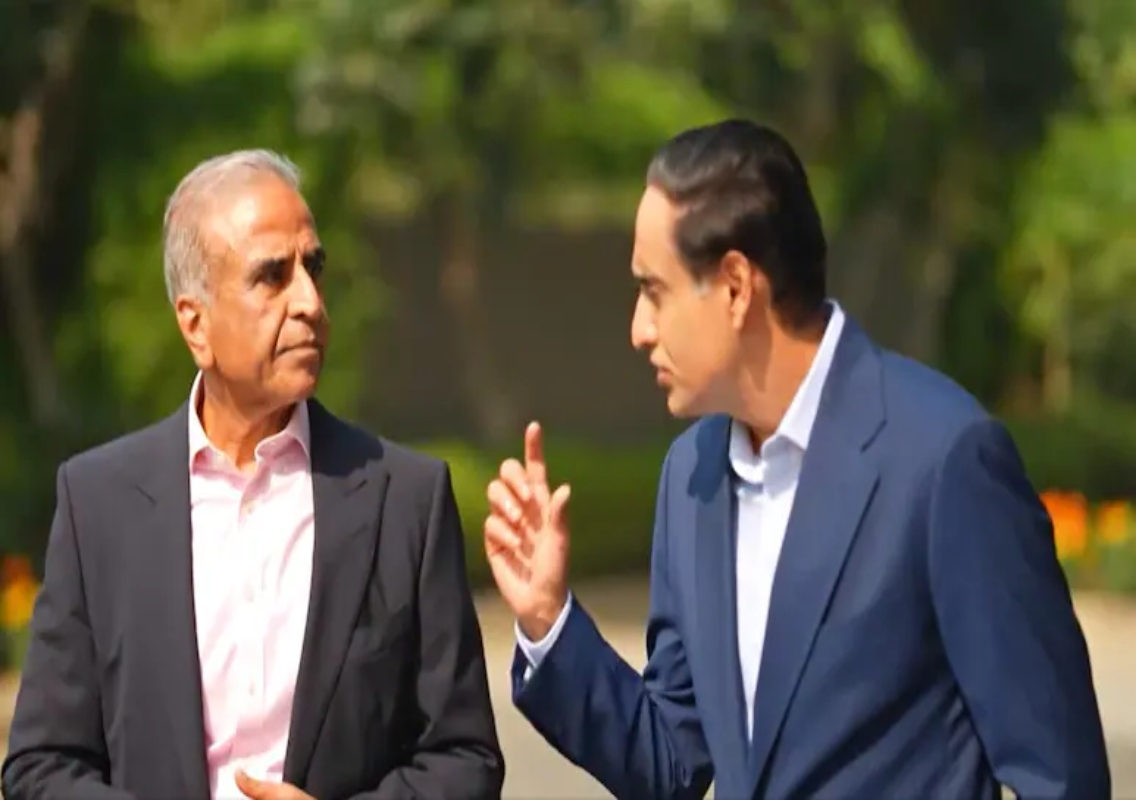


New Delhi: Bharti Airtel is preparing for its next phase of expansion, with chairman Sunil Bharti Mittal identifying financial services, data centres and advanced digital connectivity as key opportunities beyond the company’s traditional telecom business.
In an interview with NDTV on Walk The Talk, Mittal said Airtel’s strong balance sheet and cash flows had created an opportunity to pursue new businesses and make strategic investments. He described the present period as an important inflection point for the company, which has established itself as one of India’s leading telecom operators.
“Currently, where we are, things are pretty settled. Balance sheet is strong, cash flow is strong. This is the time for Airtel to make moves,” Mittal said.
He recalled that Airtel had previously expanded from mobile services into fixed-line connectivity as part of an earlier business transformation. The company is now looking at opportunities that can strengthen its presence in India’s expanding digital economy.
Financial services emerge as a major growth opportunity
Mittal expressed confidence in Airtel’s financial services businesses, highlighting the scale of Airtel Money in Africa and the performance of Airtel Payments Bank in India.
Airtel Money in Africa has around 40 crore customers, giving the company a substantial customer base in the financial services segment.
He also said Airtel Payments Bank had been performing well and had become profitable. The business has revenue of approximately Rs 4,000 crore and deposits of around Rs 4,000 crore.
However, the payments bank does not have the authority to lend. Mittal’s comments underline the importance of financial services as a complementary business to Airtel’s telecom operations.
Airtel has also been developing its financial services presence in India. The company received regulatory approval for Airtel Money, a non-deposit-taking non-banking financial company, which is expected to support its plans to offer lending services to customers.
The broader opportunity lies in using Airtel’s large customer base and digital distribution network to expand financial products and services.
Data centres could become another major business
Data centres are another important part of Mittal’s growth strategy. With demand for cloud computing, artificial intelligence and digital services increasing, India is expected to require substantial investment in data storage and computing infrastructure.
Mittal acknowledged that Airtel was not yet a leading player in the data centre business itself. However, he said the company had a strong position in connectivity and already provided network services to several data centre operators.
He expects two to four large Indian companies to emerge as frontrunners in the country’s data centre industry, with Airtel among the important participants.
The company’s data centre business operates through Nxtra Data. Airtel has been working to expand Nxtra’s capacity as demand for cloud services, enterprise computing and AI infrastructure increases.
The opportunity is not limited to owning data centre facilities. Connectivity, secure networks and cloud services could help Airtel offer integrated solutions to businesses that require reliable digital infrastructure.
The expansion also comes as India seeks to strengthen domestic computing capacity and meet growing requirements for data localisation and secure data management.
6G could transform India’s telecom networks by 2030
On the future of telecommunications, Mittal said the industry would need financially strong operators capable of investing in new technologies.
He expects India to have 6G technology by 2030 and believes future networks could evolve into sensing networks, extending their role beyond conventional voice and data connectivity.
The next generation of telecom infrastructure is likely to require sustained investment in network equipment, spectrum, fibre and other digital assets.
Mittal also discussed the structure of the global telecom industry, noting that most countries were moving towards having two or three major operators. He stressed that telecom companies need sufficient financial capacity to support the investment requirements of future technologies.
His comments highlight the importance of maintaining a sustainable business model as operators prepare for the transition from 5G to 6G.
Mittal says India has an advantage in connectivity
Mittal said India was ahead of countries such as the United Kingdom and the United States in the quality of radio signals.
He also pointed to the relatively low cost of mobile calls and data services in India, saying consumers had benefited from the country’s rapid expansion of digital connectivity.
However, he suggested that users should be willing to pay more as their dependence on digital services increases.
The issue of telecom tariffs remains important for the industry because operators need sufficient revenue to fund network expansion and technology upgrades. The ability to generate stronger average revenue per user could help companies maintain investment levels while improving financial performance.
Satellite telephony and security concerns
Mittal said he was not particularly concerned about satellite telephony becoming a major threat to conventional mobile operators in India.
The satellite communications business associated with Bharti, he said its capacity for direct satellite telephony was limited and that the service was likely to contribute only a small amount of revenue.
He also responded to concerns around the regulatory approval process for satellite communications services, referring to the time taken by governments to assess security requirements.
“We have been waiting for nods longer than Musk,” Mittal said, referring to Elon Musk’s Starlink and the process of obtaining approvals.
He stressed that governments needed to examine national security implications before allowing foreign companies to operate critical communications infrastructure.
“We can have foreign assets in India but the kill switch has to be in our hands,” he said, emphasising the need for domestic control over infrastructure that could have defence and security implications.
Mittal added that two OneWeb centres had received security clearance and approval, while the company was awaiting a government decision on satellite telephony.
Airtel’s next phase will extend beyond mobile services
Mittal’s comments indicate that Airtel’s future growth strategy will involve more than expanding its mobile subscriber base. Financial services, data centres, cloud computing and satellite connectivity are expected to play increasingly important roles in the company’s business plans.
The strategy builds on Airtel’s existing customer relationships and network infrastructure while opening opportunities in sectors that are expected to benefit from India’s digital expansion.
With a stronger balance sheet and established telecom operations, the company is positioning itself to invest in businesses that could become additional sources of growth over the coming years. The success of these initiatives will depend on execution, investment discipline and the ability to compete in emerging technology markets.