







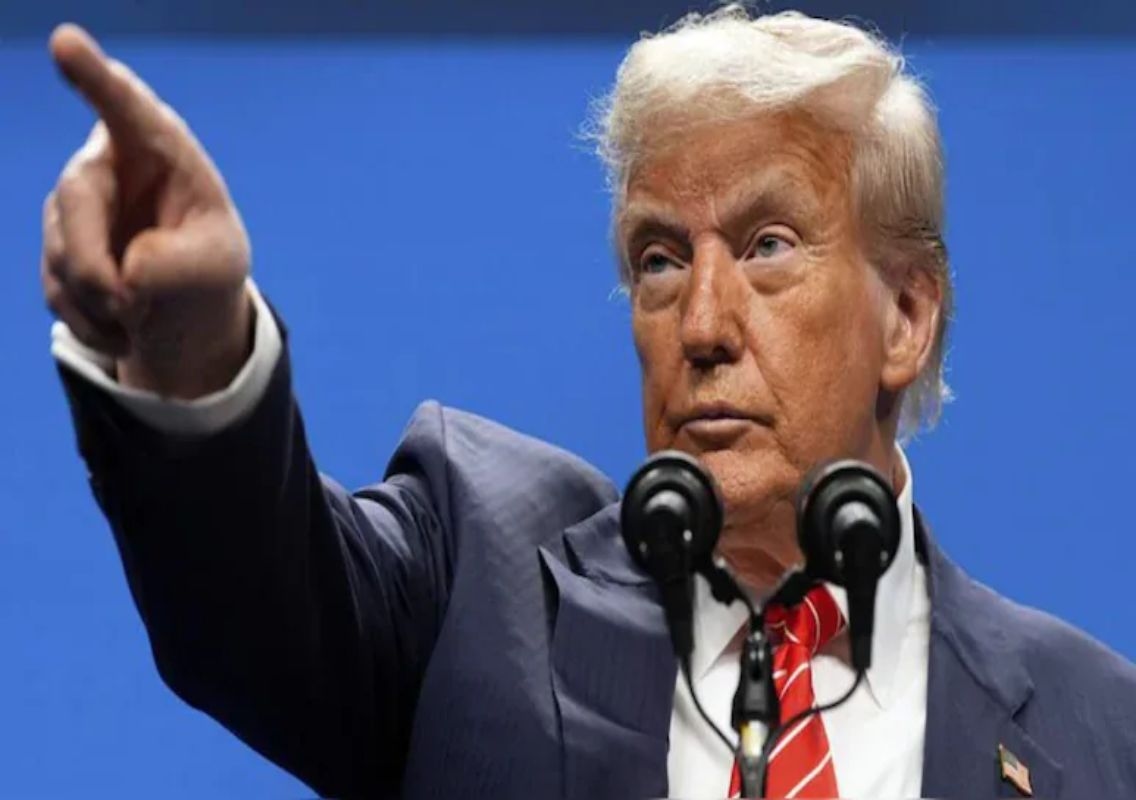


Washington: US President Donald Trump has imposed new tariffs of up to 100% on imported drones, citing national security concerns and the need to protect the American unmanned aircraft industry from foreign competition. The move adds another layer to the Trump administration’s broader tariff strategy and could affect drone manufacturers, suppliers and consumers.
The new measures target imported drones and related products, with tariff rates varying depending on the country of origin and product category. The administration has argued that excessive dependence on foreign-made drones could create security vulnerabilities for the United States, particularly because drones are increasingly used for military, surveillance, infrastructure and other sensitive applications.
Why Trump is targeting imported drones
Drones have moved far beyond their earlier role as consumer gadgets used mainly for photography and recreation. They are now widely used in agriculture, logistics, mapping, infrastructure inspection, policing and military operations.
That wider use has also made drone supply chains a national security issue.
US officials have increasingly raised concerns about drones and drone components manufactured overseas, particularly where sensitive data could potentially be collected or transmitted through connected devices. The Trump administration’s latest tariff action is therefore being presented not simply as a trade measure but also as part of a broader effort to strengthen domestic production.
The administration believes that encouraging American companies to manufacture drones and critical components domestically could reduce dependence on foreign suppliers.
The tariff decision also fits into Trump’s wider trade policy, which has relied heavily on import duties as a tool to protect US industries and pressure trading partners.
Tariffs can reach 100%
The most significant feature of the new policy is the possibility of tariffs reaching 100% on certain imported drones.
A tariff of that size can dramatically increase the landed cost of an imported product. Depending on how manufacturers, distributors and retailers absorb or pass on the additional expense, the impact could eventually be felt by American businesses and consumers.
For drone companies that rely heavily on overseas manufacturing, the new duties could force them to reconsider their supply chains.
Companies could respond in several ways. Some may absorb part of the additional cost to remain competitive, while others could raise prices. Manufacturers may also accelerate plans to move assembly or component production to the United States.
However, relocating production is not straightforward. Modern drones rely on a complex network of components, including batteries, motors, sensors, cameras, processors, communication equipment and other electronic parts.
National security is at the centre of the policy
The Trump administration’s main justification for the tariffs is national security.
The US government has become increasingly concerned about the security implications of foreign-made drones, particularly when those aircraft are connected to networks or capable of collecting large amounts of information.
Drones can capture photographs and video, record geographical information and, depending on their design and software, communicate with remote servers. That has raised concerns about how data collected by drones could be stored, accessed or transmitted.
The issue has become particularly sensitive in government and critical infrastructure applications.
By imposing higher duties on imported drones, Washington is attempting to make domestic alternatives more competitive while reducing reliance on foreign products.
The policy also sends a message to American drone manufacturers that the government sees the sector as strategically important.
US drone industry could benefit
American drone manufacturers could potentially benefit from the new tariffs.
Domestic producers may find it easier to compete against lower-cost imported models if those products become significantly more expensive after the duties are imposed.
The policy could encourage investment in US-based manufacturing, research and development. Companies may also see greater demand from government agencies and businesses looking for alternatives to foreign-made drones.
A stronger domestic drone industry could have wider benefits for the US economy, particularly if production expands beyond final assembly into components such as batteries, sensors, motors and flight-control systems.
However, the extent of the benefit will depend on whether American manufacturers have enough production capacity to meet demand.
Consumers and businesses may face higher costs
The other side of the tariff policy is the possibility of higher prices.
Imported drones are widely used by consumers, photographers, filmmakers, farmers, surveyors and small businesses. If manufacturers pass the tariffs on to customers, the cost of purchasing drones could rise.
Professional users could be particularly affected because many commercial applications require more sophisticated and expensive aircraft.
Farmers, for example, increasingly use drones for crop monitoring and precision agriculture. Surveying companies use them to collect aerial data, while construction companies use them to monitor projects and inspect sites.
Higher equipment costs could therefore affect businesses that rely on drones as productivity tools.
Supply chains could face disruption
Another potential consequence is disruption across the drone supply chain.
Even companies that sell drones under American brands may rely on overseas suppliers for important components. A tariff regime that covers individual parts as well as finished products could therefore have a broader impact than simply making imported drones more expensive.
Manufacturers could be forced to find alternative suppliers or redesign products around domestically sourced components.
That process could take time and require substantial investment.
For smaller drone companies, the adjustment could be particularly difficult because they may not have the financial resources or purchasing power of larger manufacturers.
China remains a major factor
The drone industry has long been closely associated with Chinese manufacturing, particularly in the consumer and commercial segments.
Chinese companies have established significant positions in drone hardware, components and related technologies. That has made the sector an important part of the US-China technology and national security debate.
Washington has already taken several steps in recent years aimed at reducing potential security risks associated with Chinese-connected technology.
The new tariff policy could therefore be viewed as part of a larger effort to reduce US dependence on Chinese technology supply chains.
For companies operating internationally, this could accelerate the broader trend of diversifying manufacturing away from China.
Trade tensions could increase
The new tariffs could also have international consequences.
Countries whose drone manufacturers are affected could challenge the measures or consider retaliatory action. Higher US import duties can create friction with trading partners, particularly if governments believe their products are being unfairly targeted.
The development comes against the backdrop of Trump’s broader use of tariffs across several industries.
For businesses, the uncertainty can be almost as significant as the tariff itself. Companies need to make long-term decisions about factories, suppliers and inventory while trade rules can change relatively quickly.
That could encourage manufacturers to build more flexible supply chains capable of adapting to changing tariff conditions.
A boost for US drone manufacturing?
The long-term success of the policy will depend on whether tariffs actually lead to stronger domestic production.
Higher import duties can protect domestic manufacturers from foreign competition, but tariffs alone do not guarantee that a competitive industry will emerge.
US manufacturers will still need to invest in technology, production capacity and skilled workers. They will also need to compete on factors such as reliability, battery performance, software, cameras, flight time and price.
If domestic companies can scale successfully, the tariffs could contribute to the development of a stronger American drone ecosystem.
If they cannot, businesses and consumers could simply end up paying more for products that remain dependent on imported components.
What the new drone tariffs mean
For now, the immediate impact is likely to be felt most strongly by companies importing drones into the US.
Manufacturers and distributors will have to assess the precise tariff rates applicable to their products and determine whether the additional costs can be absorbed. Some could increase prices, while others may explore new suppliers or shift production.
American drone makers, meanwhile, could gain a competitive advantage as imported alternatives become more expensive.
The policy could also influence procurement decisions by government agencies and large businesses, particularly those already looking to reduce their exposure to foreign technology.
Conclusion
Trump’s decision to impose tariffs of up to 100% on imported drones represents a significant escalation in Washington’s effort to protect domestic drone production while addressing national security concerns.
The policy could provide an opportunity for US manufacturers to expand, attract investment and develop domestic supply chains. However, it also risks increasing costs for consumers and businesses that depend on imported drones and components.
The bigger question will be whether the tariffs lead to a genuinely competitive US drone industry or simply make the technology more expensive. With drones becoming increasingly important across defence, agriculture, logistics and commercial applications, the consequences of the policy could extend well beyond the consumer electronics market.