







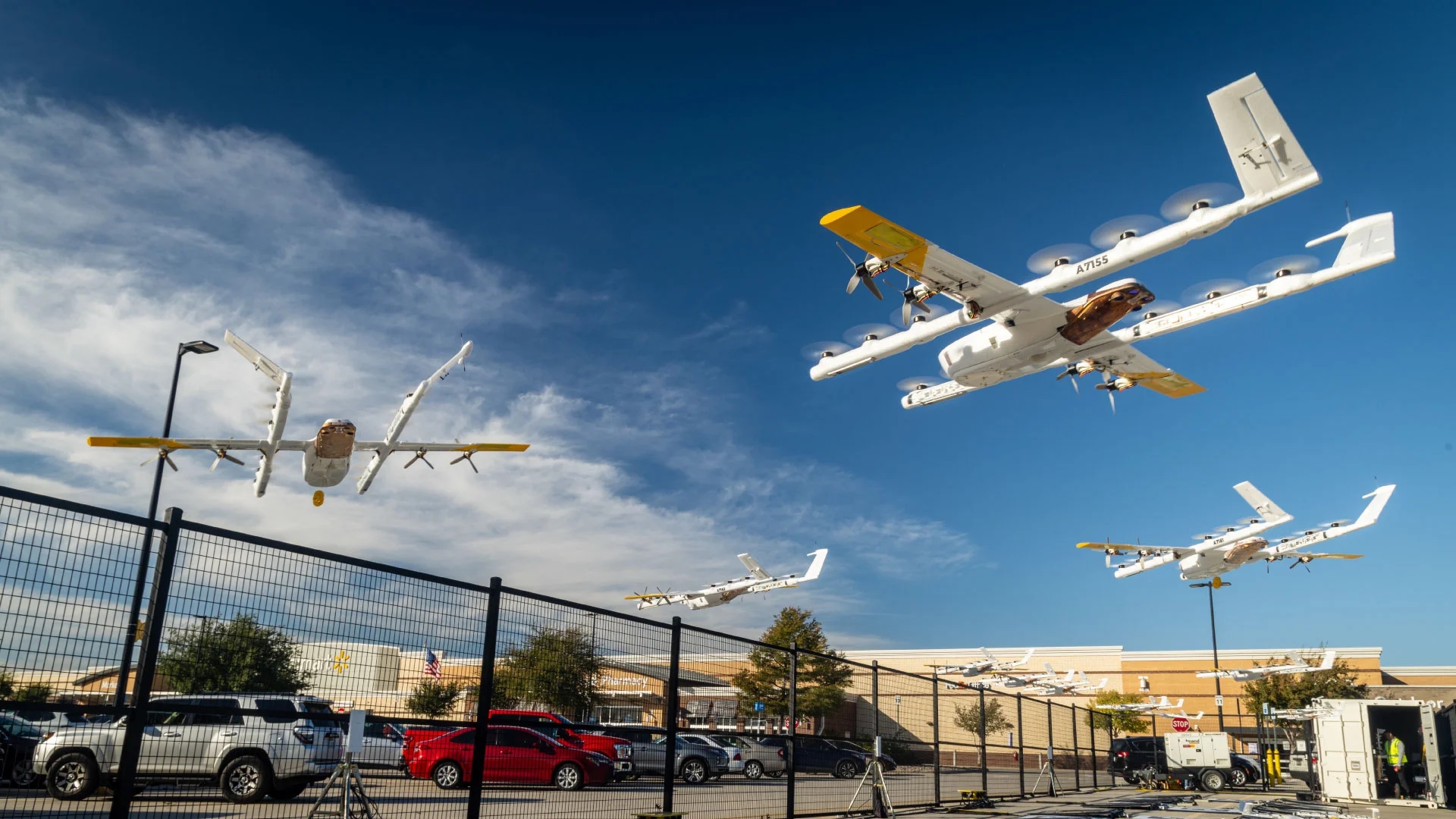


Walmart has taken another significant step in strengthening its last-mile delivery capabilities by expanding its drone delivery service to the metro Atlanta region, as part of a wider national rollout in the United States.
Drone delivery has been a long-term strategic focus for the global retail giant, aimed at speeding up deliveries, reducing last-mile costs, and meeting growing consumer expectations for near-instant fulfilment.
Atlanta launch part of wider expansion plan
The Atlanta rollout follows Walmart’s June announcement outlining plans to expand its drone delivery programme in partnership with Wing to five new US cities over the next year. These include:
- Atlanta, Georgia
- Houston, Texas
- Charlotte, North Carolina
- Orlando, Florida
- Tampa, Florida
With this expansion, Walmart is steadily moving beyond pilot projects to embed drone delivery as a scalable part of its logistics network.
Dallas-Fort Worth success fuels confidence
Walmart’s latest push is backed by what it describes as strong performance in the Dallas–Fort Worth (DFW) metroplex, one of the largest drone delivery operations in the world.
In 2024, the retailer announced plans to extend its on-demand drone service to 1.8 million additional homes across the DFW region. This expansion enabled Walmart to potentially reach up to 75% of the area’s population with drone deliveries.
According to the company, Walmart currently delivers thousands of orders every week via drones in the region. These include everyday grocery items such as eggs, ground beef, and avocados, demonstrating the practicality of drone delivery for routine household needs rather than niche use cases.
Building a multi-partner drone ecosystem
Walmart’s drone ambitions are not limited to a single technology partner. In 2022, the company also began working with DroneUp, launching drone deliveries across parts of Arizona, Florida, and Texas.
By collaborating with multiple drone service providers, Walmart is positioning itself to adapt quickly to regulatory environments, local infrastructure, and technological advancements across different states.
Faster last-mile delivery as a retail differentiator
Industry analysts view Walmart’s drone expansion as a strategic response to increasing competition in e-commerce and quick commerce. As consumers become accustomed to same-day and even same-hour delivery, retailers are under pressure to compress fulfilment times without dramatically increasing costs.
Drone delivery offers several potential advantages:
- Faster fulfilment for short-distance orders
- Reduced reliance on road-based delivery during peak traffic
- Lower emissions for small-package deliveries
- Improved service reach in suburban and semi-urban areas
Global relevance and lessons for India
While Walmart’s drone operations are currently focused on the US, the developments are being closely watched globally—including in India, where quick commerce and last-mile innovation are advancing rapidly.
Indian cities such as Bengaluru are already known for ultra-fast deliveries through hyperlocal networks. However, large-scale commercial drone delivery remains largely experimental due to regulatory, airspace, and safety considerations.
Walmart’s experience in the US could offer valuable insights for Indian retailers and policymakers as the country explores the future of unmanned aerial logistics, particularly for healthcare, rural connectivity, and emergency supplies.
The road ahead for drone commerce
With expanding city coverage, proven demand, and growing operational maturity, Walmart’s drone delivery programme is moving closer to mainstream adoption. Challenges remain—particularly around regulation, weather dependency, and scalability—but the retailer’s sustained investment signals confidence in drones as a core component of future retail logistics.
As last-mile delivery becomes an increasingly critical battleground, Walmart’s Atlanta launch marks another milestone in the race to redefine how everyday goods reach consumers