







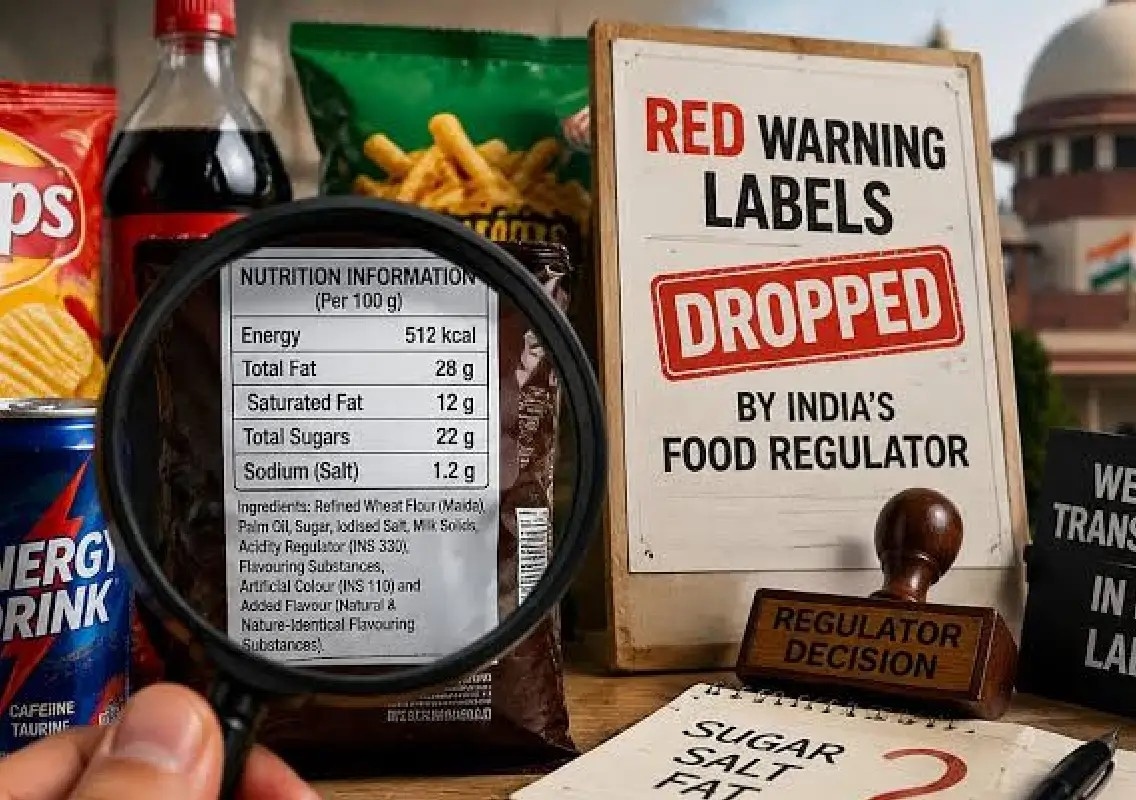


New Delhi: A Reuters investigation has drawn attention to differences between packaged food and beverage products sold in India and those available in markets such as Britain, amid a wider debate over nutritional labelling and public health.
One example cited is Fanta. A can sold in London reportedly contains 63 calories, while the Indian version contains significantly more sugar and an artificial colour whose use in European food products requires a prominent health warning.
Debate over warning labels
India’s food safety regulator has moved away from an earlier proposal for colour-coded warning labels on the front of packaged foods.
Instead, it has proposed a black-and-white nutritional table displaying sugar, fat and salt content. The decision is now being scrutinised by the Supreme Court following a petition by public health activists.
The debate comes as concerns grow over obesity and unhealthy diets. A recent study cited in the report estimates that around 450 million Indians could be overweight or obese by 2050.
Food companies push back
Reuters reported that food and beverage industry representatives opposed stronger interpretive warning labels during a March meeting with the Food Safety and Standards Authority of India (FSSAI).
Industry representatives argued that symbols and warning icons could confuse consumers and questioned whether such labels would significantly change eating habits.
However, critics say clearer front-of-pack information could help consumers make healthier choices.
Same brands, different recipes
The investigation also highlights how multinational companies can sell different versions of the same products depending on local regulations, tastes and consumer purchasing power.
Examples cited include Fanta, KitKat and Maggi noodles, with differences reported in ingredients and nutritional labelling between India and other markets.
Consumer activist Revant Himatsingka, popularly known as FoodPharmer, has highlighted several such differences through social media, building an audience of more than five million followers.
Growing pressure for transparency
The report comes amid increasing consumer awareness about processed food and nutrition in India.
While companies have argued for greater clarity in proposed labelling rules, health experts and activists continue to push for stronger warnings on products high in sugar, salt and fat.
The ongoing Supreme Court scrutiny could therefore prove significant in determining how clearly nutritional risks are communicated to Indian consumers.