







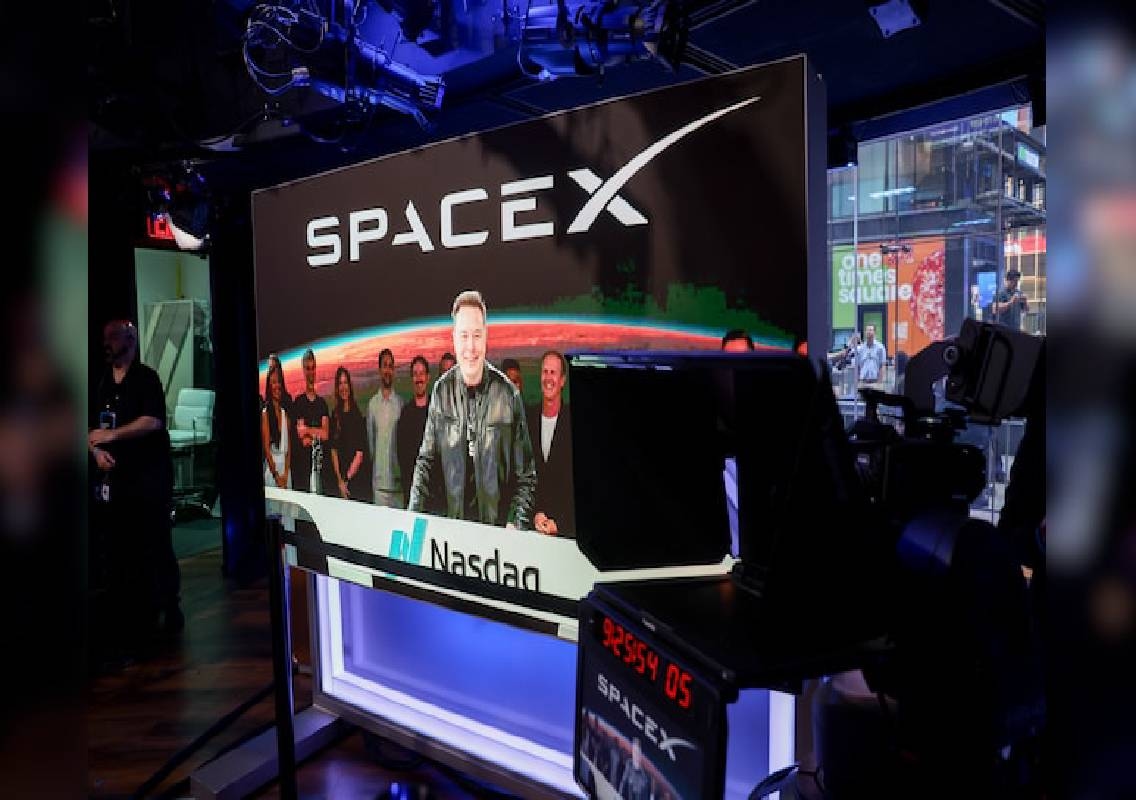


New Delhi: Elon Musk-led SpaceX is facing growing scepticism from some investors, with short sellers reportedly making nearly $4 billion in paper profits as the company’s secondary market valuation has retreated from recent highs. While the development has sparked discussions about the aerospace giant’s valuation, analysts maintain that it reflects concerns over pricing rather than the company’s underlying business strength.
According to a Bloomberg report, a section of investors believes SpaceX’s valuation has become overly optimistic after years of rapid appreciation driven by enthusiasm surrounding artificial intelligence (AI), defence technology and commercial space exploration.
Why are investors betting against SpaceX?
Short selling is an investment strategy in which investors profit if the price of an asset declines. While this approach is common in public stock markets, it is relatively uncommon in private companies because their shares are not freely traded.
However, SpaceX has an active secondary market where employees and early investors can sell their shares to eligible buyers. This has enabled sophisticated investors to take bearish positions against the company’s valuation.
Over the past few years, SpaceX’s private market valuation surged as investors poured money into AI, defence and space technology companies. But as valuations climbed to record levels, some investors began questioning whether expectations had become too ambitious.
The recent decline in secondary market share prices has allowed these short positions to generate an estimated $4 billion in unrealised, or paper, profits.
Does this mean SpaceX is struggling?
Market experts say the answer is no.
Analysts argue that the bearish bets are primarily aimed at the company’s valuation rather than its operational performance.
Siddharth Maurya, Managing Director of Vibhavangal Anukulkara, said the increased activity by short sellers demonstrates how investors are focusing on valuation discrepancies in highly priced technology companies.
He noted that while the reported paper profits appear significant, they should be viewed against the backdrop of elevated market valuations and changing investor sentiment.
According to Maurya, short selling in this case is “more of a valuation exercise than an assessment of the technological leadership and soundness of business operations.”
In other words, investors are questioning how much SpaceX should be worth, rather than whether it has built a successful and sustainable business.
SpaceX continues to dominate the space industry
Despite the recent pressure on its valuation, analysts continue to regard SpaceX as the global leader in commercial space launches.
The company enjoys several competitive advantages:
- Falcon rockets remain the world’s leading reusable launch vehicles.
- Starlink has grown into one of the largest satellite internet services globally, serving millions of customers.
- Starship, SpaceX’s next-generation launch system, continues to be developed with the aim of enabling deep-space missions and significantly reducing launch costs.
Maurya said the company continues to benefit from its launch operations, expanding Starlink business and strong innovation pipeline.
These strengths have helped SpaceX maintain its position at the forefront of the global commercial space sector despite increasing competition.
What does this mean for investors?
Experts believe the latest development highlights how even market-leading companies can experience sharp valuation swings.
Viram Shah, Founder and CEO of Vested Finance, said the reported $4 billion represents paper profits rather than realised gains.
He also pointed out that nearly one-third of the tradable shares in the secondary market are reportedly held in short positions, making the stock vulnerable to sharp movements in either direction.
According to Shah, if SpaceX’s valuation rebounds, short sellers may rush to close their positions, potentially triggering a rapid rise in the share price through a short squeeze.
He advised investors to focus on long-term business fundamentals rather than short-term price movements, while ensuring their exposure remains appropriately sized to withstand market volatility.
Valuation versus fundamentals
The SpaceX episode reflects a broader trend in global financial markets, where investors are becoming increasingly selective about highly valued technology companies.
Although enthusiasm for AI, defence technology and space exploration remains strong, investors are placing greater emphasis on whether company valuations accurately reflect future earnings potential.
For SpaceX, the debate is not about whether the company leads the commercial space industry—it clearly does—but whether its current valuation fully justifies the high expectations already priced in by investors.
Conclusion
The recent gains made by SpaceX short sellers underline changing market sentiment towards richly valued technology companies rather than signalling operational weakness. SpaceX continues to dominate commercial launches, expand its Starlink satellite network and develop the ambitious Starship programme. While its valuation may remain volatile in the near term, analysts believe the company’s long-term business fundamentals remain robust, making the current debate largely one of valuation rather than viability.