







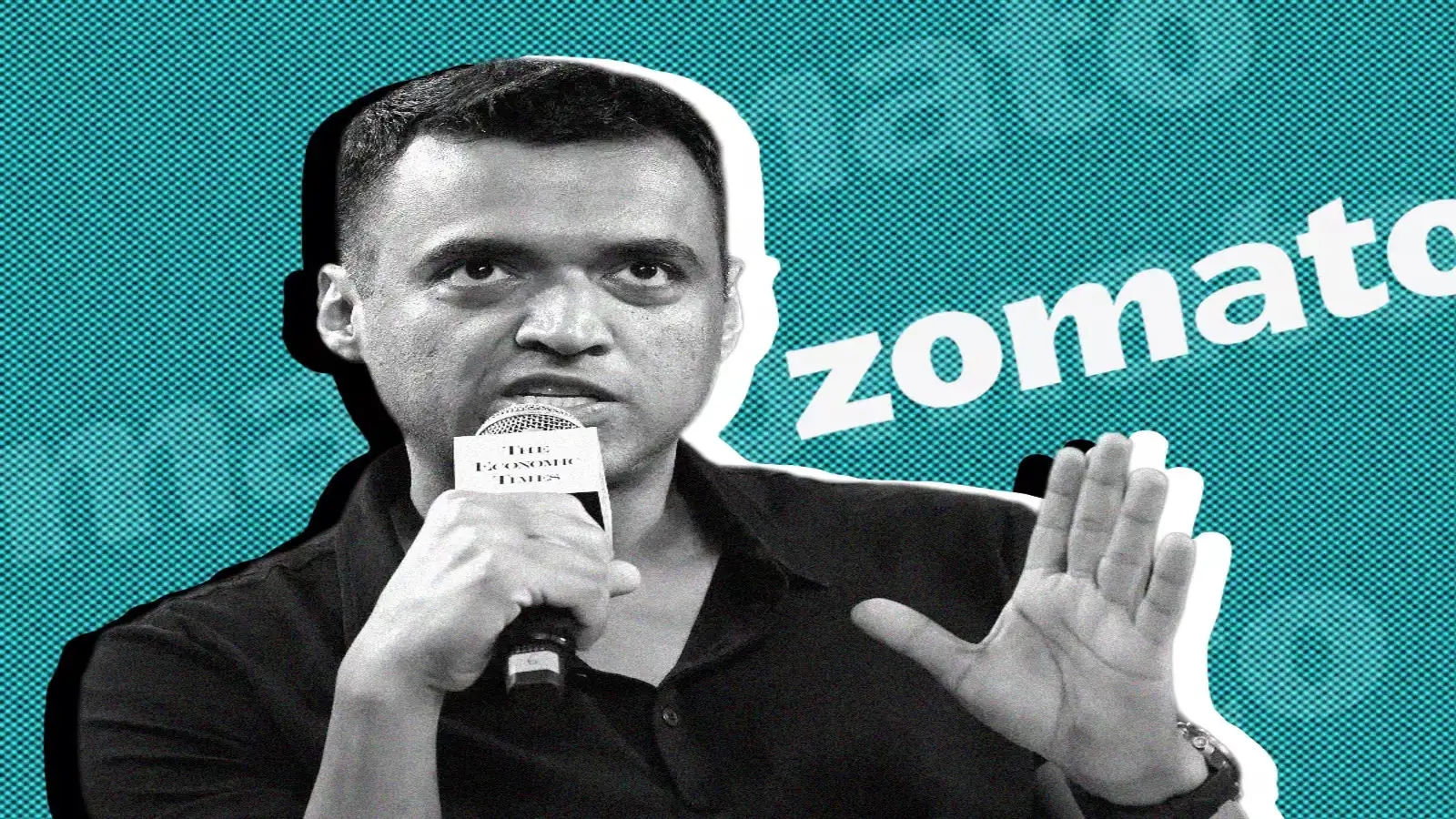


Zomato and Blinkit founder Deepinder Goyal has pushed back against criticism of the gig economy and recent strike calls by delivery workers, stating that platform operations continued at record levels on New Year’s Eve and that ultra-fast delivery timelines do not compromise rider safety or fairness.
In a series of posts on X on January 1, Goyal said Zomato and Blinkit were “unaffected by calls for strikes” and delivered orders “at a record pace” as the year ended.
Record deliveries despite strike calls
According to Goyal, more than 4.5 lakh delivery partners completed over 75 lakh orders for more than 63 lakh customers on New Year’s Eve — the highest single-day performance in the platforms’ history. He credited local law enforcement for ensuring smooth operations, saying authorities helped keep “a small number of miscreants in check”.
He added that delivery partners “showed up despite intimidation” and clarified that no special incentives were offered beyond standard New Year’s Eve payouts.
Incentives and earnings clarified
Goyal said Zomato offered payouts of ₹120–₹150 per order during peak hours between 6 pm and midnight, with potential earnings of up to ₹3,000 for the day, depending on demand and availability. Rival platform Swiggy had earlier announced higher festive incentives, offering delivery workers earnings of up to ₹10,000 across December 31 and January 1.
Defence of 10-minute delivery promise
Responding to concerns that 10-minute deliveries push riders into unsafe driving, Goyal said the model is based on backend logistics and store density, not speed pressure on workers.
“Our 10 minute delivery promise is enabled by the density of stores around your homes. It’s not enabled by asking delivery partners to drive fast,” he wrote, adding that delivery partners do not see customer delivery timelines or countdown timers on their apps.
He explained that Blinkit orders are typically picked and packed in about 2.5 minutes, followed by rides averaging under 2 km at speeds of around 15 kmph.
Gig economy and fairness debate
Rejecting allegations of exploitation, Goyal said, “If a system were fundamentally unfair, it wouldn’t consistently attract and retain so many people who choose to work within it.” He described the gig economy as “one of India’s largest organised job creation engines”, providing income opportunities at scale, often as supplementary work.
His remarks drew support online, with users arguing that delivery speed is driven by neighbourhood infrastructure and logistics rather than reckless riding.
Background of worker protests
Goyal’s response followed strikes staged on December 25 and December 31 by gig workers associated with platforms including Zomato, Blinkit, Swiggy and Amazon. The protests called for better pay, improved working conditions, social security coverage and a rollback of ultra-fast delivery commitments.