


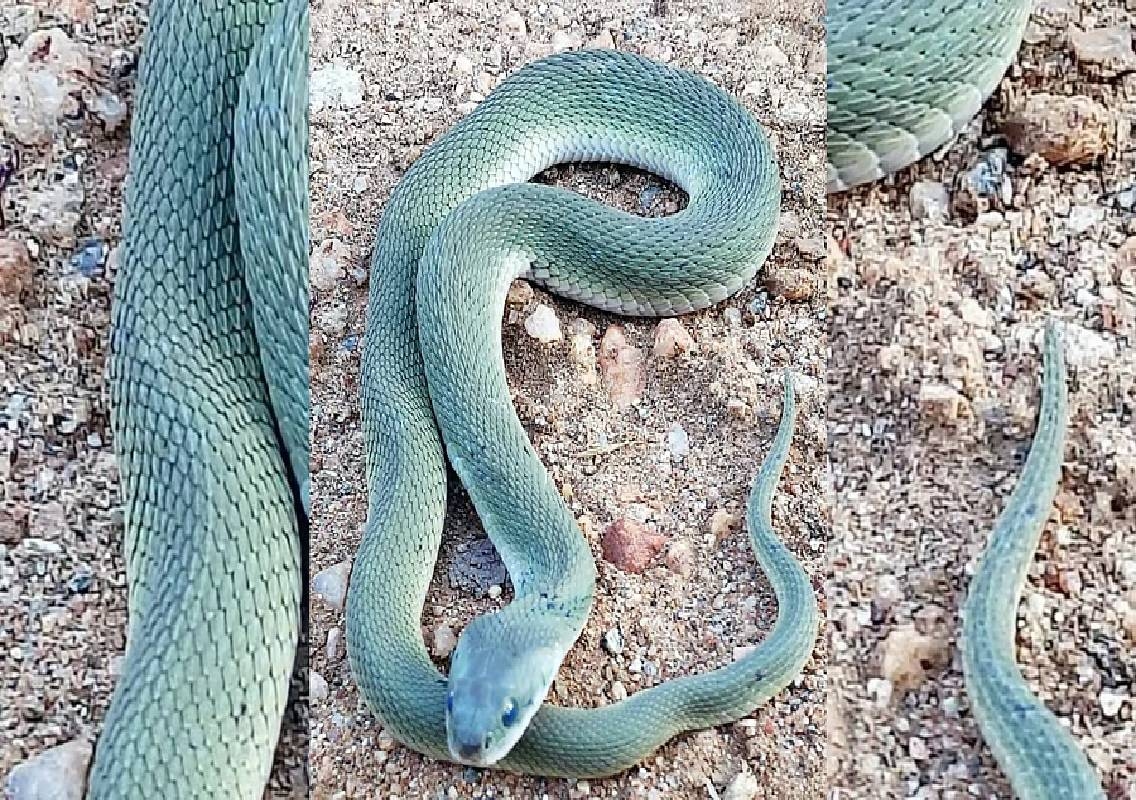


B.R. Hills: A rare olive-green snake has been spotted in Karnataka’s Biligiri Rangaswamy Temple Hills, popularly known as B.R. Hills, drawing attention to the region’s rich biodiversity and the importance of protecting its natural habitats.
Located in southern Karnataka, B.R. Hills is known for its forest ecosystems and diverse wildlife. The landscape forms part of an important ecological region where different habitats support a wide variety of animal and plant species.
The sighting highlights the biodiversity found in Karnataka’s forested landscapes, where snakes and other reptiles play an important role in maintaining ecological balance.
However, the exact species, location of the sighting and circumstances surrounding the discovery could not be independently verified from the original report.
B.R. Hills is an important wildlife habitat
B.R. Hills is home to diverse forest habitats that support mammals, birds, reptiles and numerous other forms of wildlife. The region’s varied vegetation and natural surroundings provide shelter and feeding grounds for many species.
Snakes are an important part of these ecosystems. As predators, they help regulate populations of rodents, frogs and other small animals, contributing to the balance of the food chain.
Although snakes can cause concern when encountered by people, their presence in a forest ecosystem is a natural part of wildlife diversity. Understanding their behaviour and protecting their habitats are important aspects of conservation.
Sightings of unusual-looking reptiles can also draw attention to species that are not commonly noticed by the public. However, identifying a snake accurately requires examining its physical characteristics, distribution and other distinguishing features.
Why olive-green snakes attract attention
Olive-green colouring can be found in several snake species native to India. Colour alone is not enough to establish a snake’s identity, as different species can have similar appearances.
One species found in parts of southern India is the olive keelback (Atretium schistosum), an aquatic snake associated with freshwater habitats. The olive forest snake (Rhabdops olivaceus) is another species recorded in Karnataka’s Western Ghats.
These are distinct species, and neither should be assumed to be the snake reported at B.R. Hills without confirmation from the original report or a qualified wildlife expert. Background: species information.
Correct identification is important because snakes differ in their habitats, behaviour and conservation requirements. A photograph, detailed description or expert examination can help distinguish between species that might otherwise appear similar.
The role of snakes in forest ecosystems
Snakes help maintain ecological balance by controlling populations of prey animals. Some species primarily hunt rodents, while others feed on amphibians, fish or other small animals.
Their presence can therefore provide valuable information about the ecosystems in which they live. Protecting forest habitats, water sources and natural vegetation can help sustain the range of species that depend on these environments.
Reptiles may be difficult to observe because many are secretive and avoid human activity. A sighting can provide an opportunity to raise awareness about their ecological importance, but it does not necessarily indicate that a species is endangered or that its population is increasing.
Conservation assessments require reliable information about a species’ distribution, population, habitat requirements and threats.
Responsible wildlife observation is important
Wildlife sightings should be handled carefully to avoid disturbing animals or putting people at risk. Snakes should not be handled, cornered or approached for photographs.
If a snake is found near a settlement or public area, trained snake rescuers or the relevant forest authorities should be contacted where necessary. Maintaining a safe distance allows the animal to move away without unnecessary stress.
Forest conservation also depends on protecting natural habitats and limiting activities that disturb wildlife. Public awareness can help people understand that snakes have an important role in nature and should not be killed simply because they are unfamiliar or frightening.
The sighting reported from B.R. Hills serves as a reminder of the reptile diversity found in Karnataka’s forests. Confirming the species and documenting the circumstances of the sighting would help provide a clearer understanding of its significance.