









‘Bulldozer’ directly refers to the use of powerful violence against any obstacle. It must have originated in Europe from the use of “bullwhips”, used to control cattle in the 1880s. The instrument or an earthmover came to be known as bulldozer because of its power to remove things or move earth, including hard areas.
In recent times, it is the law enforcement agencies in Uttar Pradesh which was responsible for the creation of a new phrase called “Bulldozer Justice”. It was a new method they used from 2017 to crush crime though it was unlawful, extra judicial, but indeed a cruel political tool. Sometime later, the Supreme Court of India gave a verdict stating that this sort of Bulldozer Justice was not acceptable under the rule of law enshrined in the constitution. A state sanctioned punishment of demolitions of houses or other constructions by using bulldozers was not acceptable to the court, which went on to state that even if the construction was wrongly done, the demolition should proceed as per the due processes of law, providing a chance for the accused to defend himself or herself legally and constitutionally.
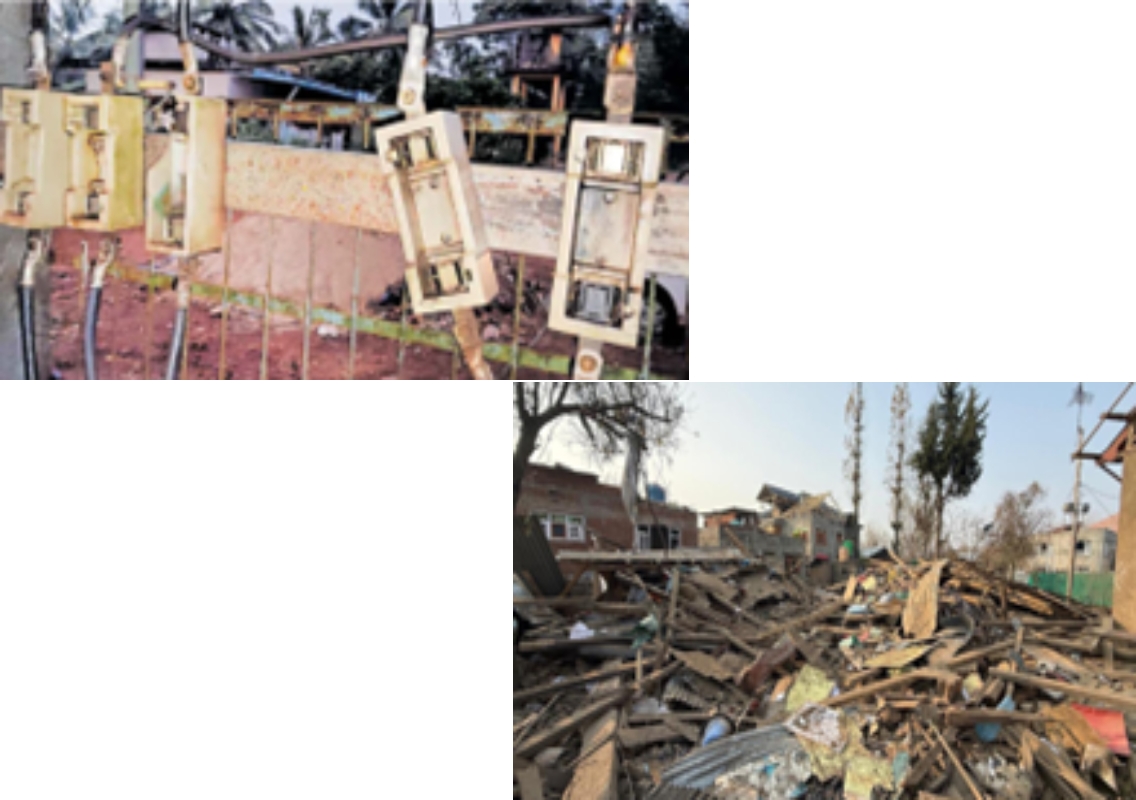
There was a report from Kasargod in Kerala. A young man removed the fuse connections of around fifty transformers by breaking them. Five square kilometers of the area went under darkness. The twelfth day of the month was the last date to make a payment for the use of electricity in his house. He did not pay six months’ bills amounting to rupees twenty-two thousand on time, for lack of funds. He pleaded with the lineman who came to remove the fuse promising that he would pay the amount by that evening. He was even ready to hand over the amount in the hands of the lineman which he had reportedly borrowed from two of his neighbours. Even then the lineman did not oblige and removed the fuse. Enraged by this, the man took his motorbike and visited different places where the transformers were situated and broke the fuse, plunging the entire area into darkness. In fact, this is an example of Bulldozer Justice. Even granting that the electricity department could have been considerate, the young man had no business to retaliate by an unlawful act. He implemented a sort of Bulldozer Justice.
That was not in any way qualitatively different from what the police did in Kashmir when the residential house of Umar Nabi was destroyed on the night of November 13, 2025. He was identified by security agencies as the one who drove an explosive laden car which burst into flames in front of the Red Fort in New Delhi on November 10, 2025. Umar Nabi’s house was not destroyed using a bulldozer; instead the security forces used explosives to break down the house in Pulwama in Kashmir. Most locals, several social activists and political leaders condemned the demolition as well as the method used to demolish. Many Kashmiris demanded that justice be done to the people of Kashmir, instead of bulldozing their houses. They said that people of Kashmir did not approve of the explosion that happened in front of the Red Fort and they also did not approve of the demolition of the house and the method used as it was a revenge taken on the family of Umar Nabi who were not guilty at all. This indeed was Bulldozer Justice.
There is no doubt that any responsible legally constituted governmental agency has the right to demolish any construction with procedural lapses. The owner has a right to challenge such demands in a court of law where possibly he may get a reprieve. Simultaneously, it is also possible, if there is any lapse in the procedures, it could be rectified. This is how the rule of law functions in a country. It has also to be seen whether there were other houses with similar lapses which might not have been bulldozed. Apart from the injustice done to the family who may not even know that a member of the family was involved in the Red Fort explosion, and therefore, they could not be punished at all, unless the court of law decides otherwise. More than anything else, punishing the entire family for the offence done by a lone member is not just, unless there is legally recorded proof that they were also involved.
It is necessary to analyse the actions of the man in Kasaragod who destroyed fuse units of transformers because he was denied an additional grace period for making the payment for which he had a satisfactory reason, of getting six month’s bills together. One can easily understand that it was an individual’s frustration from two points of view. Primarily, it was the suffering that he had to undergo once the fuse was removed and secondly, it was his anger against the electricity department for not sanctioning him a little more time to make payment for which he was ready. However, this anger led him to take revenge against the department resulting in the suffering of a lot of people in a five kilometer area, which, indeed, is an instance of Bulldozer Justice.
In yet another analysis, the Pulwama demolition can be seen as a sign of state terrorism. That this was done by a security agency made it more unacceptable because there were several people involved in taking decisions on an action of destroying the residence of a family including the method being adopted. The decision to destroy the house, adopting an unlawful method and not adhering to the procedures needed easily proclaims the lack of respect for the rule of law, enunciated by the Supreme Court. State terrorism of the use of bulldozers to destroy houses, for which sanctions have not been made available by the law enforcing procedures is deeply condemnable.
Bulldozer Justice is a disgrace on democracy and the rule of law as it speaks, not only ill of the administrators and political leadership but also proclaims the use of unaccountable power.