




Activities of the youth all over the world, especially in the major European countries and in India have been reported, both in support of the causes they represent and in condemnation of their behaviour during the rallies and agitations.
The responses of the youth in Europe and India differ in their expressed behaviours on the streets and in the places where they assembled. Additionally, though some common causes for the movements of the youth do exist, the presence of some basic differences in the demonstrations and their demands can be perceived.
Almost within the first fifteen days of October 2026, both France and India faced similar resistance from student movements. In both countries, thousands of youth, especially students were arrested and the treatments meted out to them by the law enforcement authorities were criticised. In France, students assembled at the Marianne Statue at Place de la Republique in Paris and in India at Jantar Mantar in Delhi.
The youth protest at Marianne Statue in Paris started because of the miserable conditions in a school named Lycee Antoine de Saint-Exupery in Paris where the students were agitating against lack of physical amenities.
Unexpectedly, students of more than six hundred schools and dozens of universities joined the protest. Vagaries of climate change, associated closure of schools, privatisation of both education and industry, of national lottery and other profitable state assets which were social issues that were added by the agitators to the students’ original demands.
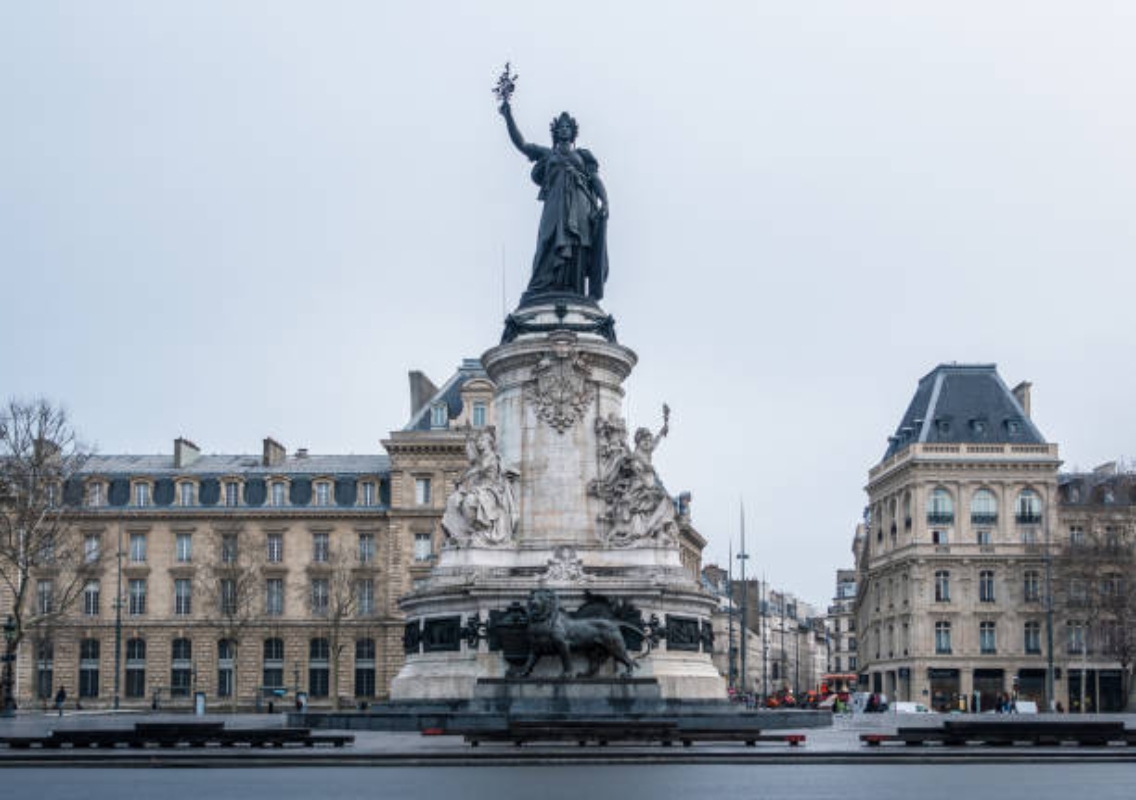
Marianne Statue, at the Place de la Republique, though there are similar statues in other places, happens to be the centre where people assemble especially to protest. The Paris statue, a French national symbol, that stands for liberty, equality, fraternity and reason is a popular place.
Built sometime in 1792 during the time of the French revolution, Marianna Statue is built as a lady with a Phrygian Cap, an ancient Roman symbol of freedom. It also is a personification of France with its use as a government logo. Some consider it equal to Joan of Arc and a symbol of opposition to monarchy.
The lady in the statue was sporting a conservative pose in the beginning and it was replaced with a more violent pose much later. The name originated from Mary and Anne, two common female names in France. People assemble at the platform and around the statue whenever organised protests take place.
Jantar Mantar was built half a century prior to the Paris monument. Historically, Emperor Muhammad Shah requested Maharaja Sawai Jai Singh, the Second, to build the scientific observatory in 1724 and it was completed within 1735. ‘Jantar’ is a word for machine, ‘Yantra’, and ‘Mantar’ is a word for ‘Calculation’ or ‘Consultation’; both the words formed the name given to the building because of the presence of the instruments of calculation installed there.
The Maharaja of Jaipur constructed these massive fixed masonry structures to observe planetary movements in Delhi first, and thereafter in Jaipur, Ujjain, Varanasi and Mathura. Formerly, people used to assemble for protest at the boat club near India Gate.
However, in 1993, people who crowded to protest moved to Jantar Mantar which was more centrally located and convenient for people to assemble. The famous Anna Hazare protests in 2011 and Nirbhaya case in 2012 and many other protests were conducted at Jantar Mantar.
In the second week of October 2026, there was an unexpected and massive demonstration by the French youth at the Marianna Statue, and thousands were arrested. What surprised the French government was the associated violence that took place in Paris in different streets where the youth who were in protest, also looted several malls and commercial establishments.
The demonstrations shook the Macron Government which found it difficult to justify and offer explanations for the demands made by the youth, particularly because the students were unruly and violent.
Emmanuel Macron’s party is facing the presidential elections in April 2027 and Macron is not qualified to contest as he is already in his second term and faces a constitutional bar for a third chance.
In the second week of October 2026, thousands of students gathered at Jantar Mantar to protest against the new mode of preparation of voter’s list, thousands participated from different parts of the country.
They marched through the streets where riot police and reserve police force arrested many of them and their leaders were incarcerated for longer periods than the one day while many were taken into custody and released within a day.
Some of them were crowded into buses and taken away through different streets to buy time, so that they would not reassemble to protest again. Some arrested youths and students complained of police atrocities while in custody. There were also complaints against the police for the use of pellet guns, wounding some of the students.
An interesting phenomenon that has been brought out in the responses of two governments against the protestors deserves close examination. The French government arrested six thousand youth on the first day and released them in the evening even though some of them indulged in criminal activities, including stealing from shopping malls and other establishments.
They did not stop the youth in assembling again at the Marianna Statue. However, strong in contrast, the government of India denotified Jantar Mantar so that the students will never be able to regroup as that would be illegal by which they can be punished.
The responses of the two governments are worth studying, especially because both are democratic republics. More importantly, it has to be remembered that the protest in Delhi youth did not involve in any criminal activity whereas the protesting French students behaved violently and vandalised shops and establishments.
No country can have a government which will survive through suppression of common man’s voices against it. The voices of the people, especially those who are in disadvantaged conditions, are extremely important for the successful functioning of a democracy which has freedom as its fundamental principle. Persecuting methods are not democratic and stand against freedom of expression.