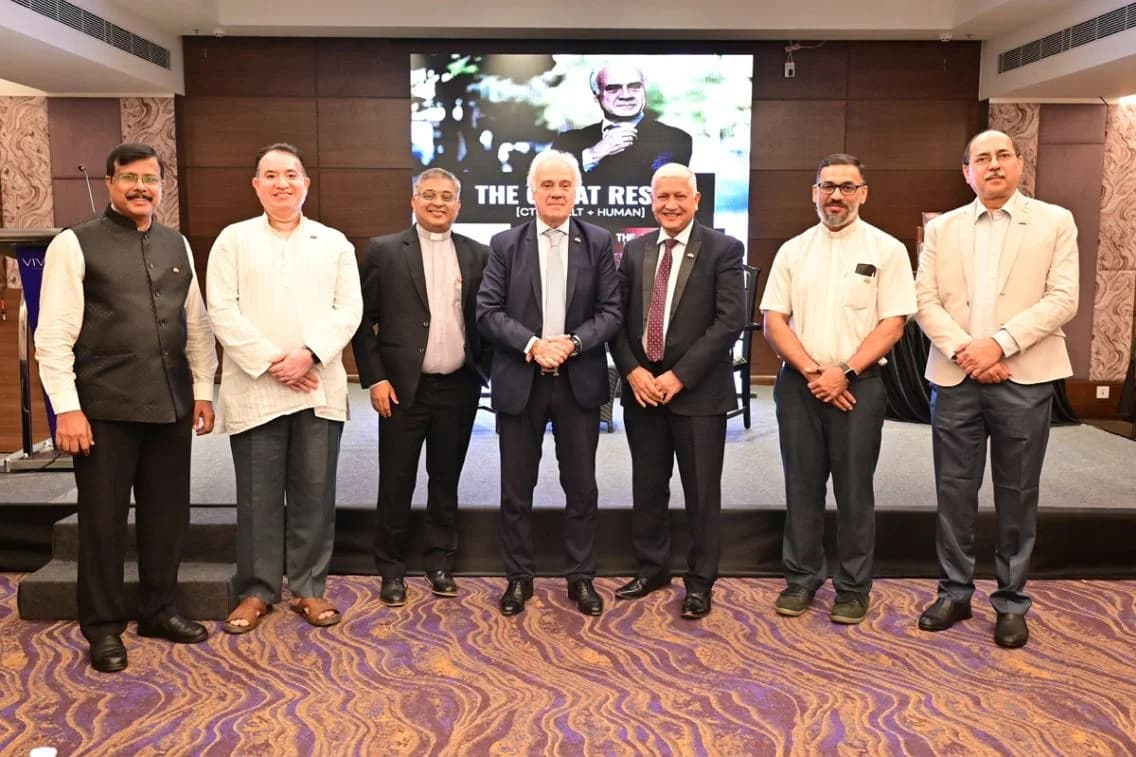
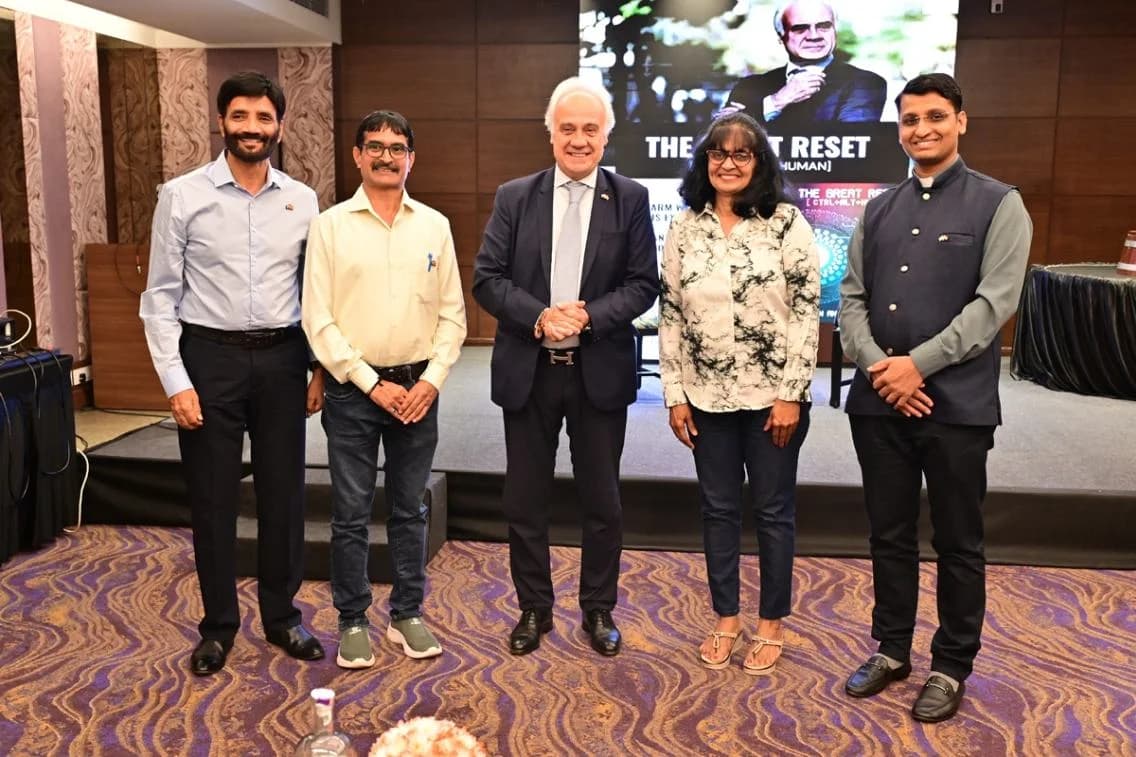
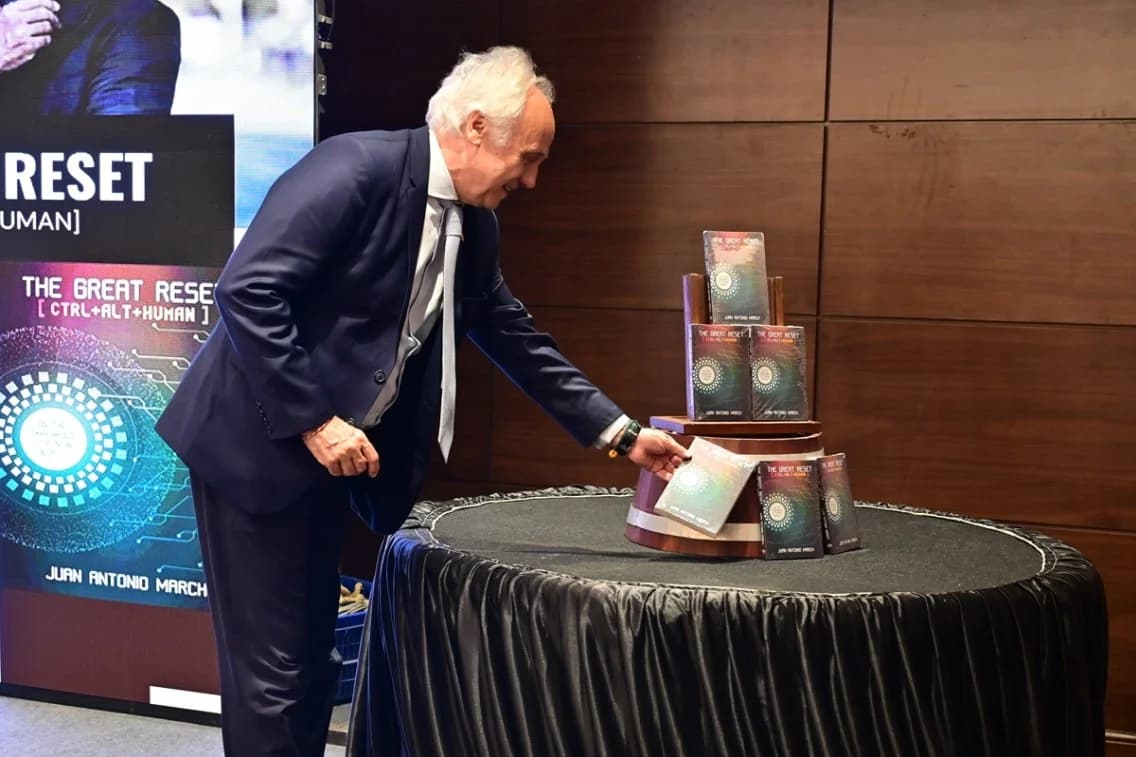
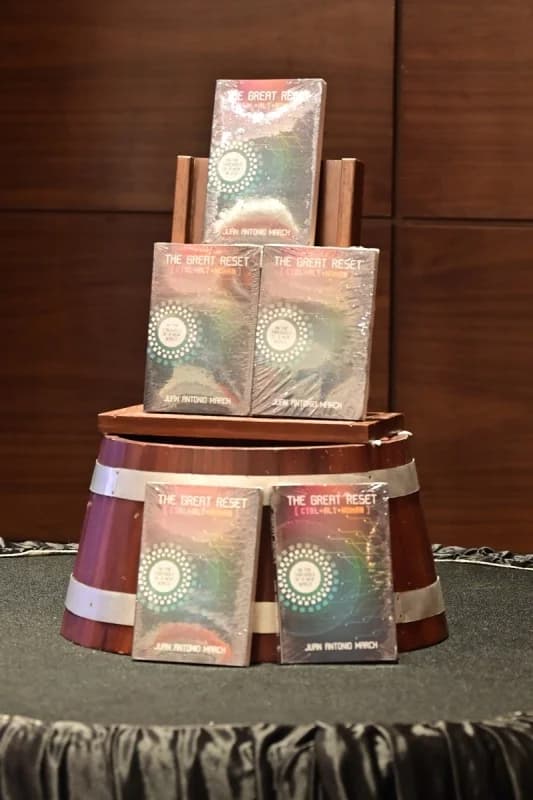
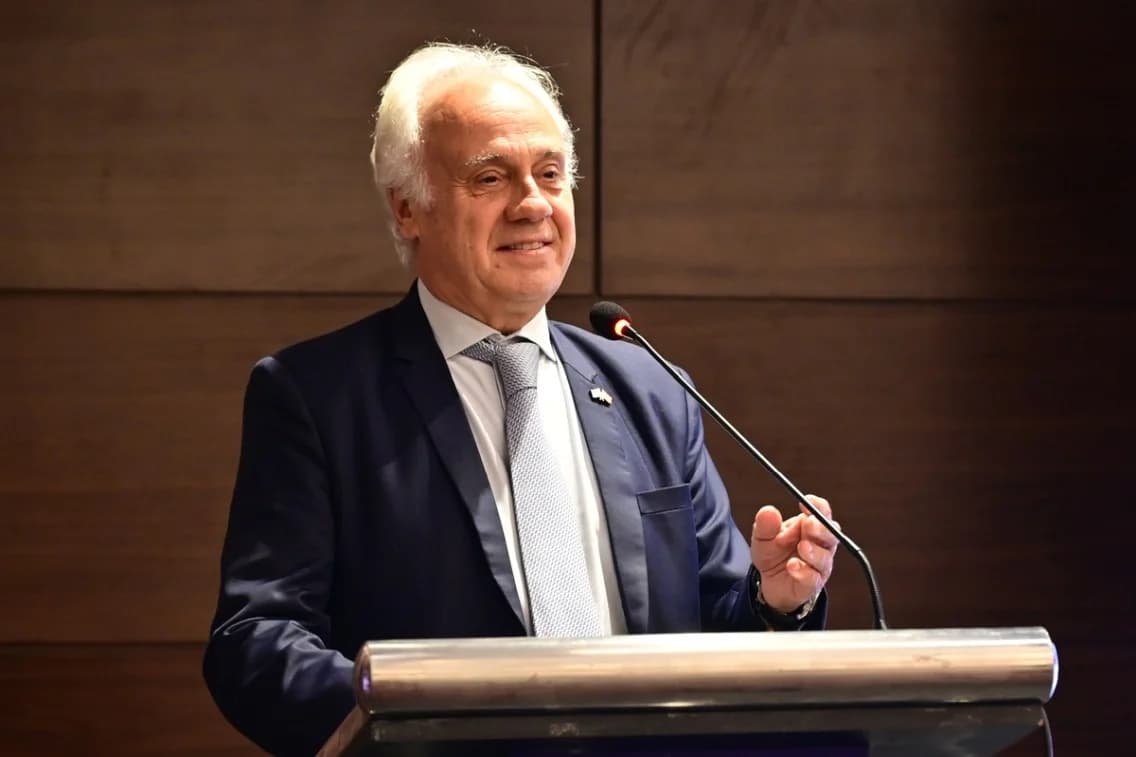
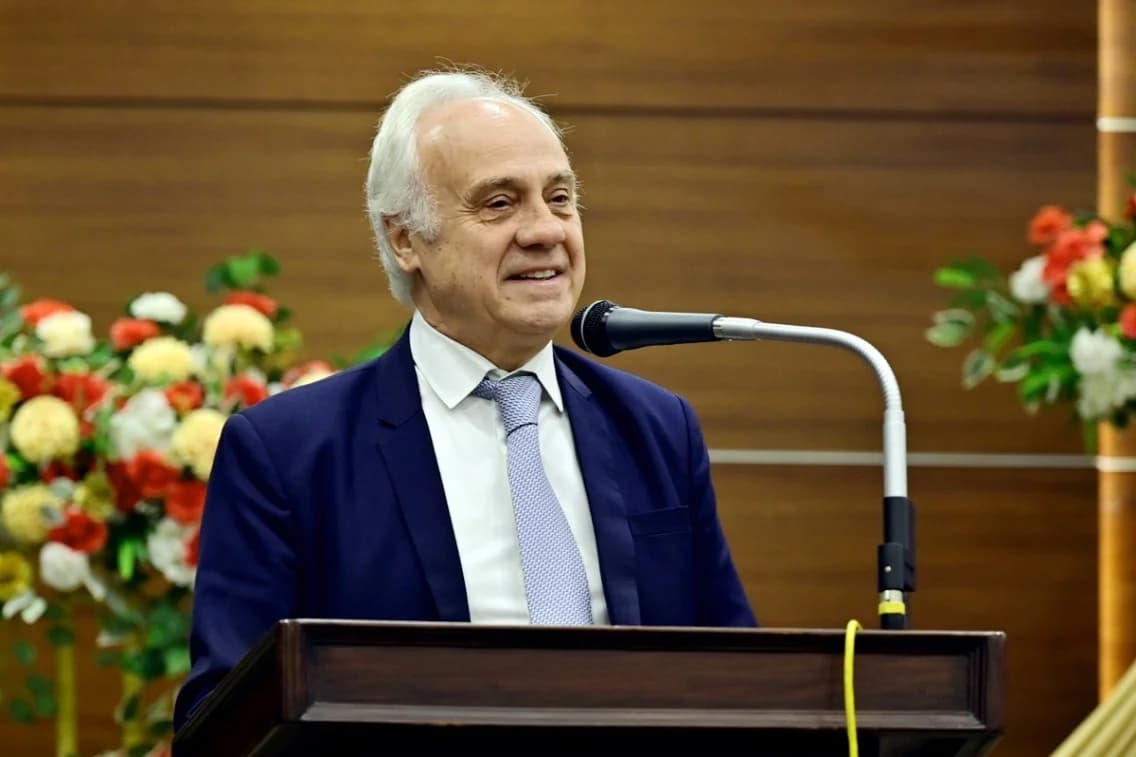
Mangaluru: In a landmark visit blending futuristic thought with high-level diplomacy, His Excellency Juan Antonio March Pujol, Ambassador of Spain to India, launched his latest book The Great Reset [CTRL+ALT+HUMAN] at the Senate Hall of Hotel Vivanta by Taj on February 3. The event formed the centrepiece of a multi-day official engagement in Mangaluru, drawing academics, technology professionals and faith leaders into a wide-ranging dialogue on a world approaching an AI-driven inflection point.
A thriller with a diplomatic pulse
A seasoned diplomat with experience at the United Nations and the WTO, Ambassador March has authored a work that doubles as a geopolitical caution and a futuristic thriller. The narrative follows Nour, a visionary AI expert who uncovers fifteen extraordinary breakthroughs worldwide, culminating in a decisive UN summit where humanity must choose between a unified global framework and irreversible chaos. Addressing the audience, the Ambassador noted that while the 20th century secured human rights, the 21st will be defined by how societies empower individuals through intelligence and ethical choices.
India as a global inspiration
During a moderated discussion, the Ambassador reflected on India’s role in the emerging world order, describing the country as a vital source of inspiration for a one-humanity vision. Citing India’s 1947 unification, he observed that while Europe still maintains 27 separate armies, India successfully integrated diverse territories, forces and currencies into a single federal republic. He characterised this as an act of sophisticated diplomacy offering valuable lessons for global governance in an AI-enabled, multipolar world, cautioning against reliance on outdated 19th-century power thinking.
Dialogue on AI, education and employment
As an education-centric city, Mangaluru’s engagement naturally turned to the real-world implications of artificial intelligence. Addressing concerns around job displacement, Ambassador March expressed optimism that AI would uncover new human needs and generate more employment than it displaces. However, he issued a clear message to academia: education systems must undergo their own “Great Reset”. Teachers, he said, must move beyond transmitting static knowledge to continuously adapting in step with exponential innovation.
Spain–India Dual Year 2026
The book launch also highlighted the Spain–India Dual Year 2026, marking 70 years of diplomatic relations with a focus on culture, tourism and AI. The Ambassador outlined ambitious plans for academic collaboration, including exchanges involving representatives from 85 Spanish universities and 120 leading Indian institutions to promote joint research. He also pointed to opportunities for deeper sporting ties, noting Spain’s readiness to support football and tennis development in India through coaching exchanges.
A comprehensive Mangaluru engagement
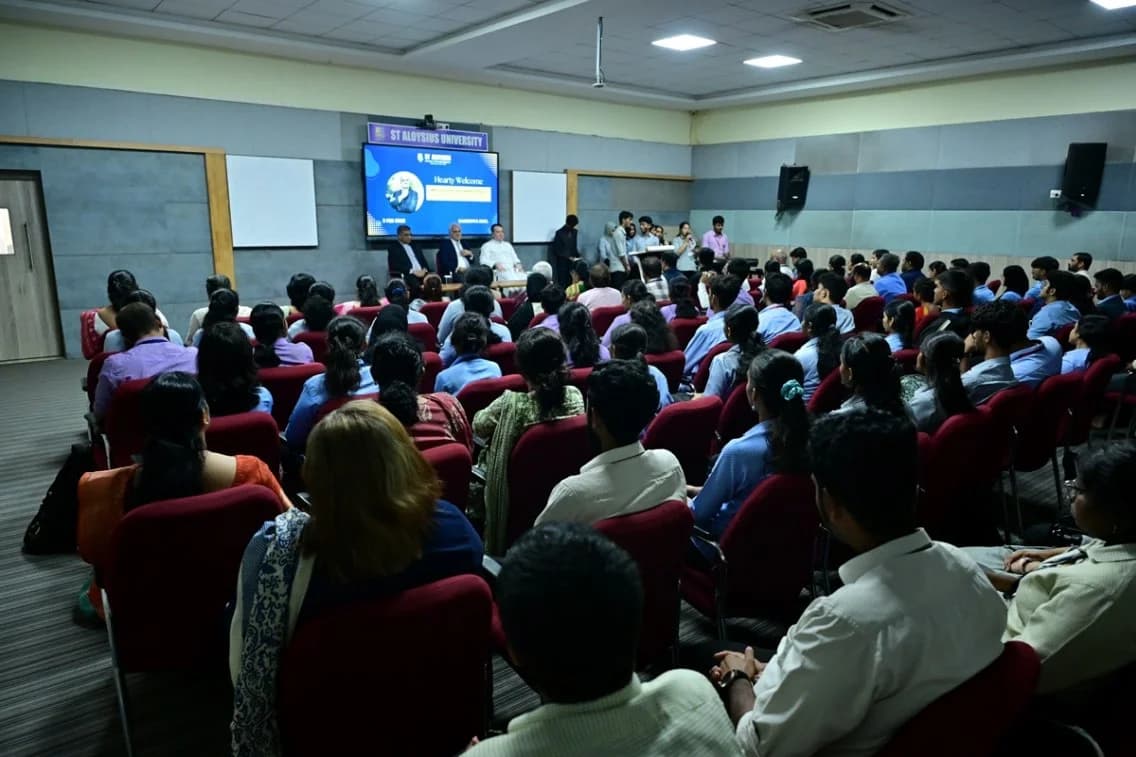
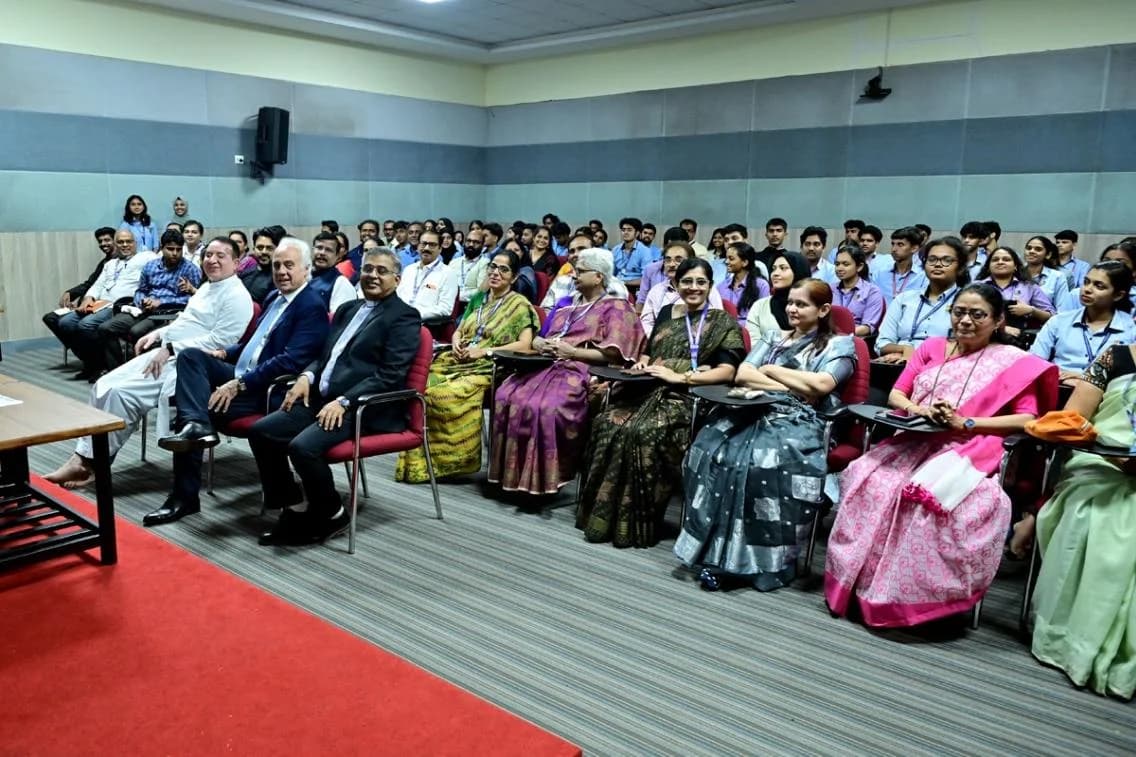
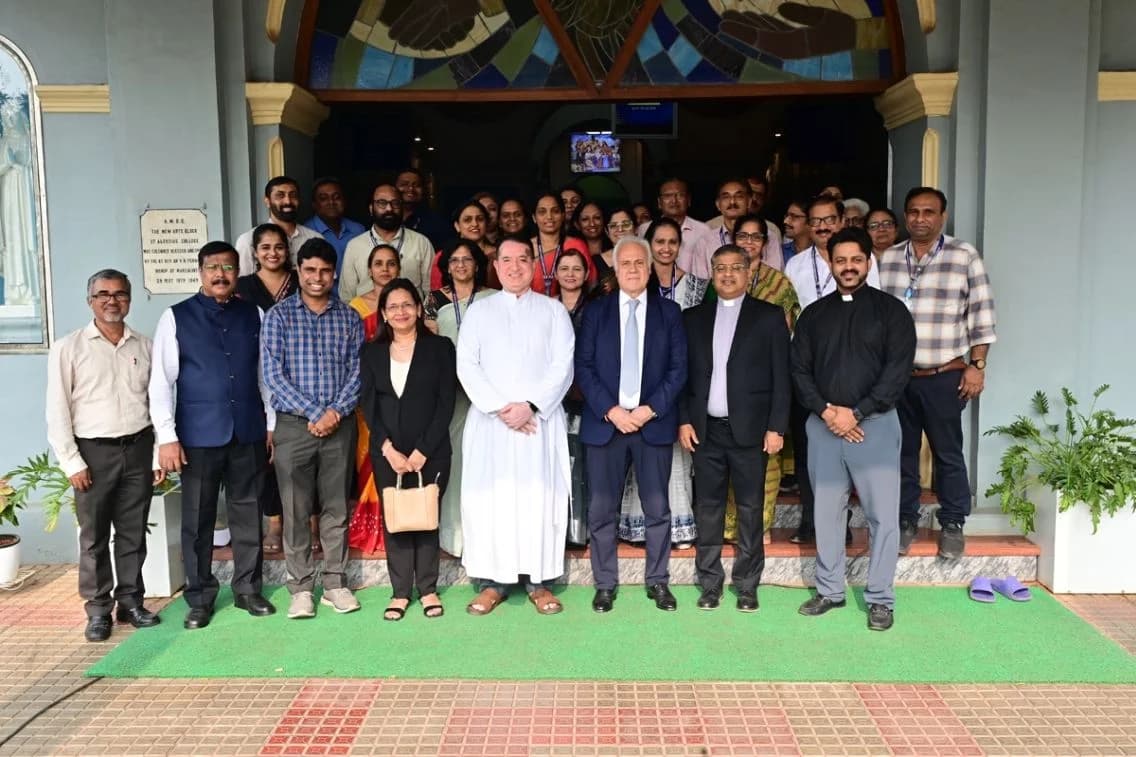
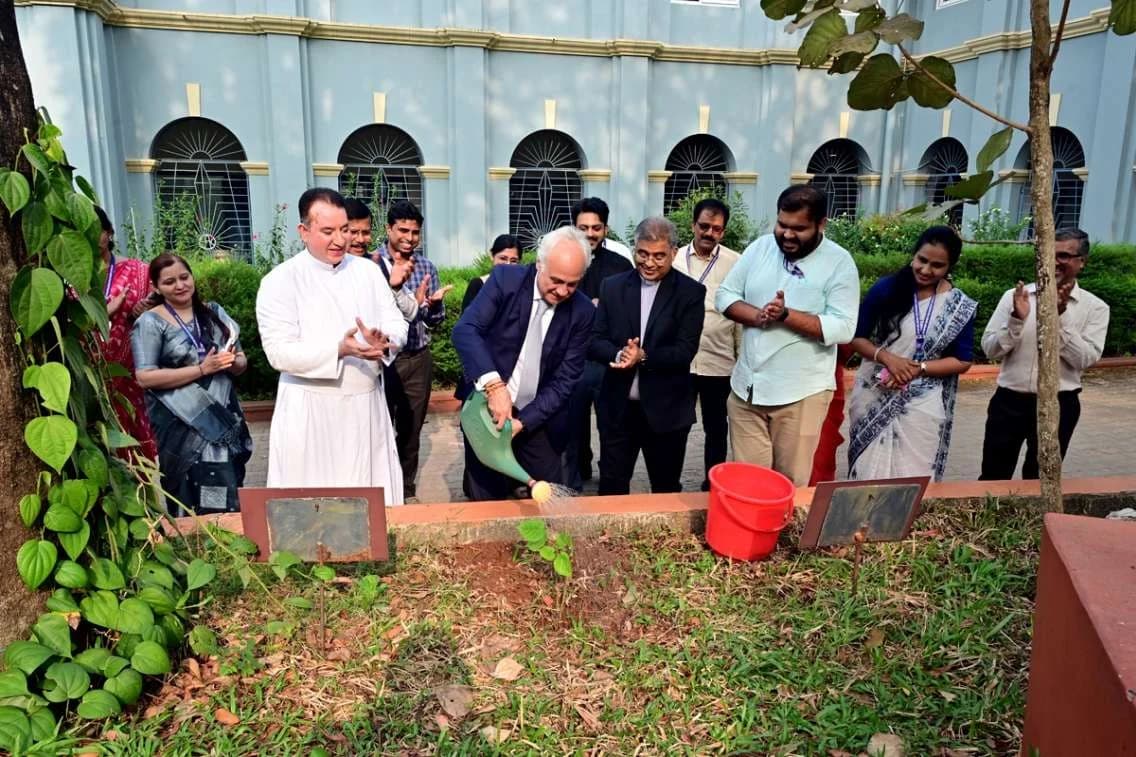
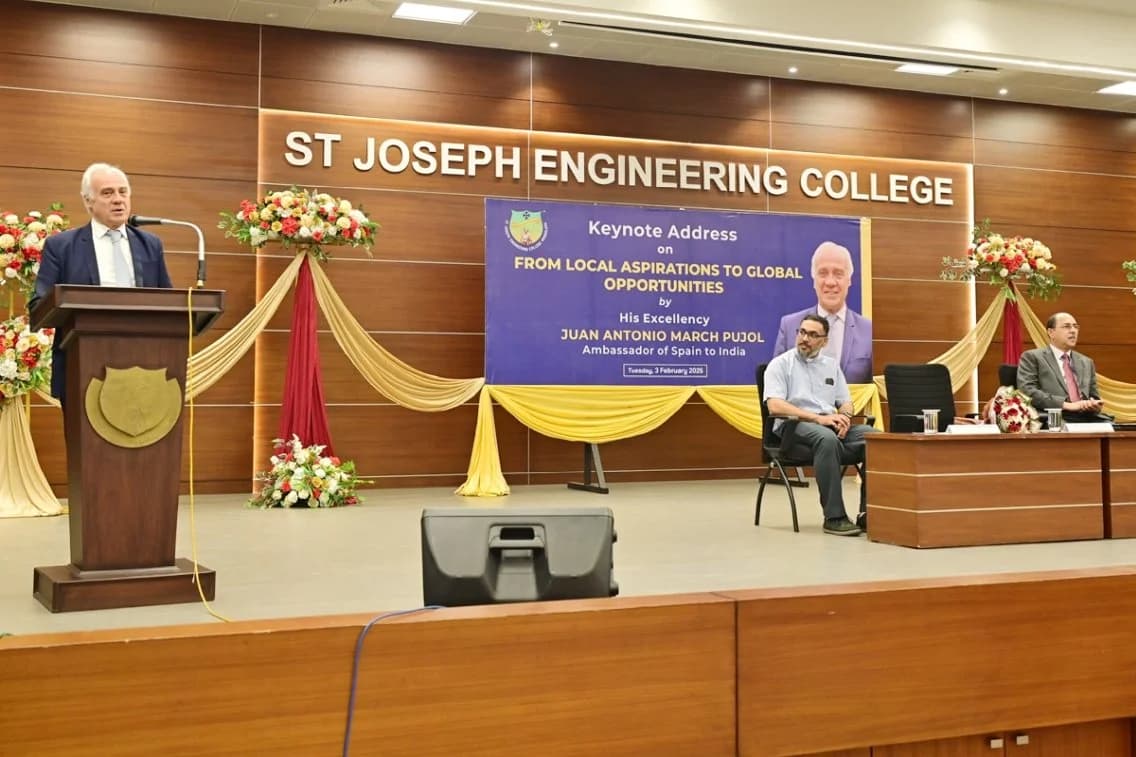
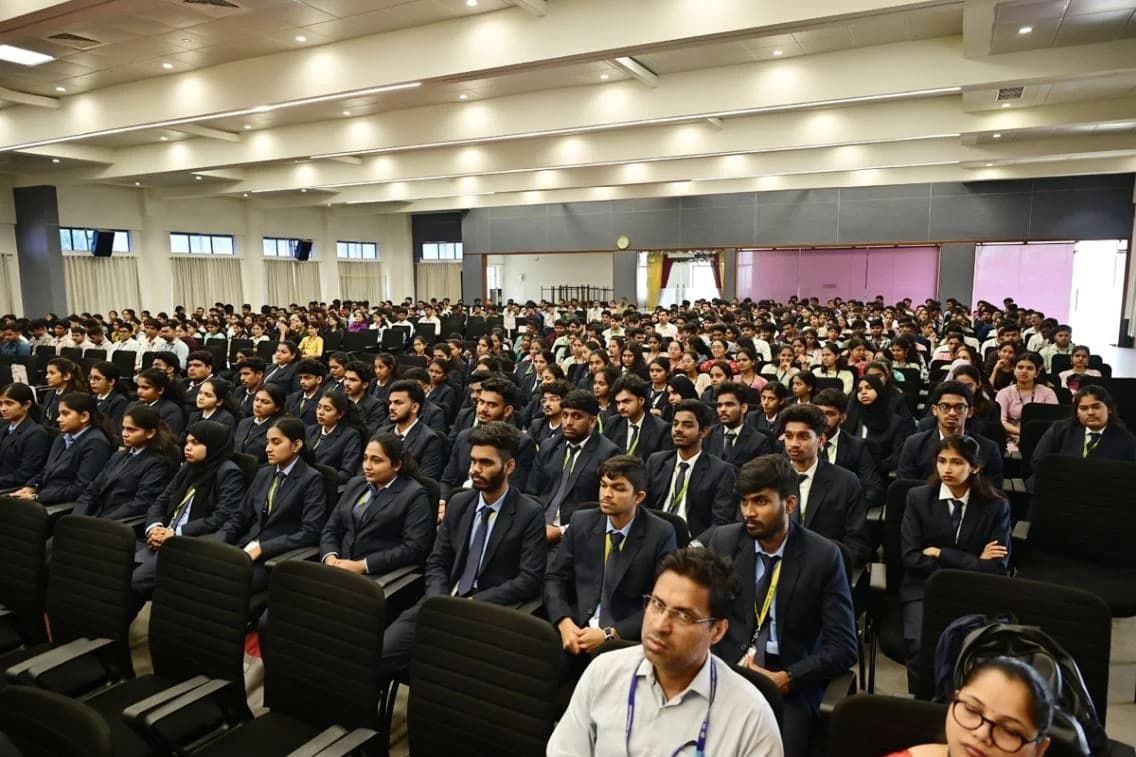
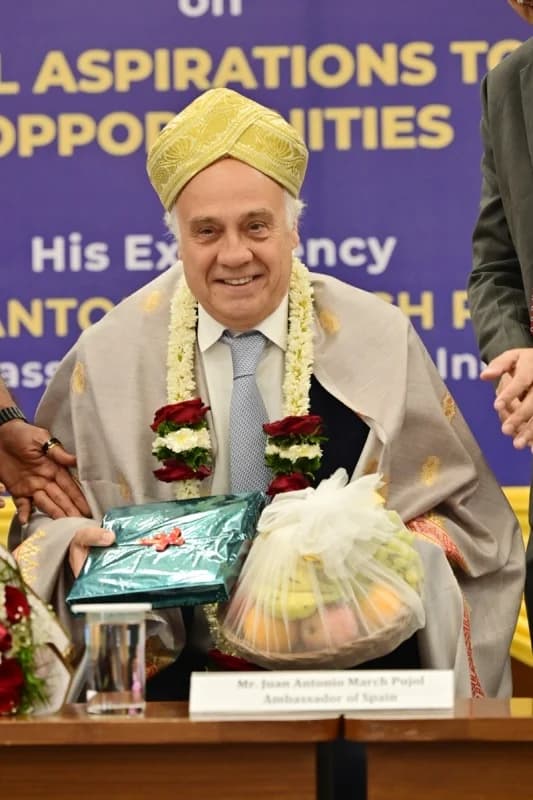
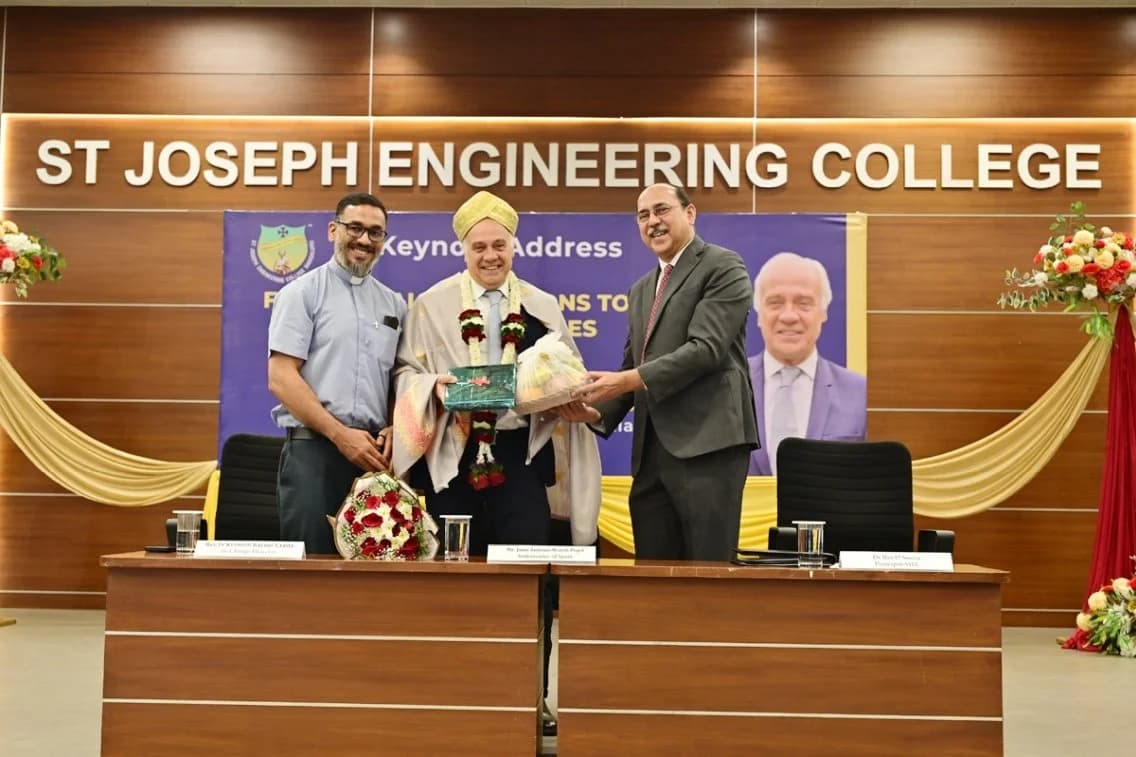
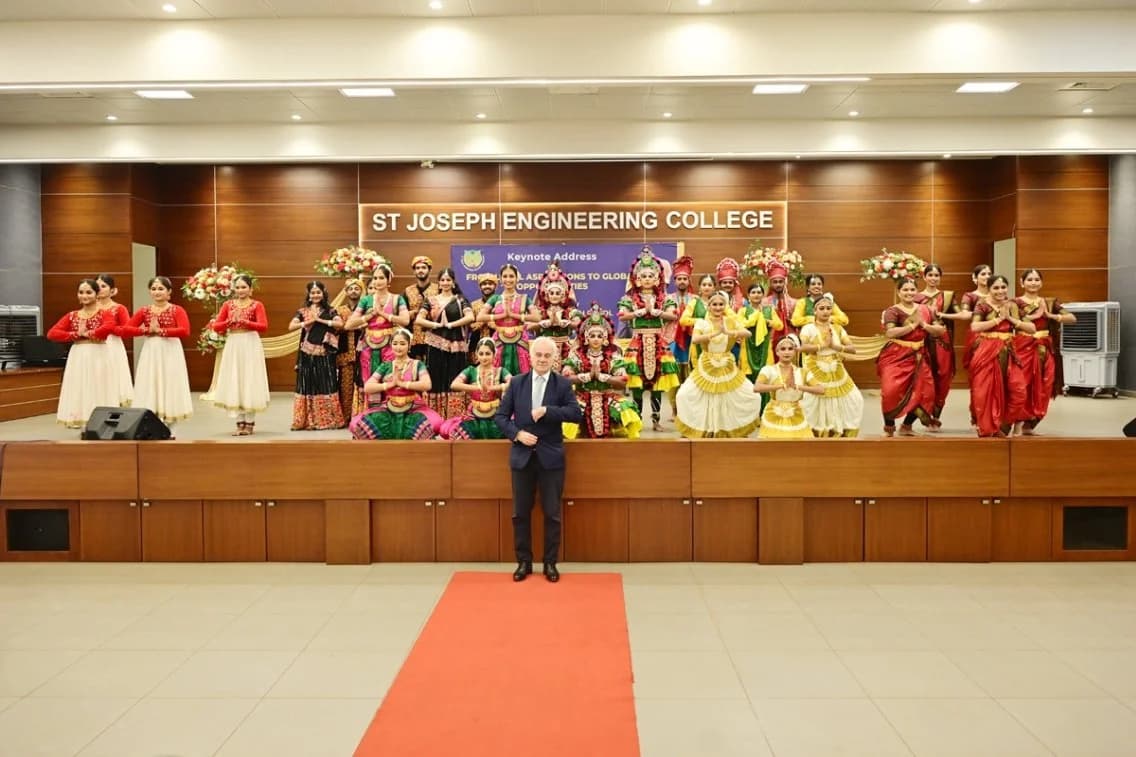
The visit featured extensive institutional interaction across the city. The Ambassador began with an interactive session at St Joseph Engineering College, followed by an afternoon dialogue at St Aloysius (Deemed to be University) with faculty and students alongside Vice Chancellor Rev. Dr Praveen Martis SJ.
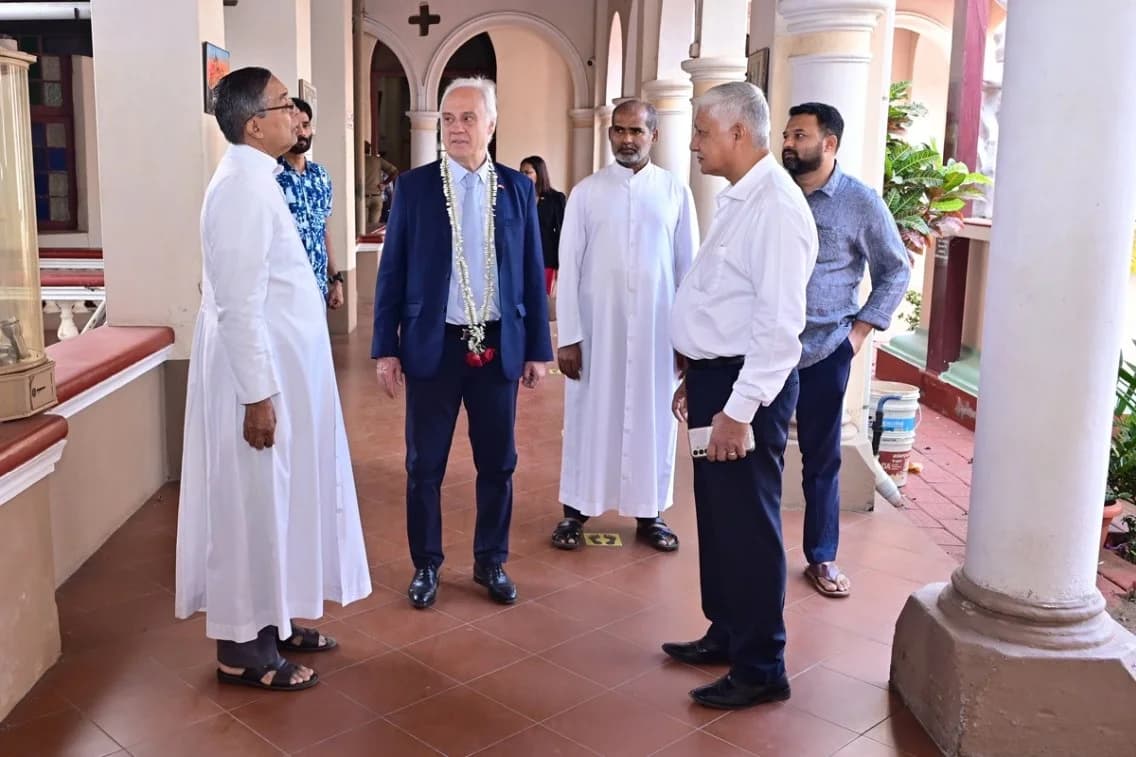
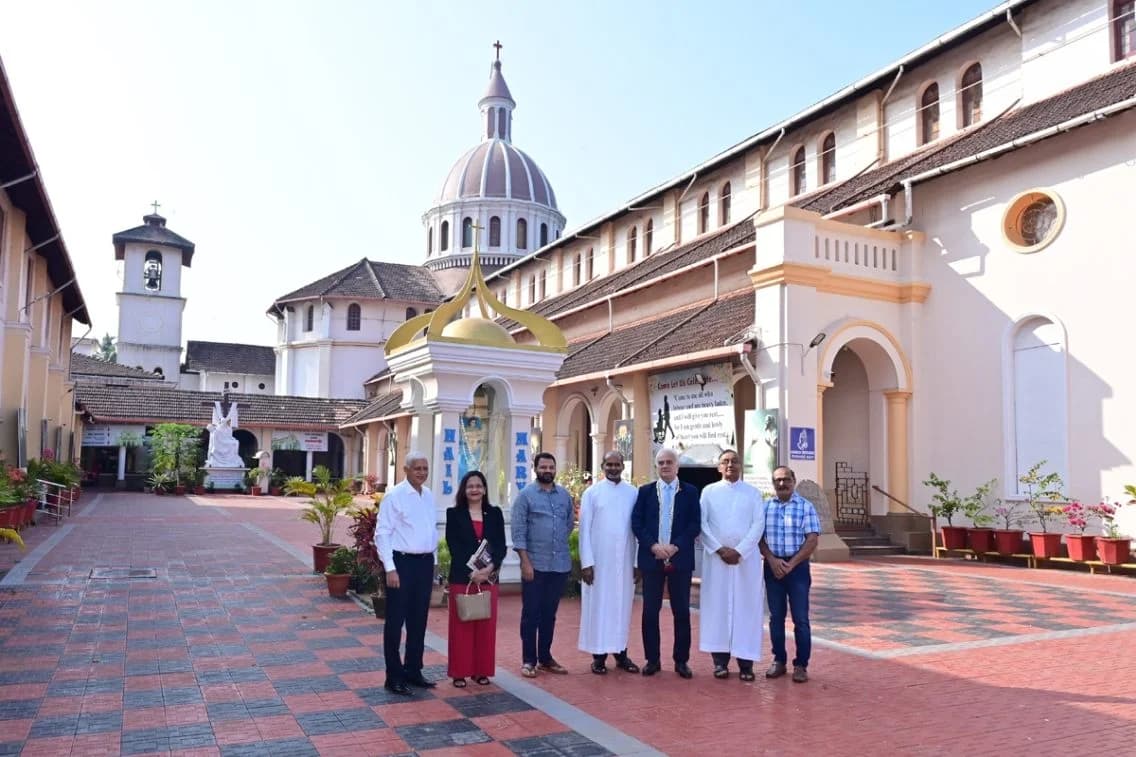
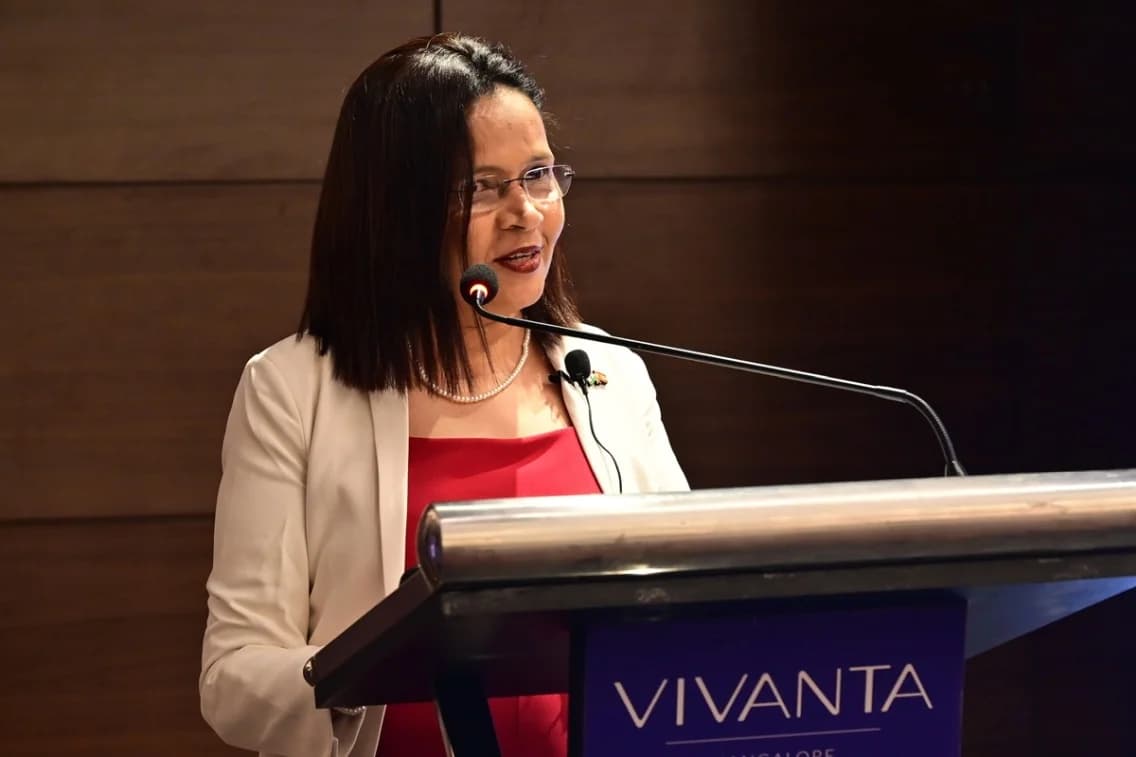
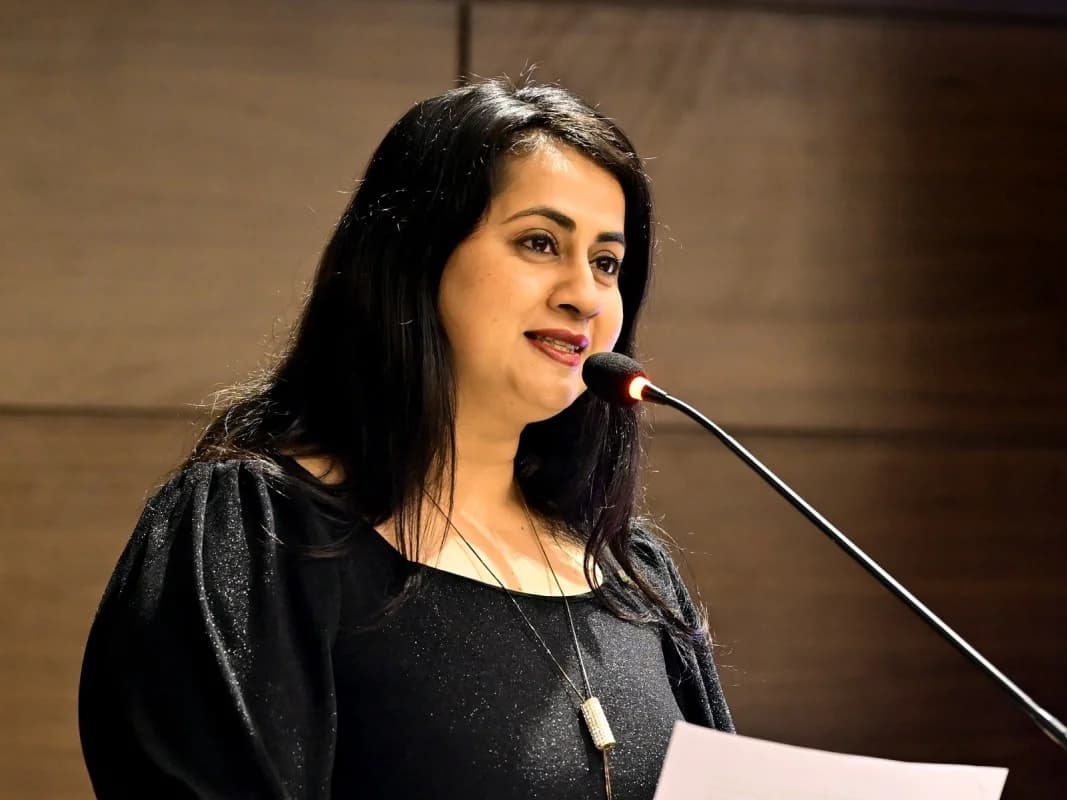
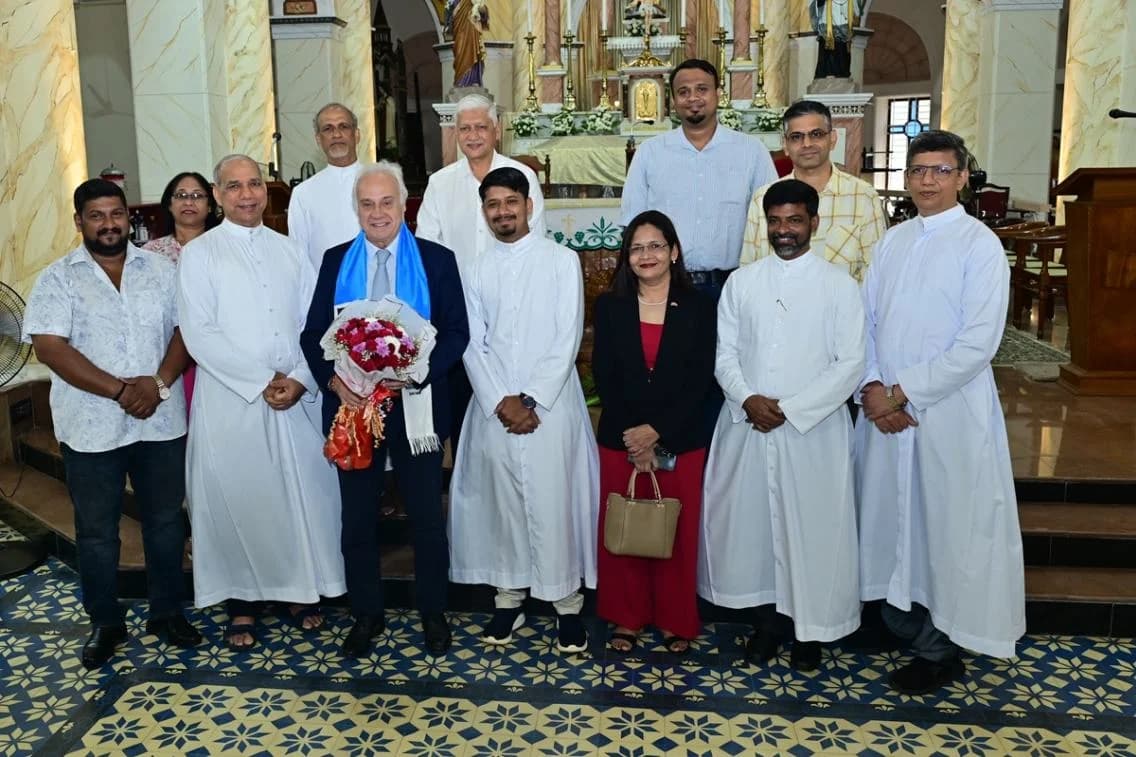
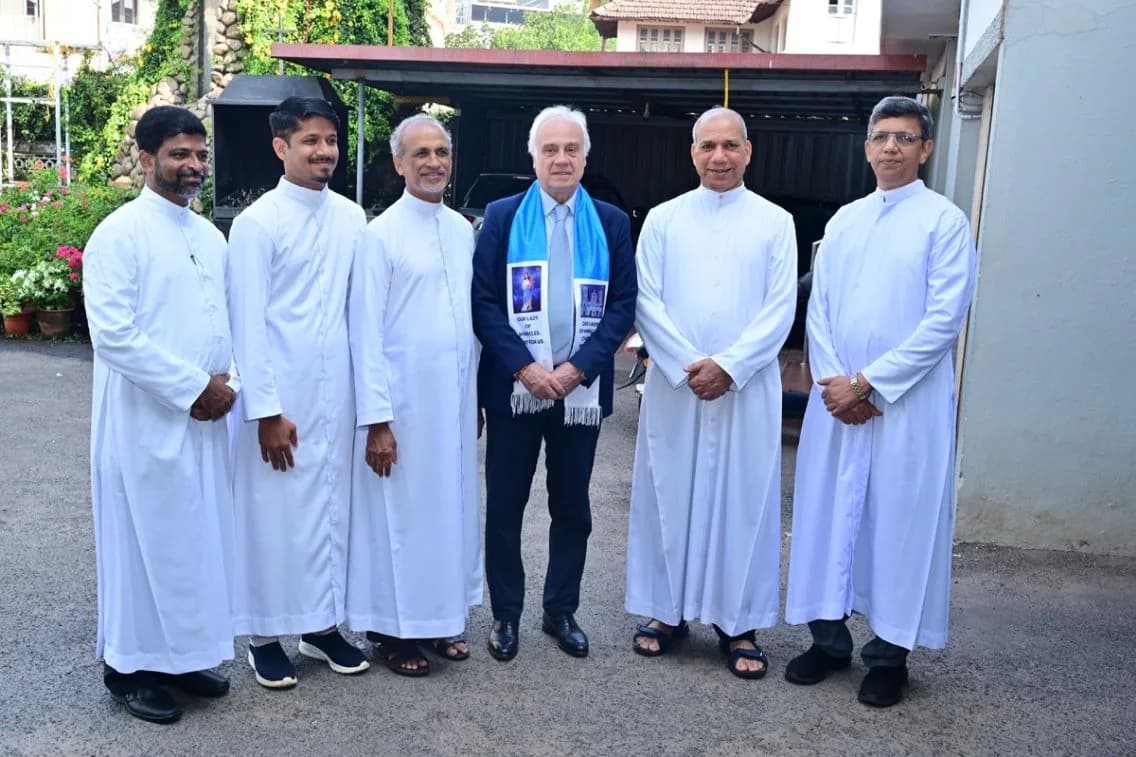
The formal evening launch was hosted by Loretta Andrade, with reflections by the author and a memento presentation by Mr Roy Castelino, PRO of the Diocese of Mangalore. In a symbolic gesture of cultural bridge-building, the vote of thanks was delivered in Spanish by language instructor Rajni Lobo Patrao. Before departing for Delhi, the Ambassador visited Rosario Cathedral and Milagres Church, where he was received by Rev. Fr Valerian D’Souza and Rev. Fr Bonaventure Nazareth.
The future of language
One of the evening’s most thought-provoking moments came when Ambassador March predicted that AI would soon dissolve language barriers altogether. He suggested that real-time translation technologies could render the idea of a single global language obsolete, allowing people to communicate fluently in their mother tongues while being universally understood. “The future will not be handed to us,” he concluded. “We must step into it.”
Conclusion:
The interaction left a strong impression that Mangaluru’s academic and cultural ecosystem—often dubbed India’s Silicon Beach—is well positioned to contribute meaningfully to global conversations shaping humanity’s future in the age of artificial intelligence.