







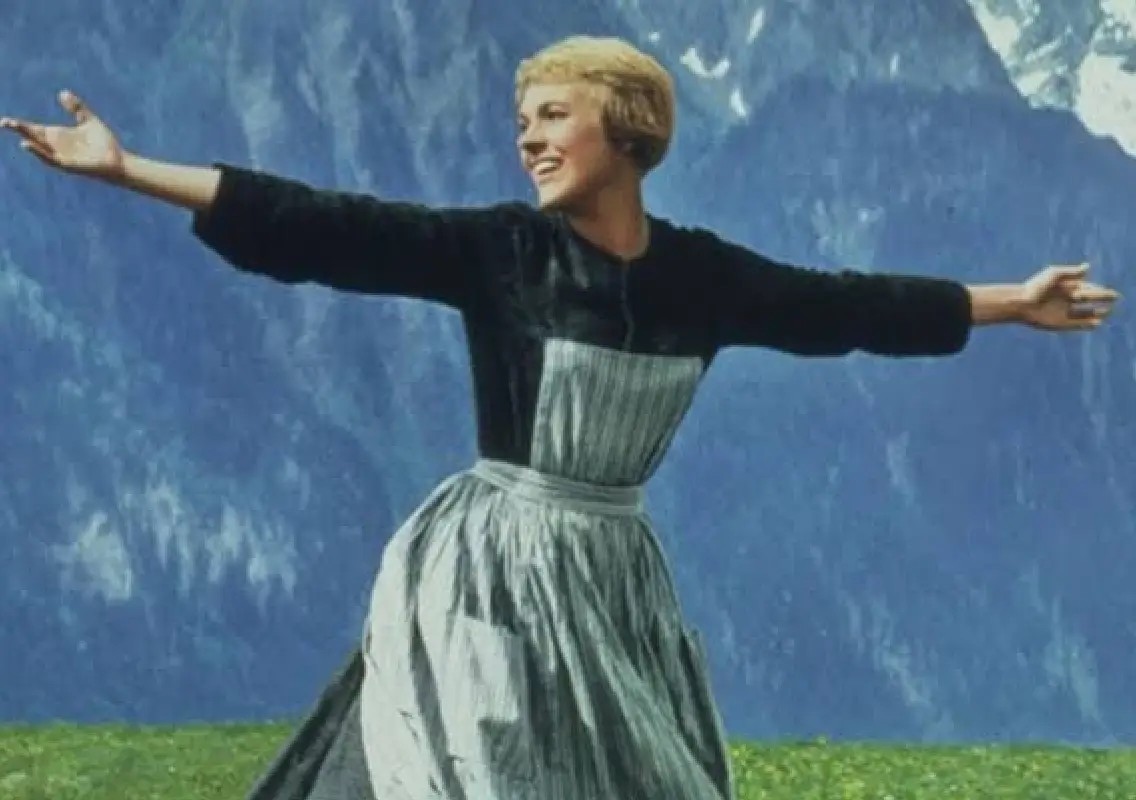


I was at college when the movie ‘The Sound of Music’, one of those legendary films among many, known also for the songs, was released. I had seen the classic movie directed by Robert Wise with Julie Andrews as the leading lady as Maria, the governess of seven children, with Christopher Plummer as Captain George Von Trapp, the father and the film won seven Oscars.
Though the songs ‘Do Re Me’ and ‘Eddlweiss’ were popular, the one which was always on the lips of the youngsters who saw the movie was ‘I am Sixteen going on seventeen’ sung by Leise when she sneaks out to meet her secret boyfriend called Rolf, a local telegram delivery boy.
The scenic Austrian Alps are alive with the sound of music in that song which speaks plenty about love, courage and music itself.
Among different streams of fine arts, music is considered supreme by many, though painting, sculpture, literature and performing arts have their own importance.
This is because appreciating music is easier than those of many other forms of artistic expressions and it has a universal appeal with no consideration for place, time and content. What is more important is the individual and collective impact that it creates in the minds of people.
The fact that even a little baby responds to music much more than the language spoken, even by the mother, is a clear example of the impact of music.
It is necessary to go into the history of human civilisation and its details provided in the books of many well known historians, to agree with their conclusions that music existed much before words started being used.
Studies on the evolutionary history of music and the pitch, rhythm and emotional vocalisations have proved that music existed before the use of language. Musical sounds must have later converted themselves into specific tunes, which would have converted themselves to words, resulting in language formation.
Ancient bone flutes discovered in Europe date back to fifty thousand years. The Swabian Alb region of south western Germany provided vulture bone flutes which date back to forty thousand years.
Similar is the mammoth ivory flutes discovered in countries like France and Austria which also proves that music was prevalent in the olden days too. The arrival of modern humans in Europe could have coincided with the advent of structured music.
I do recall my younger years when workers were called away from their work in the paddy field for short breaks with coffee or coffee with eatables or lunch. We had one outside worker attached to the house who used to distribute the food to the workers. He used to call them by shouting out a loud howl which could be different depending on what the workers were going to get.
He gave a howl of ‘o o o oh’, when there was only coffee to be served and ‘o o o oh hai hai’ when there was coffee and eatables together. The sound of his call was onomatopoeic and that exactly was the sound of music without any musical paraphernalia.
Modern music has reached very high levels because of the type of accompaniment used to present itself. Excellence in the use of these instruments have added to the impact of music in either way; either to enhance the depth of the feelings created or to soothen the already created depths of feelings. Music plays hide and seek with the emotions of people.
Its evolution from mere sounds into what it is today is unimaginable from the point of view of its influence on human emotions, sending it both to calmness and frenzy. The sight of several thousands of people dancing in front of a crowd of singers and musical instruments are unexplainable even to the best of the psychologists and social scientists.
It is debatable whether the total impact of music is the sound of the singer or the sound of the instruments played. There are still other important questions that arise concerning a decision on whether the language of the song or the tune of the singer creates the impact. To make sure, one has to state that not only these but even many other aspects have to be considered to understand the full impact of music.
If in the olden days, it was the voice of the singer which made her unique, it is now more a combination of the language of the song, the tune created by the composer and the support offered by the musical instruments that matter.
There is a range for the tune of the music which impacts the spirit and feelings of the listener. There may be a melody, or even a humming, that influences the listener to move his mood. A singer may have to employ control over her voice creating a sound, either to enhance or to ease the emotions that she herself may create.
The strength of her voice and its sounding can soothen or enhance the intensity of emotions involved at a precise moment. So, there are different areas and aspects of the sound of music and its artistry.
Mozart or Beethoven; Beatles or Coldplay or Bastille; our own Latha or Asha, all have contributed to the sound of music to the satisfaction of not only the aristocrat but also the common man. However, it is important to remember that in the modern world, the singer, solely, is not the creator of music; it also contains the contributions from the composer, the writer and the instrumentalist, not to mention many others involved.
Ilayaraja, the music composer from Chennai, went to the court of law in 2014 to decide who ultimately holds the intellectual property rights of music or songs.
Common man who appreciates music can only remember that music comes from the throats of singers precisely through the flexible movements of the lips and the facial muscles, through their enchanting voice which evokes and exhilarates a passion through the sound of music.
………………………………….
Prof. Sunney Tharappan, is Director of College for Leadership and HRD, Mangaluru. He trains and writes and lives in Mangaluru. Email: [email protected]