







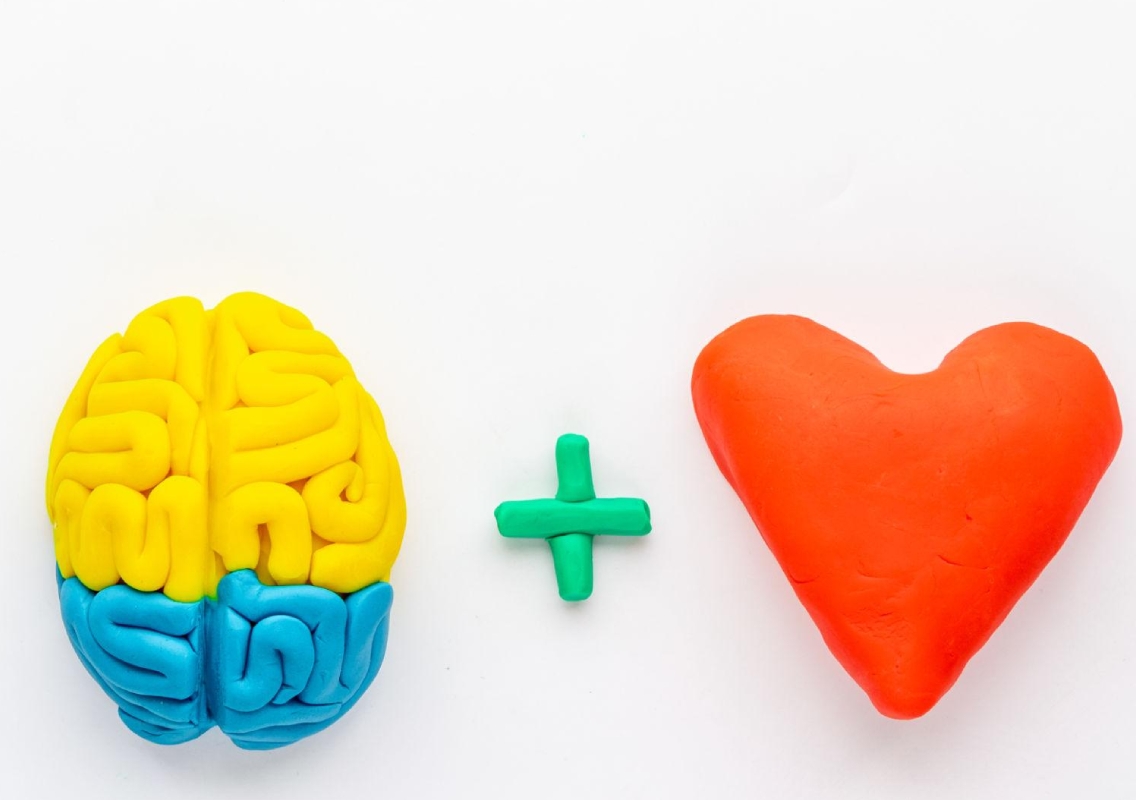


As per the researched opinion of paleoanthropologists like Donald Johanson, who discovered the fossil, called ‘Lucy’, considered to be the great great great thousand times great, grandmother of the entire humanity, in Ethiopia, humans started bipedal straightened up movements more than twenty four lakh years ago. They were supposed to have had smaller brains, yet were capable of thinking and feeling. Even today, of all freedoms that humans enjoy anywhere in the world, these two remain the most important capabilities, because they are unrestricted anywhere at any time. From this perspective, thinking and feeling are the most powerful resources of all humans.
All humans all over the world, despite different types of restrictions of performances in their existing societies, despite respectful of democratic principles, declare at the top of their voice that each of them is a free person. However, humans are free to act only according to the dictates enshrined in the social contracts and the constitutions of the country where they live. However, the two absolute freedoms where no one can be restricted, either as individuals or as a collective, are thinking and feeling. The debate on which is the foremost is not yet settled because one is not sure whether one thinks first, and therefore, feels about it; or whether one feels first in one way and therefore, thinks about it in a similar way.
Jean Paul Sartre, the French philosopher, Nobel Prize winner for literature of 1964, and an existentialist with Simone de Beauvoir, again a French existentialist, influenced the society of the twentieth century about the importance of thinking and feeling, more the former. Similarly, Bertrand Russell and Noam Chomsky wrote about the rationality of thinking as more important than the intensity of feelings, something which was not acceptable to a lot of psychologists of those days. Towards the end of the twentieth century, Daniel Goleman and Jean Carper gave greater importance to feelings as expressed in their books. The best service that they rendered to humanity is that they placed the feelings also in the brain and placed it on equal footing with thinking. However, they alsoleave the question which is primarily unanswered, in their books ‘Emotional Intelligence’ and ‘Your Miracle Brain’ respectively.
There was a noteworthy report on 01 of December 2025 from Mumbai. It was about the unprecedented decision of Ms. Anchal Mamidwar to marry the dead body of Saksham Tate, her lover who was killed by Himesh and Sahil, her brothers and Gajanan Mamidwar, her father. She decided to become Tate’s wife by marrying the dead body and making their love eternal. She also decided to stay in his house permanently. She demanded that the perpetrators of the crime, though they were her near ones, should be hanged to death. The loving pair belonged to different castes and that led to the disapproval of her near ones and which ended in the subsequent killing of her lover. It is strange that the man was introduced to the young woman by her brothers.
This report has to be seen from the perspectives of Anchal who must have felt miserable, when she came to know about her lover’s tragic end at the hands of her near ones. The intensity of her emotions did not stop her from thinking about the possible way of satisfying her feelings for the man whom she loved dearly. In her case, both her thinking and feeling were the possible outcome of her freedoms though marrying the dead body of her lover in public with blessings of everybody may not be her desired choice. One can only salute the young woman for using absolute freedoms of thinking and feeling. One does not know what awaits her because she has to live in a new family and new environment where other freedoms have to be sanctioned to her.
Sartre once said that all humans are condemned to be free. When he was asked for an explanation, he said humans when they were born have no preset conditions for living. The new born infant exists first absolutely free and thereafter defines the type of freedoms that are to be gained depending on the family and society and country to which she or he belonged. As one grows up, he says, that there are core biological signals of thinking and feeling which get regulated or expanded based on situations, circumstances and environment available.
Though termed the unbreakable brain, it is the development of the mind and the type of its functioning which decides the application of the two absolute freedoms. As seventy-five percent of the brain is water, its reduction or even the reduction of the contents like sodium by two percent can course change memory or attention or influencing ways of thinking or feeling, though thinking and feeling have their own absolute autonomy and consequential freedoms. All feelings are a subjective experience which is evoked. All thoughts lead to ideation and subsequently to bare thoughts which can be turned into achievable ones.
Thoughtlines lead to ideation which in turn defines themselves. These can gather together which may need conceptualising and identification of necessary techniques for implementation. Feelings function differently and are too complex for human understanding because a person who is extremely happy can become sad or angry or afraid within a short time just as it can happen that feelings of pride can turn to shame real soon. Such happenings are universal in their nature. Despite the fact that thinking and feeling are absolute freedoms, they can also become prisons for the humans in their everyday life.
Thinking and feeling are products of the mind which is ‘housed’ in the brain, to use a word from Howard Gardner, the thinker and writer. The mind’s ways of working will depend on its making and it is supported by both thinking and feeling, the two absolute freedoms, in their making. It will be worthwhile to read ‘Making Your Mind’ by Timothy Thomson or ‘Making Your Mind Magnificent’ by Steven Campbell to make an in-depth study.